U.S. President Donald Trump ordered a substantial reduction in American participation in the Ulchi Freedom Shield joint military exercises with South Korea, citing his personal relationship with North Korean leader Kim Jong Un and South Korea's refusal to join U.S. military action against Iran. The exercises, described by the Associated Press as an 11-day event and by TIME as a 10-day event, began as scheduled. Trump posted his announcement on Truth Social, and on Monday told reporters at the White House that he was making the Korean Peninsula 'much safer' by truncating what he called 'war games.'
Trump orders reduction of U.S. participation in South Korea military exercises, citing Kim Jong Un relationship and Seoul's Iran stance
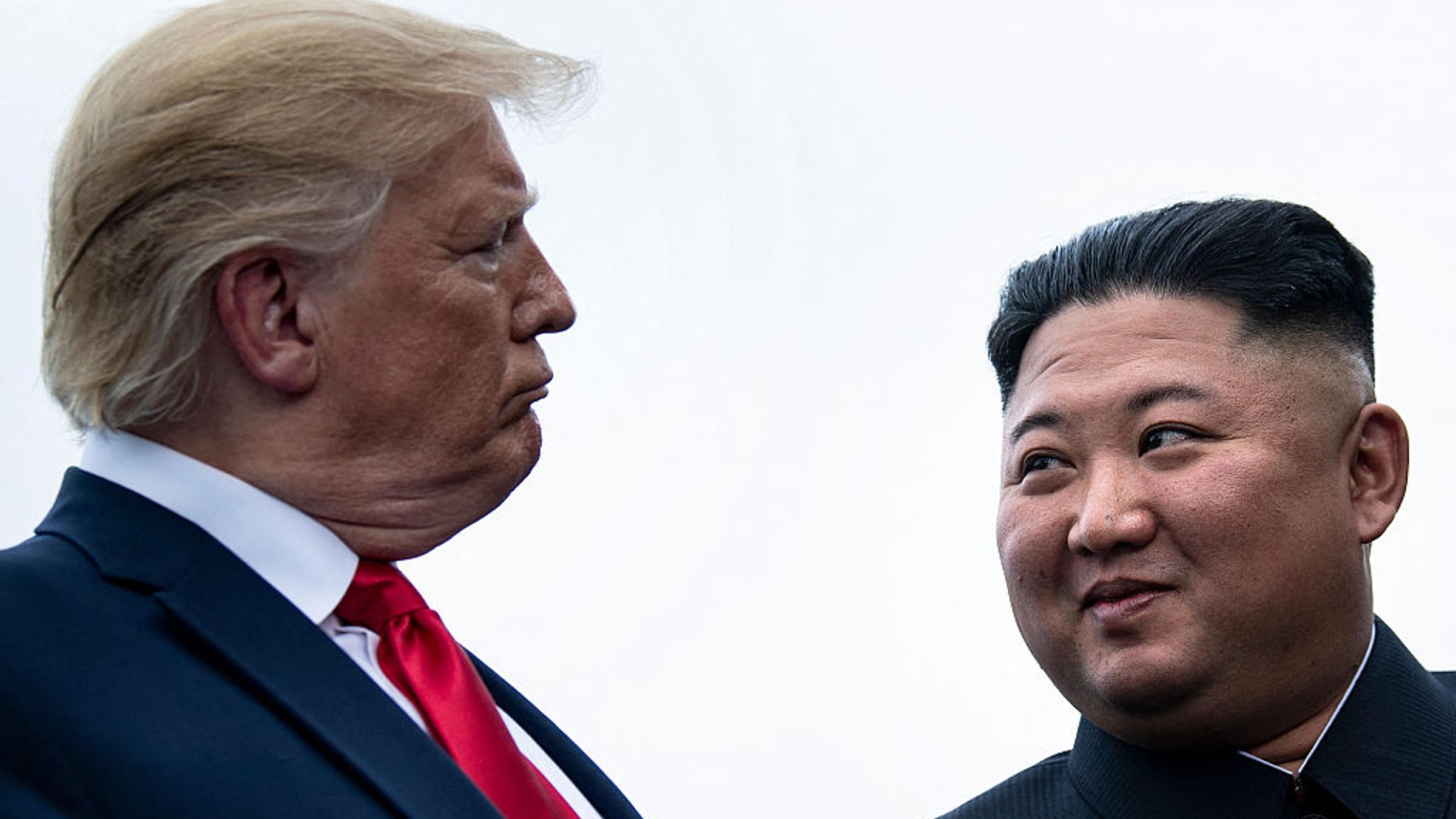
U.S. President Donald Trump ordered a substantial reduction in American participation in the Ulchi Freedom Shield joint military exercises with South Korea, citing his personal relationship with North Korean leader Kim Jong Un and South Korea's refusal to join U.S. military action against Iran. The exercises, described by the Associated Press as an 11-day event and by TIME as a 10-day event, began as scheduled. Trump posted his announcement on Truth Social, and on Monday told reporters at the White House that he was making the Korean Peninsula 'much safer' by truncating what he called 'war games.'
Trump stated on Truth Social that the exercises are 'not only costly … but send a signal that is totally inappropriate and hostile to a country that, as long as Donald J. Trump has been president, has been unthreatening and respectful,' according to TIME. He added that Kim Jong Un had responded to his outreach, telling White House reporters on Monday: 'Kim Jong Un has always treated me with great respect. I understand him; he understands me,' according to the Japan Times.
South Korea's presidential Blue House said it remained in 'close coordination' with Washington regarding the drills, which had begun as 'previously notified and scheduled,' according to its defence ministry, per TIME. According to the Associated Press, it was not known which specific parts of the training were being scaled back.
On Monday, Trump posted a photo of Kim Jong Un speaking on a phone with the caption: 'HEY DONALD ... WE COOL, RIGHT?' according to the Associated Press.
According to TIME, since Trump re-entered office North Korea has conducted 24 ballistic missile tests alongside numerous cruise missile and air-defense firings, including a launch the previous Wednesday. TIME also reports that North Korea has dispatched more than 14,000 troops, artillery ammunition, and ballistic missiles to support Russia's war in Ukraine following a June 2024 strategic partnership with Moscow, and that Ukrainian President Volodymyr Zelenskyy has warned Kim is preparing to deploy 30,000 more troops.
According to TIME, South Korean and U.S. military commanders had planned to use the Ulchi Freedom Shield exercises to adapt to battlefield tactics observed from North Korean forces in Ukraine, including drone swarm integration, electronic GPS jamming, and coordinated cyber warfare. Col. Ryan Donald, public affairs director for U.S.-led commands in South Korea, told reporters: 'They've taken those lessons learned there and brought them back to North Korea—that changes their capability. That is why the exercise looks different and over the last five years has continually evolved.'
According to TIME, Daniel Pinkston, an international relations expert at Troy University in Seoul, said North Korea has a long history of providing Iran with technical assistance, including 'building turnkey factories, technology design, production capabilities, tactics.' TIME reports that North Korean missile designs formed the basis for several Iranian ballistic missile programs and that North Korean engineers assisted Iran with hardened military infrastructure.
According to the Associated Press, polls show South Koreans have increasingly supported pursuing their own nuclear weapons capability. Matthew Kroenig, formerly of defense and intelligence positions under both parties and now with the Atlantic Council, said the U.S. has been working to persuade South Korea it is protected, and that scaling back the exercises 'potentially undermines that message.' Retired U.S. Ambassador Robert Wood similarly said the exercises are critical to deterring North Korea, which has shunned talks with the U.S. over its nuclear program and has accelerated weapons testing.
According to the Associated Press, the decision drew immediate criticism from congressional Democrats. Representative Greg Meeks of New York, the top Democrat on the House Foreign Affairs Committee, said: 'Treating one of America's closest allies like an adversary weakens our alliances and benefits China and North Korea.'
Where sources differ
- The AP describes the Ulchi Freedom Shield as an 11-day exercise; TIME describes it as a 10-day exercise. Neither source explains the discrepancy.
- TIME characterizes the decision as dealing 'a severe blow to American alliance credibility,' reflecting an editorial framing not fully shared by the AP, which quotes some former officials who note that U.S. forward bases and core alliance relationships remain intact as of the time of reporting.
- It is not established which specific components of the Ulchi Freedom Shield exercises are being scaled back or by how much U.S. troop or asset participation is being reduced.
- The sources do not report any direct comment from North Korea or Kim Jong Un on the decision or on the reported response to Trump's outreach.
- The nature and content of Kim Jong Un's reported response to Trump's outreach is not detailed in any source.
- The sources do not establish whether the South Korean government lodged any formal protest or made any direct public criticism of Trump's decision.
- The precise number of U.S. forces involved in the exercises and the scale of the reduction are not specified.
- The sources do not establish what, if any, diplomatic communications preceded Trump's announcement.
- The reaction of Japan, Taiwan, or other regional allies beyond the statements of former U.S. officials is not reported.
- The discrepancy in exercise duration (11 days per AP, 10 days per TIME) is not explained.
- Associated Press — original — by https://apnews.com/author/ben-finley
- The Japan Times — by Jesse Johnson
- TIME — by Charlie Campbell
Read the original at Associated Press