British Prime Minister Andy Burnham told Ukraine's Volodymyr Zelensky in a phone call on Saturday 10 October that he had his "complete solidarity", according to a Downing Street readout, after the Ukrainian president clashed with US President Donald Trump over a US agreement to buy Russian diesel. Burnham said he recognised that "the past 24 hours had been difficult for Ukraine", the readout said, and the two leaders agreed to meet in person in the coming days. Trump confirmed on Friday that an agreement had been reached with Moscow to suspend sanctions on Russian diesel exports until 7 April, according to the BBC, and on Saturday said he thought "it's time for Ukraine to get a new president", telling reporters outside the White House that Zelensky "wants to make problems for the world". Ukrainian officials reported a Russian attack killed people in the south-east of the country, with the outlets giving differing casualty figures.
UK's Burnham tells Zelensky he has 'complete solidarity' after Trump clash over Russian diesel deal
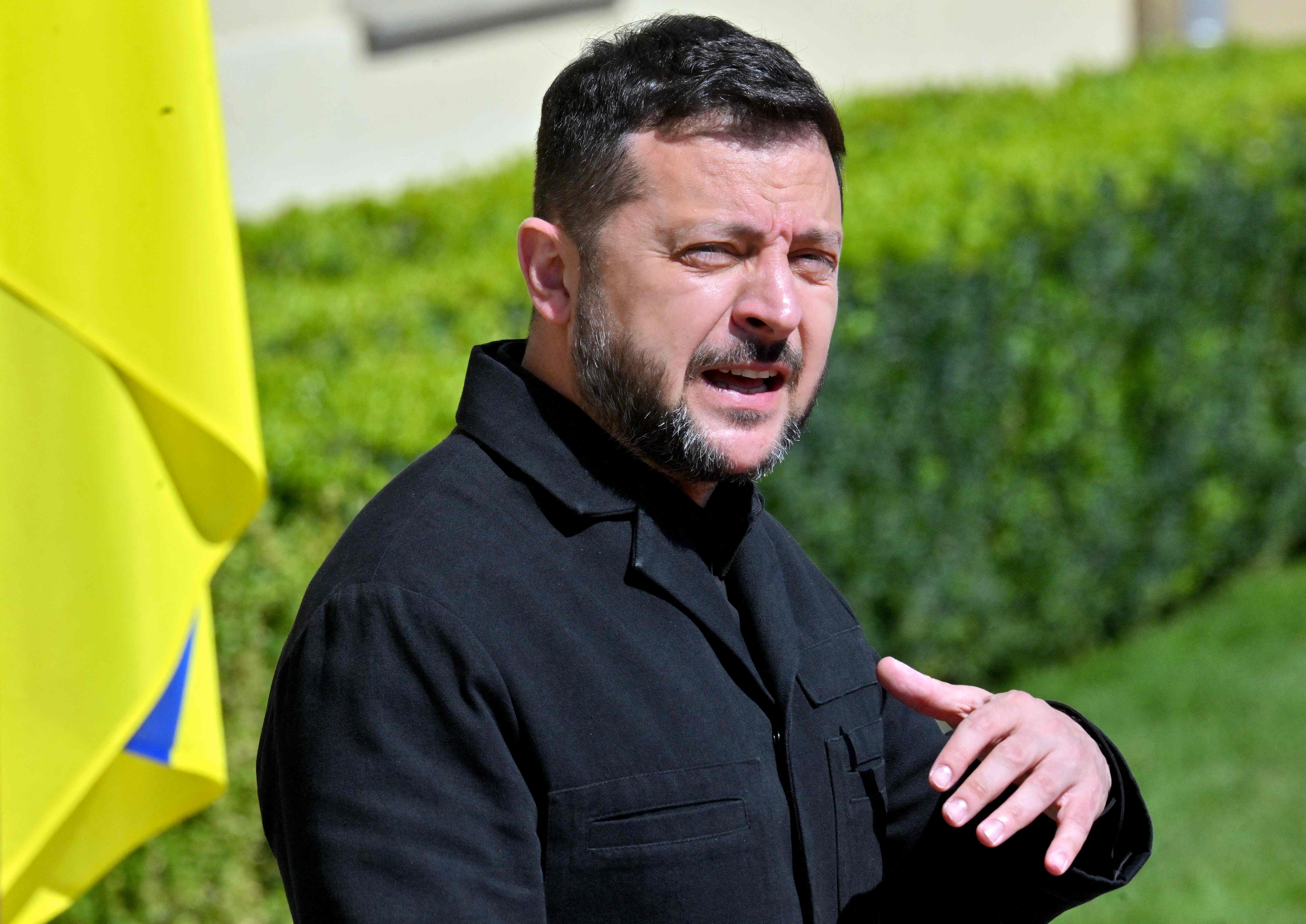
British Prime Minister Andy Burnham told Ukraine's Volodymyr Zelensky in a phone call on Saturday 10 October that he had his "complete solidarity", according to a Downing Street readout, after the Ukrainian president clashed with US President Donald Trump over a US agreement to buy Russian diesel. Burnham said he recognised that "the past 24 hours had been difficult for Ukraine", the readout said, and the two leaders agreed to meet in person in the coming days. Trump confirmed on Friday that an agreement had been reached with Moscow to suspend sanctions on Russian diesel exports until 7 April, according to the BBC, and on Saturday said he thought "it's time for Ukraine to get a new president", telling reporters outside the White House that Zelensky "wants to make problems for the world". Ukrainian officials reported a Russian attack killed people in the south-east of the country, with the outlets giving differing casualty figures.
Under the deal, Russia would release an initial 300,000 tonnes of diesel "to the American and global marketplace" followed by an additional 500,000 tonnes in November, the BBC reported, citing Trump's post on Truth Social. A further million tonnes would follow and then another 3m tonnes "within a short period of time", Trump wrote, noting that delivery would be "based on the condition of their diesel refineries". The Guardian described the arrangement as an agreement to buy millions of tonnes of diesel fuel over the next few months, announced on Trump's Truth Social network, with Trump saying it was essential to reduce US fuel prices that had soared as a result of his decision to go to war against Iran.
The BBC reported that Trump told reporters outside the White House on Saturday that Zelensky "wants to make problems for the world" by continuing to authorise attacks on Russian refineries, adding "He'd better damn well stop" and suggesting Ukraine should "get a new leader who can make a deal". Trump also said: "We said, 'you can do whatever you want to Russia, don't hit the refineries', because that's a world problem that's caused" and "He could have made many deals and for some reason, he never does." The Guardian reported that Trump had recently criticised Ukraine for attacking Russian diesel refineries and called on Zelensky to choose alternative targets, and that the Ukrainian leader rejected the request unless Russia stopped attacking Ukraine's energy infrastructure. The BBC noted Trump had already called for new elections in Ukraine last December, and that Ukraine has been under martial law since the war broke out in 2022, meaning elections are suspended.
Zelensky reacted to the deal by calling it "absolutely terrible" and "not fair and not honest", according to the Guardian, and saying that "back room deals" with the Russian leader would give Vladimir Putin more chances on the battlefield. He told Axios it "looks like a happy birthday present for Putin. It looks absolutely terrible", the Guardian reported, noting the Russian leader turned 74 that week. In a long social media post cited by the Guardian, Zelensky said the deal amounted to "an investment in a war that must be ended, not prolonged", that it "plays into Russia's hands", and that Russia was likely to repay it with "further terror and perfidy". In a separate statement released by Ukraine's embassy in Washington on Friday, he said Ukrainian negotiators had been "used as a smokescreen for the deal", which he called "a weak decision by strong partners". The BBC reported that Zelensky warned the deal would allow Moscow to raise new funds to source military equipment and accused Moscow of taking the deal "to mean they can keep fighting, to mean they keep dropping bombs on cities".
According to the Downing Street readout carried by AFP and the BBC, Burnham and Zelensky discussed "the importance of maintaining pressure on Russia", with the British prime minister making clear the UK "would continue to strengthen its sanctions on Russia and to take further action to constrain the Russian war machine, building on new UK designations against Russian targets announced this week". A Downing Street spokesperson said the pair had agreed Russia should acquiesce to "an immediate energy ceasefire" and end its attacks on shipping in the Black Sea, as "this would immediately release more energy and food supplies into the global market".
The BBC reported that EU foreign affairs chief Kaja Kallas echoed Zelensky in saying that suspending sanctions "provides Moscow with more revenues to wage war", adding: "This is not the time to ease pressure on Russia, and Europe won't." She said European foreign ministers intended to approve the biggest set of sanctions on Russia since the start of its full-scale invasion on Monday.
In the United States, the Guardian reported that Democrats said the agreement undercut a law Trump signed last month allowing for a broad range of sanctions on Russian banks, officials and tankers and directing him to impose steep tariffs on the top five importers of oil or natural gas from Russia, and that the law gave Trump wide discretion to make exceptions. Some Republicans also criticised the agreement, the Guardian said.
On the ground, the Guardian reported that Ukrainian officials said a Russian attack on Saturday morning killed 12 people in the south-east, including three children, and that Moscow claimed its troops were advancing in the east; it said Zelensky referred to the attack on the south-eastern city of Zaporizhzhia that killed 12 people. The BBC reported deadly new strikes on Zaporizhzhia. The AFP-sourced reports carried by The Straits Times and Arab News said Moscow's continued strikes on Ukraine killed at least 21 people, including four children. The Guardian also reported that Russian media cited the defence ministry as saying its forces had captured the settlements of Lukashove and Lobanivka in Ukraine's eastern Kharkiv region, and that a Kremlin spokesperson said the Russian leader had responded with "understanding" to Trump's proposals to de-escalate the conflict.
The BBC reported that Trump announced the diesel deal as his envoys, Steve Witkoff and son-in-law Jared Kushner, met Ukrainian and European officials in Miami to discuss proposals to end the war. It said the deal is the latest effort by Trump to lower fuel prices in the US ahead of the midterm elections, after months spent grappling with the political consequences of the Iran war, which began in February and led to the effective closure of the Strait of Hormuz, through which roughly a fifth of the world's oil products usually flows. The Guardian said fuel prices have soared since Iran closed the strait, a passageway for 20% of global oil supplies before the war. The BBC reported that diesel production in Russia dropped by an estimated 30% over the past 10 months, according to the International Energy Agency, after two waves of severe fuel shortages caused by Ukrainian drone strikes on Russian oil refineries.
The Guardian reported that tensions have been rising between Russia and European NATO members amid speculation that Moscow might be preparing military action intended to test the alliance's resolve, and that the latest development is likely to worsen Zelensky's relationship with the Trump administration.
Where sources differ
- Casualty figures for the weekend Russian strikes differ: the AFP reports carried by The Straits Times and Arab News say Moscow's continued strikes on Ukraine killed at least 21 people, including four children, while The Guardian says Ukrainian officials reported a Russian attack killed 12 people in the south-east, including three children, and refers to 12 people killed in Zaporizhzhia.
- Diesel price figures differ: the BBC says the average price of diesel is currently $6.28 a gallon, up from $5.94 last month and $3.68 last year, while The Guardian says diesel last month hit a record high of $6.52 and that a gallon of regular fuel in the US is about $4.20.
- The outlets characterise the deal differently: The Guardian describes it as a 'stunning agreement' that 'upended years of US and western pressure on the Kremlin' and as a 'fresh collision course' with European allies, while the AFP reports and the BBC describe the arrangement without that framing, as a move to ease sanctions on Russian diesel and an agreement to suspend sanctions until 7 April.
- None of the sources establishes an independently verified casualty toll from the weekend strikes; the figures given differ and are attributed to Ukrainian officials or to AFP reporting.
- No source states whether any diesel has actually been delivered under the deal, when deliveries would begin, or what would happen if the stated refinery condition is not met.
- No source contains the full text or terms of the US-Russia agreement, or explains the basis on which the 7 April suspension date was set.
- Vladimir Putin is not quoted directly in any source; his position appears only through his envoy and a Kremlin spokesperson.
- No source reports a response from the Russian embassy or foreign ministry, from the US State Department, or from NATO as an institution.
- None of the sources establishes what, if anything, the Miami talks between US envoys Steve Witkoff and Jared Kushner and Ukrainian and European officials produced.
- No source indicates whether the US Congress will act to challenge the sanctions suspension or whether the law signed last month will be enforced.
- No source explains the difference between the casualty figures reported by the different outlets or confirms the location at which each reported strike occurred.
- The sources do not establish any reaction from Ukraine's European allies beyond Kallas's remarks, nor from any US administration official other than Trump.
- The Straits Times — original — by The Straits Times
- Arab News — by Arab News
- BBC World — by Rorey Bosotti
- The Guardian US — by Robert Tait in Washington
Read the original at The Straits Times