Vote counting began Thursday evening in Zambia after polls closed in a presidential election in which incumbent Hakainde Hichilema, seeking a second term, faced 13 other candidates, with opposition leader Brian Mundubile considered by analysts to be the strongest challenger. The Electoral Commission of Zambia said results were expected Monday.
Zambia counts votes after presidential election pitting Hichilema against opposition alliance
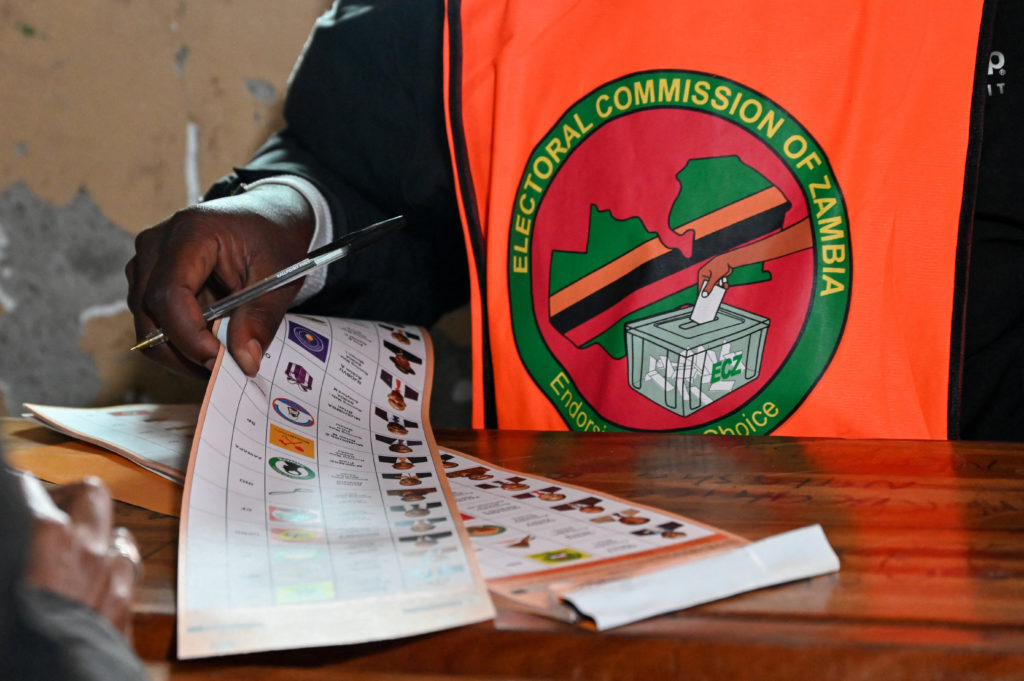
Vote counting began Thursday evening in Zambia after polls closed in a presidential election in which incumbent Hakainde Hichilema, seeking a second term, faced 13 other candidates, with opposition leader Brian Mundubile considered by analysts to be the strongest challenger. The Electoral Commission of Zambia said results were expected Monday.
About 8 million people in the southern African country of 22 million were registered to vote at more than 13,500 polling stations. Voters were also choosing members of Parliament and local government councilors.
Voters in Lusaka queued before dawn, some gathered around makeshift fires as election officials prepared. A local election observer said poor voter direction, confusion over voter rolls, and crowd management issues caused delays and frustration at some polling stations. European Union observers monitored voting at one Lusaka polling station.
Hichilema was elected in 2021 and has since restructured Zambia's foreign debt, stabilized the economy, and attracted investment, according to his own account. He has set a target of increasing annual copper production to 3 million metric tons by 2031. Zambia is a major copper producer, and the metal is considered critical to electric vehicles, renewable energy, and power grids. China is Zambia's largest foreign investor with extensive mining interests, while the United States has sought a greater role in sourcing critical minerals.
Security and political tensions rose in the final days of the campaign. Police deployed additional officers and warned against violence, disruptions at polling stations, and the circulation of false results. A presidential candidate must win more than 50 percent of the vote to avoid a runoff.
Hichilema spent four months in jail on treason charges as an opposition leader under former President Edgar Lungu, whom he defeated in 2021. Lungu died in South Africa last year, and a prolonged dispute between his family and the government over his funeral and burial added to tensions before the election. Zambia has seen three transfers of power to opposition candidates since multiparty democracy returned in 1991.
- The source does not identify the local election observer by name or organizational affiliation.
- The source does not state the current level of annual copper production against which the 3 million metric ton target by 2031 would be measured.
- The source does not detail the specific allegations made by Amnesty International or the other rights groups beyond the general characterization of shrinking democratic space.
- The source does not state how many seats in Parliament are being contested.
- The source does not specify what Mundubile's alliance of opposition parties comprises or how many parties are involved.
- The source does not provide turnout figures or any preliminary vote counts.
Read the original at PBS NewsHour