A partial solar eclipse is scheduled to begin across the United Kingdom from approximately 18:00 BST on Wednesday 12 August, with the Moon forecast to obscure up to 90% of the Sun as seen from London and up to 95% as seen from Cornwall. The eclipse is expected to reach its peak at different times depending on location, between 19:02 and 19:16 BST.
UK Solar Eclipse on 12 August: Weather Forecast Varies by Region
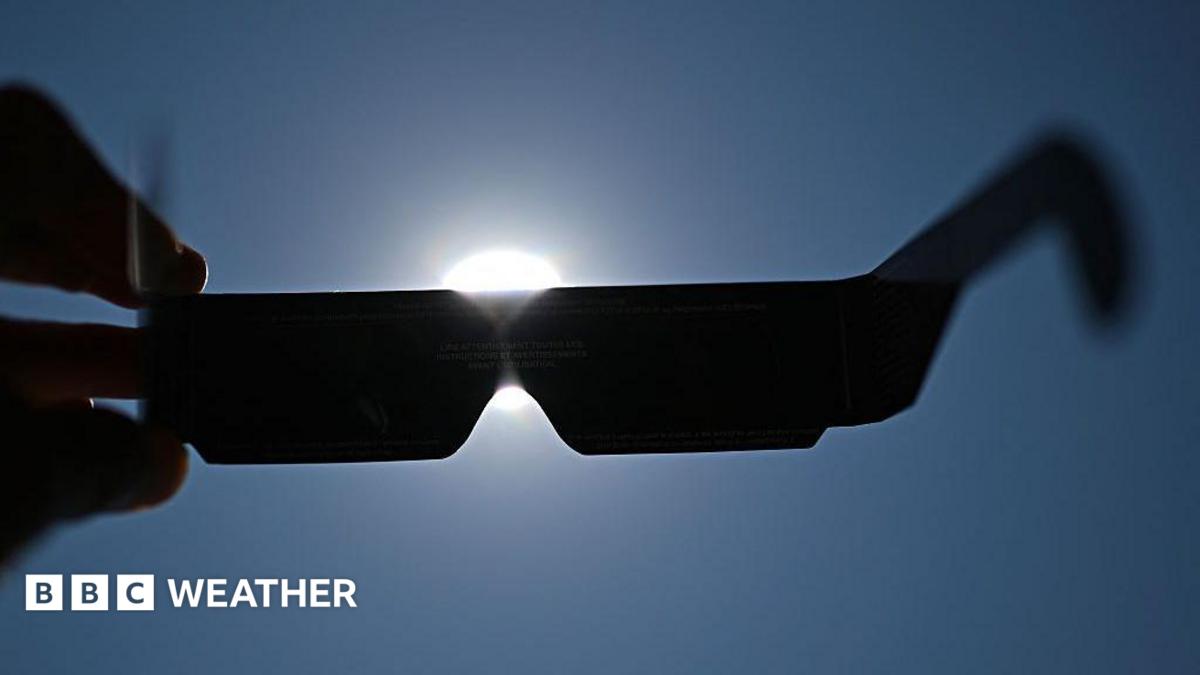
A partial solar eclipse is scheduled to begin across the United Kingdom from approximately 18:00 BST on Wednesday 12 August, with the Moon forecast to obscure up to 90% of the Sun as seen from London and up to 95% as seen from Cornwall. The eclipse is expected to reach its peak at different times depending on location, between 19:02 and 19:16 BST.
According to the forecast, high pressure sitting over much of continental Europe is expected to produce dry, settled, and sunny conditions across large parts of the UK, offering clear viewing conditions for many observers.
However, areas of cloud are forecast to move through parts of north Wales, northern England, Scotland, and Northern Ireland between 18:00 and 19:00 BST. Western Scotland and parts of northern and western Northern Ireland are expected to see cloud accompanied by outbreaks of rain, according to the forecast.
Viewing conditions are described as excellent for South Wales, south-west, central, north-east, and south-east England. Eastern Northern Ireland, north Wales, north-west England, and central and eastern Scotland are forecast to have good conditions, while western Scotland and western Northern Ireland are expected to see poor conditions.
For Iceland, some cloud cover is anticipated, with the possibility of gaps in the north and rain in the south. Spain and Portugal are forecast to have near-perfect viewing conditions with clear skies.
The Sun is expected to sit very low in the western sky during the eclipse. Observers are advised to find a location with a clear, unobstructed westward view, away from trees and buildings and at an elevated position.
- The source does not specify what safety equipment or methods are recommended for viewing the eclipse.
- The source does not state when the UK last experienced a comparable solar eclipse.
- The source does not indicate the duration of the eclipse from start to finish.
- The source does not explain how the path of totality is defined or where exactly totality can be observed.
- The source does not provide forecast confidence levels or acknowledge uncertainty in the weather predictions.
- The source does not specify the source of the weather forecast data or modelling used.