UNESCO announced on Tuesday that approximately 2.4 million girls in Afghanistan are currently denied access to secondary education under the Taliban government, a figure that has grown by roughly 200,000 since the previous year's count and could climb toward four million by 2030 if current policies continue.
UNESCO: 2.4 million Afghan girls blocked from secondary education, figure rising
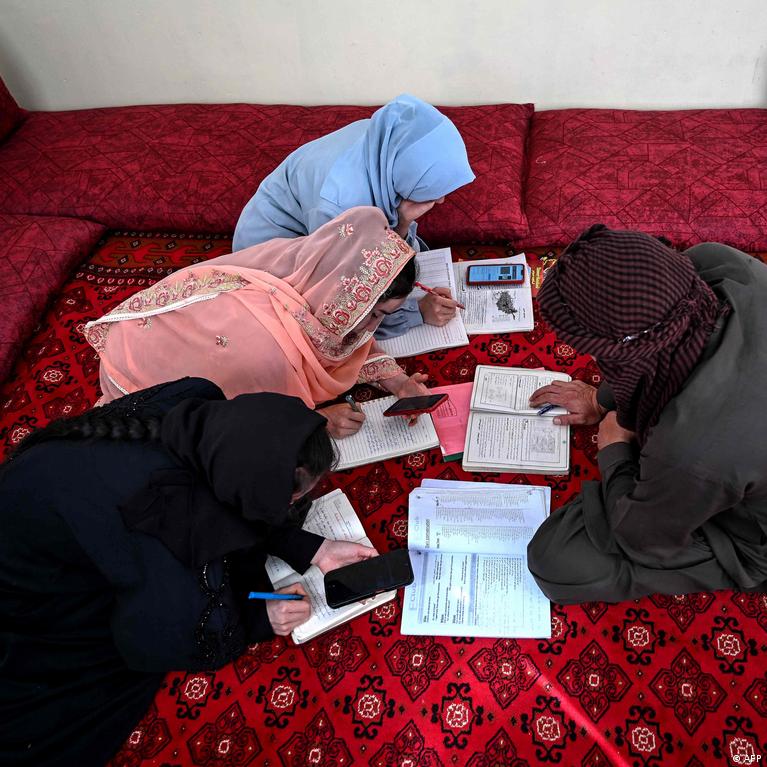
UNESCO announced on Tuesday that approximately 2.4 million girls in Afghanistan are currently denied access to secondary education under the Taliban government, a figure that has grown by roughly 200,000 since the previous year's count and could climb toward four million by 2030 if current policies continue.
Afghanistan is described by UNESCO as the only country in the world where girls and women are formally prohibited from attending secondary schools and universities. The UN has characterised the broader system of restrictions on women as 'gender apartheid.'
Secondary schools were closed to girls in March 2022, several months after the Taliban returned to power in August 2021 following the withdrawal of US and NATO forces after two decades of military presence. Women were subsequently barred from universities in December of the same year. The Taliban described both measures as temporary at the time, but they remain in force.
The Taliban administration has rejected international calls — including, according to Al Jazeera, from several Muslim-majority governments — to reverse the bans, characterising the policies as an internal matter. The authorities have stated that their approach reflects their interpretation of Islamic law and Afghan culture.
UNESCO program coordinator for education in emergencies Hoda Jaberian said, according to Deutsche Welle, that 'five years is not a temporary interruption in a child's education,' adding that it amounts to 'almost an entire secondary school cycle.' She noted that Afghanistan had made major progress in expanding girls' access to education before 2021, with nearly one million girls enrolled in secondary education by that year, progress she said has been 'completely reversed.'
The Taliban's ban on women teaching boys has, according to both sources, removed qualified staff from the broader education system and left some male students with untrained teachers or none at all. UNESCO projects a shortfall of more than 11,000 qualified female teachers in Afghanistan by 2030.
UNESCO estimates that excluding women from secondary and higher education could push around 600,000 women out of the workforce by 2066, cause cumulative income losses of 9.6 billion US dollars, and increase the risk of early marriage, according to Deutsche Welle.
Afghanistan's wider education system faces significant additional pressures. More than two million primary school children are out of class, ninety percent of ten-year-olds cannot read a simple text, and the national literacy rate stands at 37 percent. Nearly half of all schools lack water, sanitation, or heating, and approximately 1,000 schools have been forced to close since 2021 due to natural disasters including earthquakes and floods.
Deutsche Welle additionally reports that three million people returned to Afghanistan in 2025 alone, either voluntarily or under compulsion, with more than seven million having returned or been forced back since 2023, adding further strain to the education system. UNESCO continues to support community-based education, literacy programmes, and skills initiatives, often conducted in community spaces or facilitators' homes, according to Deutsche Welle.
Where sources differ
- Deutsche Welle states the projected 2030 figure could reach 'nearly four million,' while Al Jazeera describes it as 'could approach four million.' The figures are not numerically contradictory but are characterised with slightly different language.
- Neither source provides a direct response or comment from Taliban officials to UNESCO's specific Tuesday announcement.
- The sources do not detail what diplomatic or enforcement mechanisms, if any, are being pursued to reverse the bans.
- Russia is noted by Deutsche Welle as the only country to formally recognise the Taliban administration, but neither source elaborates on whether this recognition has any bearing on the education restrictions.
- Neither source specifies how UNESCO's community-based education programmes are monitored or how many students they currently reach.
- The sources do not clarify the methodology used by UNESCO to arrive at the 2.4 million figure or how the annual count is conducted.
- Deutsche Welle — original — by Patrick Große
- Al Jazeera English
Read the original at Deutsche Welle