U.S. President Donald Trump signed an executive order on August 27, 2026, directing that Lake Ontario be renamed 'Lake America' for all U.S. federal maps, documents, and communications, escalating an ongoing dispute with Canada that has already produced tariffs on tens of billions of dollars in cross-border trade. The order requires the U.S. Board on Geographic Names to update its databases to reflect the new name. Canadian Prime Minister Mark Carney and New York Governor Kathy Hochul both announced within hours that they would not adopt the change.
Trump Signs Executive Order Renaming Lake Ontario 'Lake America,' Drawing Rejection From Canada and New York
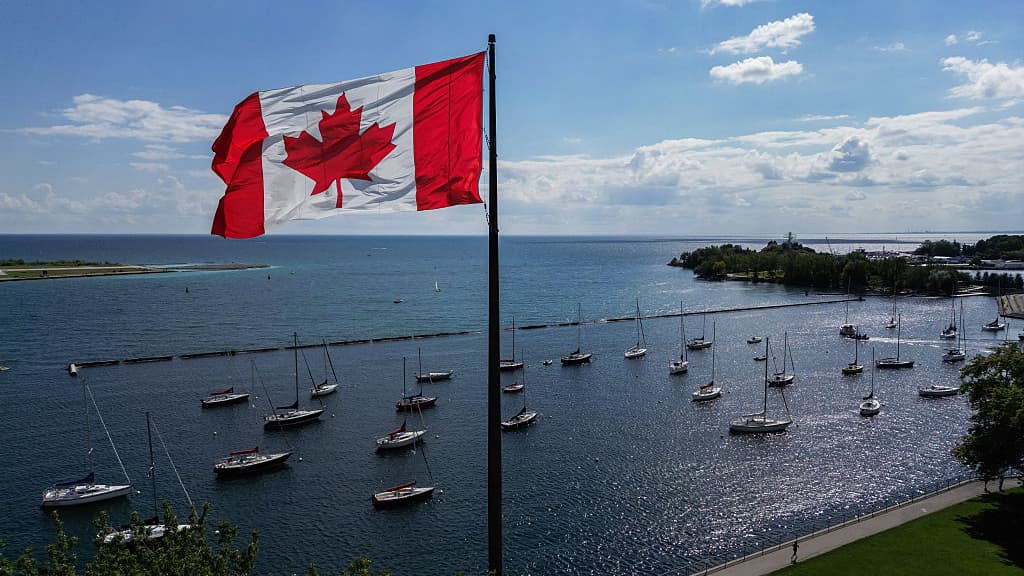
U.S. President Donald Trump signed an executive order on August 27, 2026, directing that Lake Ontario be renamed 'Lake America' for all U.S. federal maps, documents, and communications, escalating an ongoing dispute with Canada that has already produced tariffs on tens of billions of dollars in cross-border trade. The order requires the U.S. Board on Geographic Names to update its databases to reflect the new name. Canadian Prime Minister Mark Carney and New York Governor Kathy Hochul both announced within hours that they would not adopt the change.
Trump announced the decision to reporters in the Oval Office, saying, 'We're going to be changing the name of Lake Ontario effective immediately to Lake America. The lake change, the Lake of America, was something I've been thinking about for a long time, actually,' according to the Jerusalem Post. U.S. Secretary of the Interior Doug Burgum and U.S. Trade Representative Jamieson Greer were also present at the signing, according to that outlet.
Lake Ontario, one of the five Great Lakes of North America, has carried its current name for more than 400 years. According to the Jerusalem Post, approximately 52 percent of the lake's surface area lies within Canada, with the remainder in New York State under a 1909 treaty.
The name 'Ontario' originates from the Wendat language and means 'the lake is beautiful, great,' according to the Jerusalem Post. Grand Chief Pierre Picard of the Wendat Nation in Quebec condemned the renaming, saying, 'President Trump is trying to erase our history. Outraged, appalled, shocked: there are no other words to express how I feel following President Trump's decision to rename Lake Ontario "Lake America."'
Canadian Prime Minister Mark Carney responded on X/Twitter, saying the lake's name predates both Canada and the United States as nations. 'We know that America is changing. Their trading relationships, their foreign policies, their national monuments, their hydronyms. Canadians also know that naming reality means calling it Lake Ontario – then, now and always,' Carney said, according to the Jerusalem Post. The Time article characterised Carney's position as stating Canada will retain the original name 'today and forever.'
Phil Scott, the Republican governor of Vermont, which borders both Canada and New York State, called Trump's decision 'petty and disappointing' on X, according to the Jerusalem Post.
Trump also suggested on the same day that he might seek to rename one or both oceans. 'We have a gulf and we have a lake, now all we need is an ocean, so maybe we'll have to change the name of the Atlantic and or the Pacific. Maybe we'll change them both,' he told reporters, according to the Jerusalem Post. The Time article similarly noted that Trump mused about renaming the Atlantic or Pacific Ocean.
The renaming follows a pattern established early in Trump's second term. In January 2025, Trump ordered the Gulf of Mexico renamed the Gulf of America. According to the Jerusalem Post, it took approximately two weeks for the U.S. Board on Geographic Names to update the official federal nomenclature following that earlier order. Trump has also sought to attach his name to Washington buildings, a planned class of Navy warships, a visa program for wealthy foreigners, a government-run prescription drug website, and federal savings accounts for children, according to the same outlet.
According to the Jerusalem Post, trade talks between the U.S. and Canada collapsed the previous week, with each side blaming the other for derailing three days of intensive negotiations. Carney has said talks faltered over issues including U.S. negotiators proposing changes that put Canada's French-language rules at risk, the scope of tariff relief for medium- or heavy-duty trucks, and demands to curtail Canada's ability to forge new trade deals. U.S. officials rejected that characterisation, saying Carney's decision to reject the deal was a political choice, according to the same outlet.
The Time article describes the conventional process for naming geographical features along the U.S.-Canada border as involving a formal proposal brought to both the U.S. Board on Geographic Names and the Geographical Names Board of Canada, along with state and provincial counterparts, followed by extensive consultation before any change is made. The article argues Trump bypassed this process entirely.
According to the Jerusalem Post, a Reuters/Ipsos poll conducted in May showed 72 percent of Americans held a favorable view of Canada, a higher share than any other country surveyed, including Germany and Mexico, and approximately twice Trump's own approval rating at the time of the signing.
- No response or comment from the U.S. Board on Geographic Names about when or how it will implement the Lake Ontario order is included in either source.
- Neither source establishes whether any U.S. state other than New York has indicated whether it will comply with or reject the new federal name.
- Neither source reports whether Congress has any role in or response to the executive order.
- The sources do not establish what, if any, legal challenges to the order have been filed or are anticipated.
- Neither source details the precise legal authority cited in the executive order for the renaming.
- The full text or official wording of the executive order itself is not reproduced in either source.
- Neither source clarifies whether international cartographic bodies or major private mapping companies have announced any response to the order.
- The sources do not establish what share of Canadians specifically view the renaming as provocative beyond a general characterisation in the Jerusalem Post.
- TIME — original — by Reuben Rose-Redwood and Derek Alderman
- The Jerusalem Post — by REUTERS