President Donald Trump said in a Truth Social post on Thursday, Oct. 8, 2026, that the United States will not attack Iran before the Nov. 3 midterm elections, stating that Washington is holding "productive discussions" with Tehran, that the US blockade of the Strait of Hormuz will remain "in full force and effect," and that Iran will not obtain a nuclear weapon. The announcement came after The Atlantic reported on Wednesday, citing two administration officials, that the White House had asked the Pentagon to prepare options for strikes on Iran that could occur before the vote. Iranian Foreign Minister Abbas Araghchi said Thursday that Tehran expected to deliver a formal reply to a US counterproposal within days, according to Arab News.
Trump says US will not attack Iran before Nov. 3 midterm elections
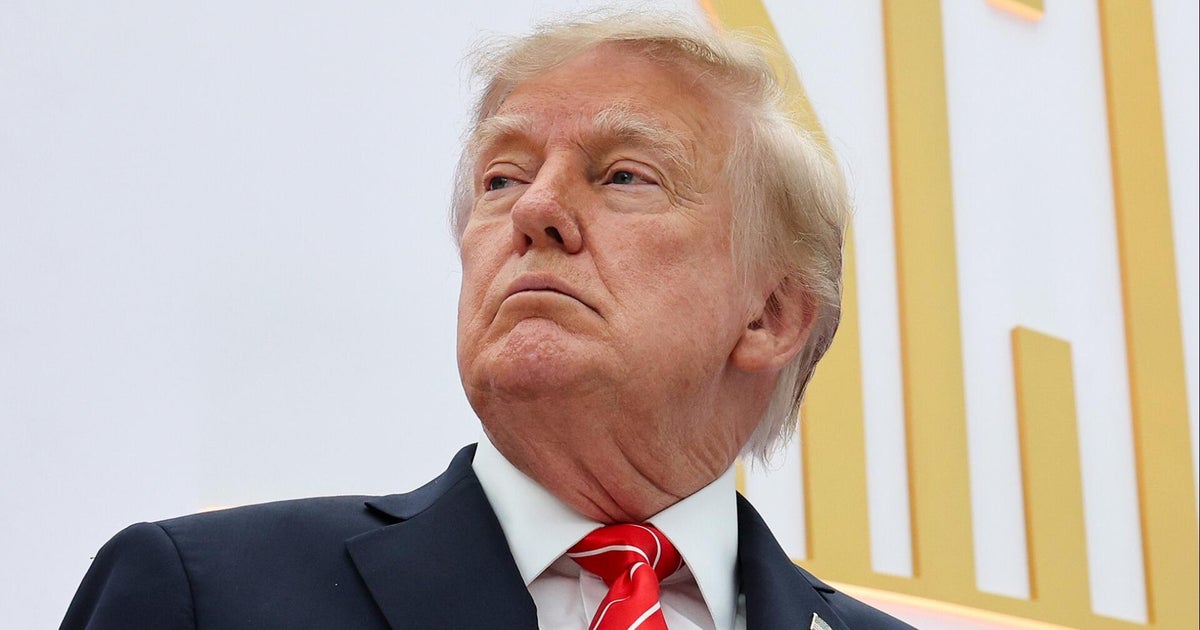
President Donald Trump said in a Truth Social post on Thursday, Oct. 8, 2026, that the United States will not attack Iran before the Nov. 3 midterm elections, stating that Washington is holding "productive discussions" with Tehran, that the US blockade of the Strait of Hormuz will remain "in full force and effect," and that Iran will not obtain a nuclear weapon. The announcement came after The Atlantic reported on Wednesday, citing two administration officials, that the White House had asked the Pentagon to prepare options for strikes on Iran that could occur before the vote. Iranian Foreign Minister Abbas Araghchi said Thursday that Tehran expected to deliver a formal reply to a US counterproposal within days, according to Arab News.
In the post, Trump said Iran was "in very bad condition, both Economically and Militarily" and claimed oil was moving through the Strait of Hormuz in record volumes, citing "22 Million Barrels, last night alone," with no barrel coming from or going to Iran, according to The Guardian US and the New York Post. The Guardian said the figure could not be independently verified. Trump's post did not state what the US would do after Nov. 3, The Guardian reported.
According to The Atlantic's report as described by The Jerusalem Post, US Central Command was developing the strike options; the potential targets, the scope of an operation and whether Trump would authorise military action remained under discussion. Administration officials linked the planning to Trump's desire to show progress in the conflict and to address high gasoline prices before the vote, the magazine reported. The Pentagon also presented options for operations after the elections, ranging from limited strikes to a broader campaign that could include further strikes on Iran's energy industry, and some presidential advisers favoured waiting until after the vote amid concern that renewed fighting, particularly if American troops were killed, could hurt Republican candidates. A White House official told the magazine that Trump "has all options available at any time" but did not answer questions about the timing of potential strikes. The Jerusalem Post separately reported on Oct. 2, citing The Washington Post, that the Pentagon was considering increasing its naval presence in the Middle East and put the existing US deployment at roughly 50,000 troops.
Trump's public position on the election and the war has shifted over the past month, according to The Guardian. On Sept. 2, as the US exchanged fire with Iran for the first time in weeks, he told reporters he was "not affected by the election." A week later, before a Republican gathering in Dallas, he said he expected the war to end almost as soon as voting was over and accused Tehran of holding out in the hope that a change of power in Congress would free it to pursue a nuclear weapon; he also conceded US oil prices were unlikely to fall before polling day. Arab News reported that Trump, while campaigning for Republicans, hinted an endgame could come in the days before or after the election while also indicating he remained open to resuming full-scale military operations, in a war Arab News described as seven months old despite initial promises of a campaign lasting weeks. The New York Post reported that Trump said on Tuesday: "Their leaders are gone, their second group of leaders are gone, and the biggest problem I have is nobody knows who the hell is running the country."
Negotiations had appeared at a standstill since Trump publicly rejected Iran's proposal late last month to reopen the Strait of Hormuz within seven days if the US met certain conditions, Arab News reported; Iran said last week it had received a US counterproposal. The Guardian reported the US first imposed a blockade on the strait in April after talks in Islamabad collapsed, reinstated it in July after a short-lived June deal, and that fighting flared again in early September when US forces struck rocket launchers on Iran's Larak Island and Tehran responded with missiles aimed at American bases in Jordan and the United Arab Emirates. The Jerusalem Post reported that Washington and Tehran were continuing to communicate through intermediaries, with disagreements remaining over a ceasefire, the blockade and reopening the strait.
In a Reuters interview published by The Jerusalem Post on Wednesday, Vice President JD Vance said any agreement would require concrete reductions in Iran's enrichment capacity, and that Washington was uncertain how decisions were being made within Iran's leadership and how much authority its negotiating counterparts held. A senior Iranian official told Reuters on Wednesday that Washington's nuclear demands conflicted with Tehran's position and that recognition of Iran's right to enrichment remained a red line, according to The Jerusalem Post.
Arab News reported that the US military has dispatched more resources to the region, with US officials saying a third aircraft carrier, the USS Theodore Roosevelt, and thousands of troops aboard it and accompanying ships could arrive as early as the end of October. The USS Abraham Lincoln was due to arrive at its home port in San Diego the same day as Trump's announcement after a record-long deployment in support of the Iran war, with reports of crew stress, poor mental health and shortages of food and hygiene products; the USS George Washington relieved the Lincoln in August, and the USS George H.W. Bush, deployed for about six months, had pulled into Phuket, Thailand, for a port visit several days earlier.
Oil markets and Hormuz traffic were described differently across the sources. The New York Post reported that Brent crude jumped to $105 a barrel on Wednesday after the Atlantic report and fell to about $103 after Trump's post, and that US gas prices were hovering around $4.36 nationally according to the latest AAA data. Al Jazeera reported that Brent futures rose $2.28, or 2.28 percent, to $102.28 a barrel by 04:27 GMT on Thursday, while US West Texas Intermediate gained $1.66, or 1.88 percent, to $89.94. Al Jazeera, citing Kpler shipping data, reported that at least 16.5 million barrels left the region last month, matching the pre-war average when Iran, which is under a US naval blockade, is excluded, with about 40 percent exported via Saudi Arabia's East-West pipeline or through ship-to-ship transfers by smaller boats; detectable vessels passing through the strait fell to seven in the previous week, the lowest since July 23. The outlet also reported that the UK Maritime Trade Operations office reported several casualties on Wednesday night after multiple projectiles struck a vessel off Qatar's northern coast, and that the Financial Times reported tanker captains can command base salaries of up to $100,000 plus a $50,000 per-trip bonus, with crews earning four to six times normal salaries, while The Wall Street Journal reported shipping companies spending $30m to $40m per round trip.
Separately, the Los Angeles Times reported that Trump told a rally crowd in Texas on Wednesday night he would not allow Iran to attack San Diego or Los Angeles, two days after remarks in Nebraska in which he said "They can take out a city, let them take out Los Angeles, let them take out San Diego. This is a very small price to pay." White House communications director Steven Cheung said Tuesday that media reaction to the earlier comments was "not rooted in reality" and that Trump was stating US cities would have been threatened if a nuclear Iran had not been stopped. California Governor Gavin Newsom opened the state emergency operations center on Tuesday to assess potential threats, and San Diego Mayor Todd Gloria and Los Angeles Mayor Karen Bass condemned the president, according to the LA Times.
The New York Post reported that some Republican candidates in key races, including Senate races in Maine and Michigan, have distanced themselves from Trump's decision to go to war in Iran, and that Energy Secretary Chris Wright told CBS News' "Face the Nation" on Sunday: "Diesel prices have been going down. Gasoline prices have been going down. I expect that to continue."
Where sources differ
- War duration: The Guardian describes the conflict as lasting almost eight months, while Arab News calls it a seven-month-old war.
- Oil prices: The New York Post reports Brent at $105 a barrel on Wednesday after the Atlantic report and about $103 after Trump's post; Al Jazeera reports Brent up 2.28 percent to $102.28 a barrel at 04:27 GMT on Thursday and WTI at $89.94, a different snapshot of the market.
- Strait of Hormuz volumes: Trump claimed 22 million barrels moved through the strait the previous night in record volumes, a figure The Guardian said could not be independently verified; Al Jazeera, citing Kpler data, reported at least 16.5 million barrels left the region last month, matching the pre-war average excluding Iran, with about 40 percent moving by pipeline or ship-to-ship transfers.
- Status of talks: Trump described "productive discussions" with Iran, while Arab News reported negotiations had appeared at a standstill since Trump rejected Iran's proposal late last month.
- Trump's post did not say what the US would do after Nov. 3, 2026, and no source establishes whether strikes will resume after the election.
- No source establishes whether Trump has made a final decision on authorising military action; The Atlantic's reporting on strike options rests on two unnamed administration officials.
- No on-the-record confirmation from the Pentagon or US Central Command appears in any source regarding the reported strike planning or the reported naval buildup.
- Trump's claim of 22 million barrels moving through the Strait of Hormuz in a single night is not independently verified in any source.
- The content of Iran's forthcoming formal reply and whether negotiations will resume are not established.
- Casualty numbers and the identity or flag of the vessel struck off Qatar's northern coast are not established.
- Whether gasoline prices will fall before election day, as the Energy Secretary expects, is not established.
- No source establishes the precise timeline for the arrival of the USS Theodore Roosevelt beyond US officials' statement that it could arrive as early as the end of October.
- No source contains comment from the government of Israel, from Saudi Arabia or other Gulf states, or from the US Congress on the announcement.
- CBS News — original
- The Guardian US — by Joseph Gedeon in Washington
- Arab News — by AP
- New York Post — by Ryan King
- Al Jazeera English — by Edna Mohamed
- LA Times — by Ana Ceballos
- The Jerusalem Post — by JERUSALEM POST STAFF