A total solar eclipse tracked across parts of northern Russia, Greenland, Iceland and northern Spain on Wednesday, August 12, 2026, marking the first total solar eclipse visible from mainland Western Europe since 1999. Totality reached Iceland's westernmost coast at approximately 5:44 p.m. local time, lasting up to 2 minutes and 13 seconds, before the moon's shadow crossed the North Atlantic and arrived over northwestern Spain around 8:28–8:32 p.m. local time, just as the sun was approaching the horizon.
Total solar eclipse crosses Iceland and northern Spain in Western Europe's first totality since 1999
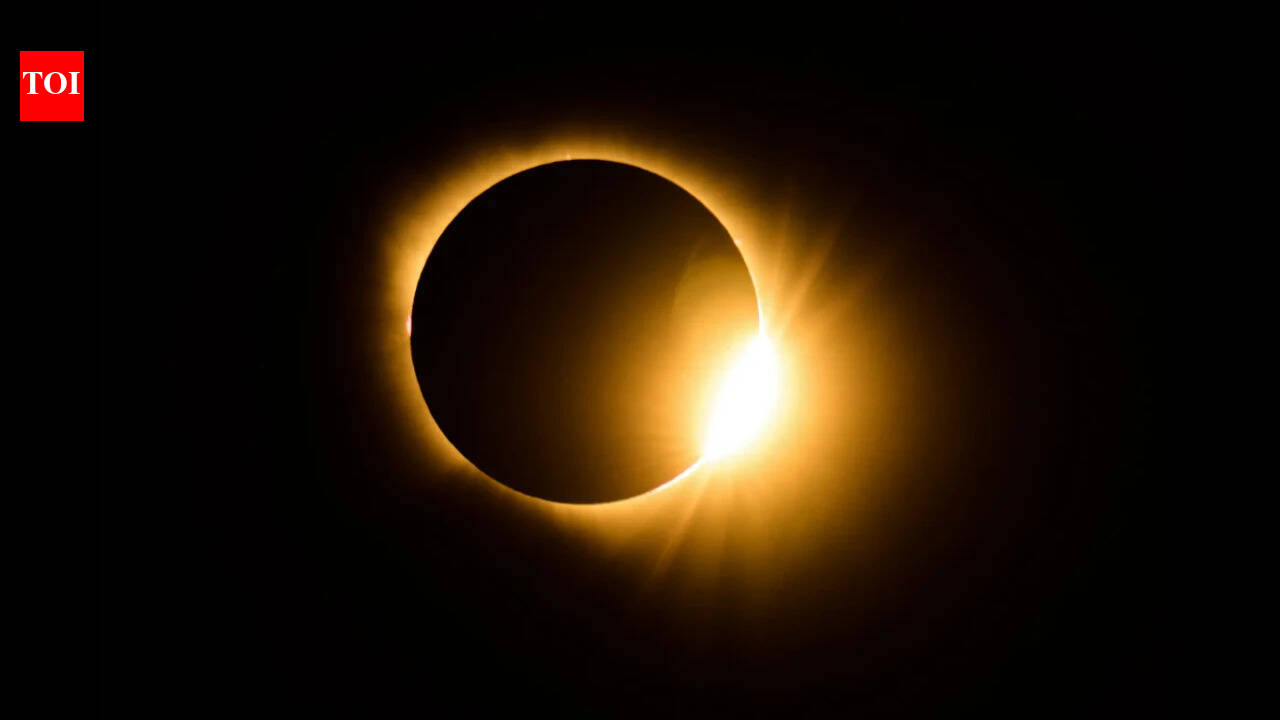
A total solar eclipse tracked across parts of northern Russia, Greenland, Iceland and northern Spain on Wednesday, August 12, 2026, marking the first total solar eclipse visible from mainland Western Europe since 1999. Totality reached Iceland's westernmost coast at approximately 5:44 p.m. local time, lasting up to 2 minutes and 13 seconds, before the moon's shadow crossed the North Atlantic and arrived over northwestern Spain around 8:28–8:32 p.m. local time, just as the sun was approaching the horizon.
The eclipse followed a path from extreme northern Russia through northeastern Greenland, western Iceland and across northern Spain, including the Balearic Islands. According to CBS News, the full path of totality lasted approximately one hour and 45 minutes from start to finish.
Outside the narrow band of totality, hundreds of millions of people experienced a partial eclipse. According to CBS News, around 230 million people were able to see at least 90 percent totality, based on population data from the Center for International Earth Science Information Network at Columbia University. In Britain, more than 90 percent of the sun was obscured, according to the Times of India, with spectators gathering at Greenwich Park in London and other open viewpoints. Observers also watched from St Petersburg along the Gulf of Finland and from Tempelhof and near the Molecule Man sculpture in Berlin.
In Iceland, cloud cover obscured the sun over central Reykjavik, though the drop in light during totality was still apparent to those gathered near Hallgrímskirkja. A break in clouds in the far west of the country gave some observers a clearer view. According to the Jerusalem Post and the Times of India, totality on Iceland's westernmost coast lasted up to 2 minutes and 13 seconds. The maximum duration of totality, about 2 minutes 18 seconds, occurred offshore west of Iceland, according to the Times of India. Iceland's population of roughly 400,000 was joined by up to 80,000 visitors, according to the Jerusalem Post, and protective glasses had sold out for days before the event.
In Spain, totality arrived near sunset, creating a sequence in which the sun disappeared completely, briefly returned, and then continued sinking toward the horizon. Totality lasted barely a minute in locations such as Buitrago de Lozoya, north of Madrid, where observers witnessed Baily's beads — separate points of sunlight along the moon's edge — just after 8:30 p.m. Crowds in Medinaceli, a Roman-era hilltop town, had gathered well before the eclipse arrived. Spectators in Segovia were given access to the bell tower of the Cathedral of the Assumption of the Virgin and San Frutos, a 16th-century structure, according to France 24, where a small group climbed 190 steps to a height of approximately 90 metres to observe the 59 seconds of totality. Spain deployed 25,000 police officers to eclipse observation sites and nearly 100 planes and helicopters, according to the Jerusalem Post, and authorities had anticipated up to 6 million visitors in mostly rural areas along the path.
Regarding Spain's eclipse history, sources differ on the last comparable event. The Times of India reported that a hybrid eclipse produced only a few seconds of totality in 1912 and that some astronomers regard 1905 as Spain's last full-scale total solar eclipse. CBS News stated that Spain had not experienced a total solar eclipse since 1905. The Jerusalem Post reported that the Iberian Peninsula last witnessed a total solar eclipse in 1912. These differing characterisations are noted below under disagreements.
Brian May, former guitarist of the rock band Queen, traveled to an observatory in Spain's Teruel province to observe the event, according to the Jerusalem Post, and documented the experience on his Instagram page. Eclipse-chasers also arrived from abroad; France 24 reported on two Swedish siblings who traveled from Malmö to Segovia specifically for the event, having passed through the Sierra de Guadarrama mountain range from Madrid.
Authorities managed wildfire risks during the eclipse, which fell in one of Spain's highest-risk periods for such fires, according to the Jerusalem Post. Emergency crews were responding to multiple fires on Wednesday, including a large one in Andalucia. A vehicle fire near an eclipse viewing point in Peñíscola, in the Valencia region, spread to 33 more vehicles before being brought under control by firefighters using aircraft, according to the Jerusalem Post. As of late Wednesday, no wildfire incident had been linked to eclipse-chasers, that source reported.
The eclipse marked the beginning of an unusually compressed sequence for Spain. According to both the Times of India and the Jerusalem Post, another total solar eclipse is due on August 2, 2027, followed by an annular eclipse on January 26, 2028 — a grouping the Jerusalem Post referred to as the 'Iberian Eclipse Trio.' According to CBS News, the next total solar eclipse visible over the United States will not occur until 2044.
Where sources differ
- Spain's last total solar eclipse before 2026: CBS News states Spain had not seen one since 1905. The Jerusalem Post says the Iberian Peninsula last witnessed one in 1912. The Times of India reports both dates, noting that a hybrid eclipse produced only a few seconds of totality in 1912, leading some astronomers to regard 1905 as the last full-scale total event.
- Timing of totality in Reykjavik: CBS News states totality in Reykjavik was at exactly 5:48 p.m. local time, while the Times of India and Jerusalem Post place totality reaching Iceland's westernmost coast at about 5:44 p.m. local time — a figure consistent with the coast rather than the capital, suggesting the outlets may be describing different locations rather than directly contradicting each other, but the precise time given for the capital differs.
- Duration of the eclipse path: CBS News states the path of totality lasted about one hour and 45 minutes in total, while other sources do not specify an overall duration for the path.
- The precise number of people who actually attended eclipse events across Spain and Iceland was not established by any source — figures cited (up to 6 million for Spain, up to 80,000 visitors for Iceland) were expectations or estimates.
- No source provides official comment or assessment from Spanish meteorological or astronomical authorities on the overall success of the viewing conditions across the country.
- The sources do not establish the total audience for broadcast or online coverage of the eclipse.
- The exact cause and full circumstances of the vehicle fire in Peñíscola, and whether any injuries occurred, are not established beyond initial local authority statements.
- No source provides Iceland's government or tourism authority response to the event or any assessment of the experience for visitors who were clouded out in Reykjavik.
- The sources do not clarify whether the 2026 eclipse is formally classified as the first total solar eclipse over mainland Spain since 1905 or since 1912, as scientific and media sources are inconsistent on this point.
- France 24 — original — by Pauline ROUQUETTE
- The Times of India — by TOI World Desk
- The Jerusalem Post — by REUTERS
- CBS News — by Mark Osborne
Read the original at France 24