Year 6 pupils at English state primary schools with a higher proportion of free school meal recipients are less likely to leave able to swim 25 metres, according to data obtained by the BBC through a Freedom of Information request to the Department for Education. While 72% of Year 6 children on average met that benchmark in 2024-25, the figure fell to 55% at schools with the highest proportions of disadvantaged pupils.
Disadvantaged pupils less likely to meet swimming targets by end of primary school, BBC data shows
Year 6 pupils at English state primary schools with a higher proportion of free school meal recipients are less likely to leave able to swim 25 metres, according to data obtained by the BBC through a Freedom of Information request to the Department for Education. While 72% of Year 6 children on average met that benchmark in 2024-25, the figure fell to 55% at schools with the highest proportions of disadvantaged pupils.
The national curriculum in England requires that all pupils leaving Year 6 be able to swim at least 25 metres, use a range of strokes, and perform safe self-rescue in different water-based situations. A safe self-rescue includes treading water for 30 seconds, floating on the back for 60 seconds, and swimming 15 metres to exit the water unaided.
The FOI data, which covered state schools excluding special schools, showed that school performance ranged from no pupils meeting the 25-metre target to schools where all pupils met it. Only 38 schools in the highest category for disadvantaged pupils met the swimming target, compared with nearly 400 schools with the lowest proportion of free school meal recipients.
Nationally, 70% of 2024-25 Year 6 leavers could on average perform a safe self-rescue, but only half of children from schools with the highest level of free meal eligibility could do so, according to the data.
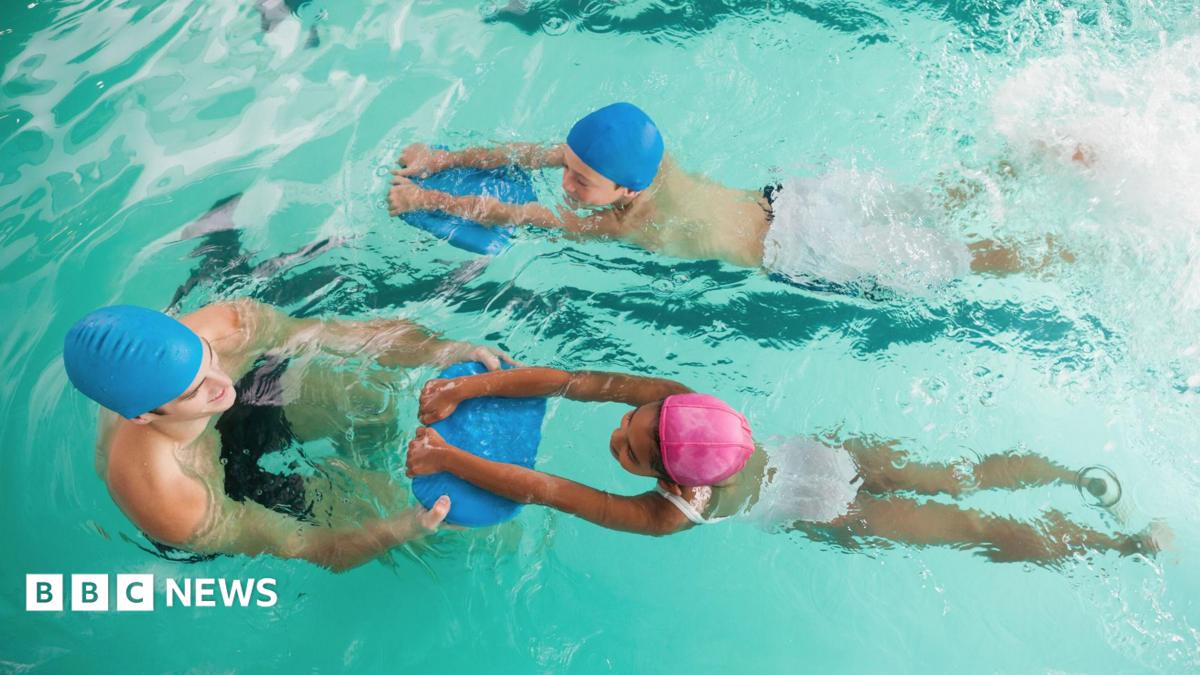
Most school groups receive six weeks of 30-minute sessions — three hours in total — to learn basic swimming skills.
Ashley Jones, head of water safety and education at the Royal Life Saving Society (RLSS), said accessibility was a limiting factor in children's swimming education, citing the availability of public leisure facilities, transport costs, and the cost of pool access. The RLSS said it would like to see a fully funded learn-to-swim programme supported by water safety education and applied in an outdoor environment.
Hampshire-based swimming teacher Bethany Harris said three hours of lessons was insufficient to take a child from being a nervous swimmer to confidently completing 25 metres. She said swimming lessons should begin earlier, comparable to when children are taught to read and write. Harris noted that a 14-year-old had died after being reported missing while swimming at Hawley Lake, near where she lives.
The bottom fifth of local authorities for average swimming attainment were all urban areas. Only four of those 31 council areas were coastal, with the rest being landlocked. Fewer children in urban areas overall could swim 25 metres proficiently than in rural areas.
A Department for Education spokesperson said the government was aware of the gap and that a new PE Partnership Network, bringing together schools, local clubs, and national bodies including Swim England, would provide targeted support to disadvantaged areas and pupils. Swim England said schools serving disadvantaged communities had faced pressures including competing curriculum demands, rising transport costs, and limited access to pools.
In 2021, Swim England published a report warning that almost 2,000 swimming pools could be lost by 2030.
- The source does not establish a causal link between free school meal eligibility and lower swimming attainment, only a correlation.
- The source does not define the precise threshold used to categorise schools as having a 'higher' or 'highest' proportion of disadvantaged pupils.
- The source does not state how many total schools were included in the FOI dataset.
- The source does not provide data on swimming attainment trends over time beyond the 2024-25 figure.
- The source does not specify what actions, if any, have already been taken by the PE Partnership Network or when it will be operational.
- The source does not establish whether the low-cost summer swimming schemes mentioned by Harris ever existed nationally or only locally.
- The source does not provide data on drowning rates or water-related fatalities broken down by school or socioeconomic group.
- The source does not detail the methodology used by schools to assess whether pupils met the national curriculum swimming targets.