Scientists are exploring engineered versions of spider-silk proteins, known as spidroins, as experimental materials for controlled drug delivery and tissue scaffolding, according to a review published in the journal Biomimetics by MDPI under the title 'Review of Spider Silk Applications in Biomedical and Tissue Engineering.'
Researchers investigate synthetic spider-silk proteins for drug delivery and tissue repair
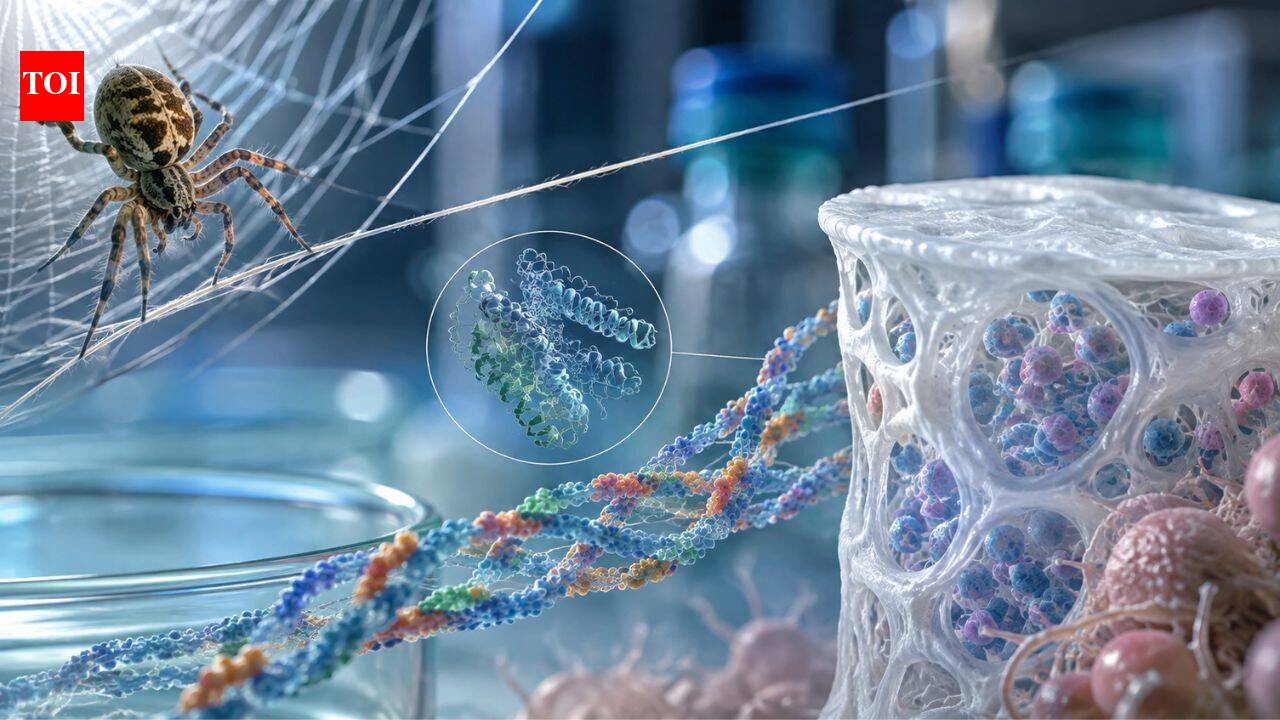
Scientists are exploring engineered versions of spider-silk proteins, known as spidroins, as experimental materials for controlled drug delivery and tissue scaffolding, according to a review published in the journal Biomimetics by MDPI under the title 'Review of Spider Silk Applications in Biomedical and Tissue Engineering.'
Spider silk is produced not as a single uniform fibre but as several structurally distinct types, each suited to a different mechanical role. In orb-weaver spiders, rigid framework threads, radial support lines, and a flexible, adhesive capture spiral all serve separate functions. Silk is also used to secure the spider itself, wrap prey, and protect eggs.
The proteins underlying this versatility are called spidroins, which are large molecules with regions that can pack into relatively rigid crystalline structures alongside more flexible segments. Inside the spider's abdomen, these proteins are stored as a concentrated liquid. As the liquid travels through a specialised duct, water is removed, acidity shifts, ion balance changes, and the narrowing passage helps align the proteins until they assemble into a solid fibre — a process that occurs at ordinary temperatures and without the chemical solvents or substantial heat used in industrial fibre production.
Laboratory work has examined engineered silk particles and gels as reservoirs for releasing drugs gradually, including both small molecules and larger biological medicines such as proteins. In one experimental system, engineered silk particles released a small molecule at a relatively steady rate for roughly two weeks. Researchers also describe silk-based three-dimensional scaffolds intended to give cells a surface on which to attach, organise, and produce new tissue, with the scaffold designed to degrade as repair progresses. Biological signals can be added to the engineered silk to encourage cell attachment.
Replicating the full process that spiders use to produce silk remains difficult. A spider controls protein concentration, chemistry, fluid flow, and molecular arrangement with a precision that scientists can partly imitate but have not fully reproduced. The review notes that these approaches remain experimental and are not ready-made replacements for established drug delivery systems or routine medical treatments.
- The source does not state the authors' institutional affiliations or funding sources for the MDPI Biomimetics review.
- The source does not state whether the review was peer-reviewed or its publication date.
- The source does not identify which research groups conducted the specific experimental systems described, including the two-week drug-release result.
- The source does not state the sample sizes, controls, or full methodology of the laboratory experiments cited.
- The source does not specify which cell types or tissue types have been tested with silk scaffolds in laboratory settings.
- The source does not state what regulatory or clinical trial steps would be required before silk-based materials could enter routine medical use.
Read the original at The Times of India