Painters such as Leonardo da Vinci, Sandro Botticelli, and Rembrandt likely added egg yolk to their oil paints deliberately, according to a study published Tuesday in the journal Nature Communications, which found that even small amounts of the protein altered paint properties in significant ways.
Study finds Old Masters likely added egg yolk to oil paint intentionally
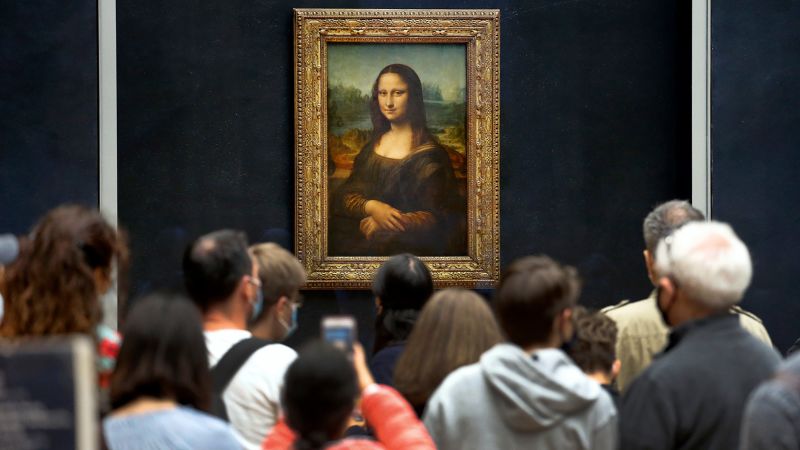
Painters such as Leonardo da Vinci, Sandro Botticelli, and Rembrandt likely added egg yolk to their oil paints deliberately, according to a study published Tuesday in the journal Nature Communications, which found that even small amounts of the protein altered paint properties in significant ways.
Trace quantities of protein residue have long been detected in historic oil paintings, but researchers had generally attributed the presence to accidental contamination from workshop environments. The new study, led by Ophélie Ranquet of the Institute of Mechanical Process Engineering and Mechanics at the Karlsruhe Institute of Technology in Germany, argues the inclusion was intentional.
Ranquet and colleagues recreated historic paint-making by combining egg yolk, distilled water, linseed oil, and pigment to produce two historically significant colors: lead white and ultramarine blue. They found that adding egg yolk slowed oxidation — because the yolk contains antioxidants — made lead white pigment more resistant to humidity by coating particles in a protein layer, and allowed painters to achieve a stiffer, high-impasto texture without increasing the quantity of pigment used.
Reducing pigment use would have carried economic significance in earlier centuries. Ranquet noted that certain pigments, including lapis lazuli — the source of ultramarine blue — were at one time more expensive than gold.
The study examined specific works, including Leonardo da Vinci's 'Madonna of the Carnation,' currently on display at the Alte Pinakothek in Munich, Germany. The painting shows visible wrinkling on the faces of Mary and the child, which Ranquet attributed to insufficient pigment in the paint and the absence of egg yolk — a deficiency the study suggests could have been corrected with the additive. The work is described as one of Leonardo's earliest paintings, created when he was learning the then-newly widespread medium of oil paint.
A second painting examined was Botticelli's 'The Lamentation Over the Dead Christ,' also at the Alte Pinakothek, which is primarily tempera but includes oil paint in the background and secondary elements. The researchers detected proteins in areas with brushwork characteristic of oil painting, and suggested that the small quantities found there may reflect deliberate addition rather than cross-contamination from the tempera portions.
- The source does not state the sample size or the total number of paintings analyzed in the study.
- The source does not identify which specific paintings attributed to Rembrandt were examined.
- The source does not state whether the study has undergone independent replication.
- The source does not specify what concentrations of egg yolk were tested or at what threshold the effects became measurable.
- The source does not state whether any of the protein traces found in the examined paintings have been definitively identified as egg yolk as opposed to other protein sources.