Rescue teams from Nepal, China, India, South Korea and Australia worked on Monday to reach workers believed trapped in hydropower project tunnels blocked by mud and rock following catastrophic flooding along the Nepal-Tibet border. Nepal's disaster management authority reported 933 workers missing from hydropower sites in the Rasuwa and Nuwakot districts, with the broader death toll and missing figures varying across sources and rising throughout the day.
Rescuers race to reach hundreds trapped in Nepal hydropower tunnels as flood death toll mounts
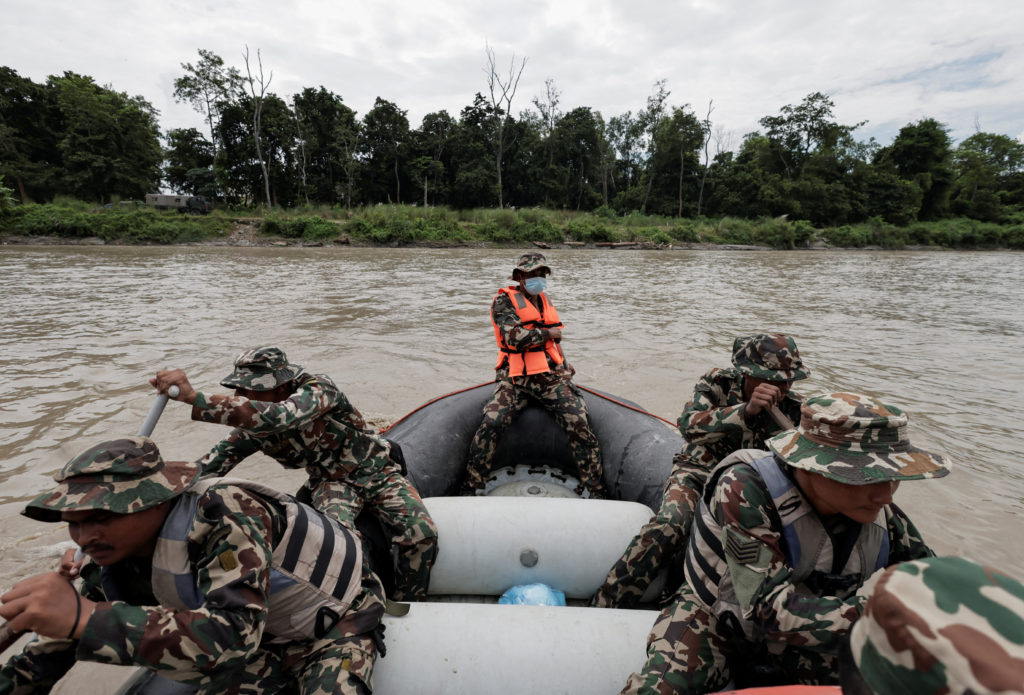
Rescue teams from Nepal, China, India, South Korea and Australia worked on Monday to reach workers believed trapped in hydropower project tunnels blocked by mud and rock following catastrophic flooding along the Nepal-Tibet border. Nepal's disaster management authority reported 933 workers missing from hydropower sites in the Rasuwa and Nuwakot districts, with the broader death toll and missing figures varying across sources and rising throughout the day.
The disaster was triggered on the preceding Wednesday by what multiple sources describe as an unprecedented surge of ice, rock, mud and debris along the Nepal-Tibet border. The Jerusalem Post and BBC attribute the event to a glacier collapse; Chinese state broadcaster CCTV, according to the Jerusalem Post, described it as caused by 'glacier instability under the long-term effects of global warming,' calling it a 'new and prominent feature of cryosphere disasters' on the Tibetan plateau.
Death toll and missing figures differ across sources and appear to reflect different reporting times. The BBC and The Guardian cite Nepal's disaster management authority as recording 939 deaths and listing 3,925 missing, with 592 of the missing being foreign nationals. NPR reports Nepal's disaster management department gave figures of 903 dead and 4,247 missing on Monday morning local time. The Guardian separately notes Nepal's disaster agency counted 903 deaths and 4,793 missing, including 592 foreigners. The Jerusalem Post, citing figures described as of Sunday night, reports Nepali authorities said 788 had died and 2,500 were missing. On the Chinese side, the Jerusalem Post and NPR report Chinese authorities recorded 16 dead and 546 missing as of Saturday, figures that had not been updated in more than 48 hours, according to NPR. The Guardian adds that Chinese state media said 261 of the missing in Tibet were foreigners, including more than 100 Nepalis.
Rescue teams used explosives to blast into hillsides, excavators to clear mud, drills, and pumps to push air into tunnels, according to the BBC and The Guardian. The BBC reported that a team entered one tunnel leading to a hydropower plant but withdrew after finding no one. Army engineers began blasting operations at the Upper Trishuli hydroelectric project to reach approximately 42 workers still thought to be missing there, after about 250 people were rescued from that site over the weekend, The Guardian reported. Nepal's Prime Minister Balendra Shah said 279 people had been rescued from the sites, according to the BBC, and told the nation that rescue efforts had been 'intensified,' with 11,379 people rescued overall.
Nepal's army spokesperson Raja Ram Basnet told Reuters, as cited by The Guardian and the Jerusalem Post, that 'a large amount of debris has been deposited and that is posing us a big challenge to open the tunnels.' Rescue mountaineer Ashish Gurung, speaking to The Guardian, described conditions inside: 'There is just mud everywhere. Inside the tunnel it was worse. It's so difficult to move, the mud is so deep.' He said at one point mud reached chest height and that around 130 metres into one tunnel 'it looked like it was just bodies,' though he noted that hydropower company maps suggested a safe area further inside where survivors might still be alive.
The BBC reported that rescuers began pumping air into a tunnel over the weekend. PBS NewsHour cited geoscientist Jakob Steiner of the University of Graz, based in Dhaka, Bangladesh, as saying the tunnels are large enough to drive trucks through and that oxygen had been supplied to some of those inside. Steiner used the same description in The Independent. Experts quoted by PBS NewsHour warned that survival chances drop sharply without clean water within 72 hours, and that six days after the floods — the timeframe referenced in the article — suffocation concerns were growing. Disaster epidemiologist Jennifer Horney of the University of Delaware told PBS NewsHour that emergency protocols and pre-stocked supplies could affect outcomes, but that mud may have blocked exits even where such plans existed. Thomas Chandler of Columbia University's National Center for Disaster Preparedness pointed to the 2023 Himalayan tunnel collapse in which 41 Indian workers survived 17 days after being provided food, water and oxygen through pipes.
Nepal's initial handling of offers of foreign assistance drew criticism. NPR reported that Bhim Gautam, chief executive of the Independent Power Producers Association of Nepal, said the country lacked 'enough technology, equipment and expertise' to conduct rescues at hydropower projects and that industry leaders had to 'pressure the government' to accept help from abroad. 'Late last week, the government approved rescue teams from China, India and Australia to come,' Gautam told NPR. 'But it is so late now.' Nepal's Finance Minister Swarnim Wagle had previously rejected reports that foreign help was refused, insisting assistance was accepted 'according to the needs on the ground,' according to NPR. Political analyst Chandradev Bhatta, speaking to NPR from Kathmandu, said the government appeared to have resisted foreign help for geopolitical reasons linked to Nepal's experience after the 2015 earthquake, when competition among China, India and Western powers for influence followed. The Nepali government did not respond to NPR's request for comment.
China's approach to information sharing also drew scrutiny. The Jerusalem Post reported that two Nepali officials told Reuters that China had not shared much information on glacier risks and water levels following a cooperation meeting earlier in the year, with officials fearing this could hamper future disaster preparedness. China's foreign ministry did not respond to a request for comment on that meeting, according to the Jerusalem Post. Separately, NPR reported China's Foreign Ministry on Monday denied that Beijing had ignored early warning signs or downplayed casualty figures, insisting its release of information had been 'transparent and timely.'
The disaster inflicted broad damage to infrastructure. The loss of hydropower capacity is estimated at 700 megawatts, approximately 10% of Nepal's total power capacity, according to The Guardian and The Independent. At least 11 or 12 hydropower projects — sources vary on the exact number — were damaged or destroyed. The Guardian and the Jerusalem Post note more than 40 bridges were destroyed, with India and China sending prefabricated truss bridges to restore access. The Red Cross estimated more than 93,000 people affected, according to The Guardian, while the Jerusalem Post cited an earlier Red Cross estimate of more than 90,000.
Experts quoted by The Independent warned that rebuilding should not simply replicate existing vulnerabilities. Steiner said authorities would need to re-examine whether future projects in high-risk zones should proceed. Ramraj Narasimhan of the Coalition for Disaster Resilient Infrastructure said the focus should be on redundancy and continuity of services. Narasimhan's organisation estimates that $124 billion worth of Nepal's infrastructure is exposed to climate-driven disasters, with average annual losses of nearly $760 million against a national disaster fund that is only a fraction of that amount. Himanshu Thakkar of the South Asia Network on Dams, Rivers and People argued for stronger risk assessments and suggested Nepal consider decentralised solar power as part of a broader energy mix.
Among notable individual cases, the BBC quoted Sita Pandey, whose husband was working at a plant when the floods struck, as saying she held 'a 50% hope that he is alive because there is an oxygen system inside.' The Guardian reported that on Monday rescuers pulled a six-year-old girl from the mud after hearing her crying. The BBC also noted that more than 30 British nationals are among the missing, and that a UK rapid deployment team arrived in Nepal on Saturday, with the UK government providing a £5 million support package. NPR reported that at least 85 Americans were listed as missing, according to the US State Department.
Where sources differ
- Death toll figures vary: The BBC and one Guardian figure cite 939 deaths; another Guardian figure and NPR cite 903; the Jerusalem Post cites 788 as of Sunday night. These appear to reflect different reporting times rather than editorial choices, but no source reconciles them explicitly.
- Missing persons totals differ: The BBC gives 3,925 missing; The Guardian gives two figures — 4,793 (with 592 foreigners) in one passage and more than 4,400 in another; NPR gives 4,247; the Jerusalem Post gives 2,500 as of Sunday night and more than 3,000 in its headline. Sources do not explain the discrepancies.
- The number of damaged hydropower projects varies: The BBC says at least 11; The Guardian says 12; the Jerusalem Post refers to 'about half a dozen' tunnels blocked.
- The number of workers missing from hydropower sites is given as 933 by NPR, the Jerusalem Post and The Guardian in one reference; The Guardian also mentions 'more than 900'; BBC says 'more than 600 workers believed to be trapped'; The Independent says 'up to 900 workers are unaccounted for.'
- Red Cross estimate of affected people: The Guardian says more than 93,000; the Jerusalem Post says more than 90,000.
- The precise cause and exact location of the initial ice-and-rock release have not been independently verified across all sources; most rely on Chinese state media or official characterisations.
- The total number of workers confirmed dead inside or near the hydropower tunnels is not established by any source.
- It is unclear how many of the 933 workers listed as missing from hydropower sites are believed to be in tunnels versus unaccounted for by other means.
- The condition of any survivors inside the tunnels — whether injured, and whether they have access to food or water — is not confirmed.
- No source establishes whether emergency supply protocols or pre-stocked provisions existed in the blocked tunnels.
- The meeting between Chinese and Nepali officials earlier in 2026 to strengthen cooperation on glacier and flood data sharing has not been independently verified, and China did not respond to requests for comment on it.
- The Nepali government did not respond to NPR's request for comment, leaving its full rationale for the initial approach to foreign assistance unrepresented beyond the Finance Minister's brief rebuttal.
- The fate of the more than 30 British nationals and at least 85 Americans listed as missing is not established.
- Chinese casualty figures had not been updated for more than 48 hours at time of reporting; no source explains why.
- Long-term plans for rebuilding hydropower infrastructure, and whether any projects will be relocated or cancelled, have not been decided or announced.
- PBS NewsHour — original — by Adithi Ramakrishnan, Associated Press
- BBC World — by Jake Lapham
- The Guardian — by Cait Kelly in Kathmandu and William Christou
- NPR News — by Omkar Khandekar
- The Independent — by Victoria Milko and Sibi Arasu
- The Jerusalem Post — by REUTERS
Read the original at PBS NewsHour