A study published in Biology Letters has found that the behaviour in which male redback spiders flip their abdomens into a female's jaws during copulation — a act that frequently results in the male being eaten — appears to be linked to a specific location on the spider's X chromosome, according to German researchers who cross-bred redbacks with the closely related New Zealand katipō.
Study links redback spider's mating somersault to single X chromosome location
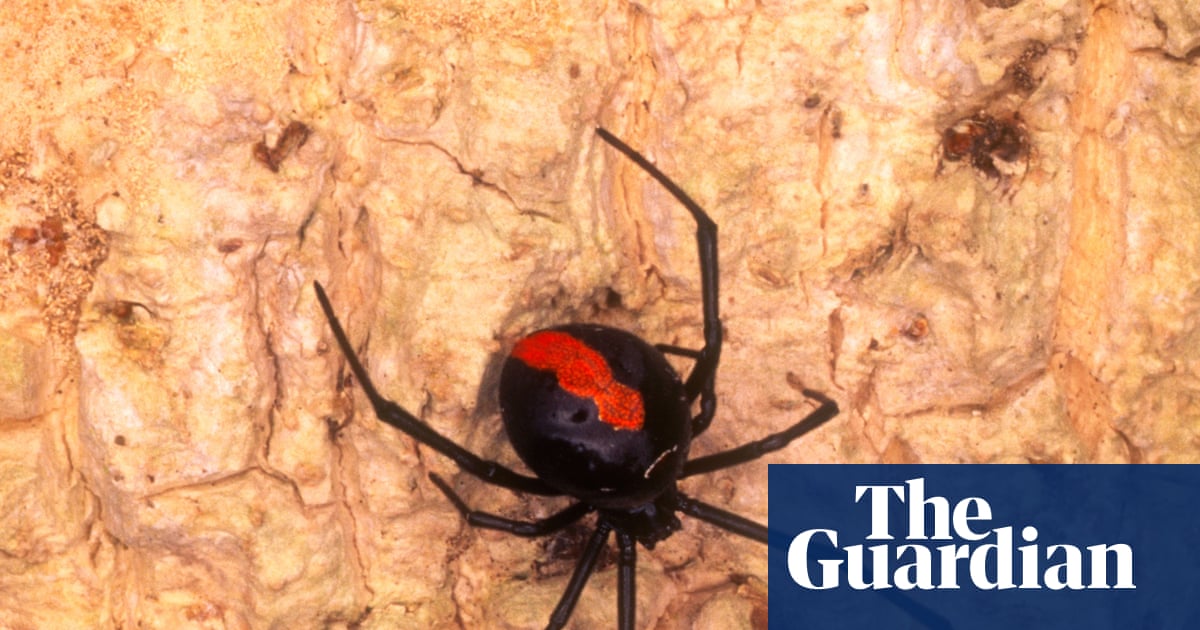
A study published in Biology Letters has found that the behaviour in which male redback spiders flip their abdomens into a female's jaws during copulation — a act that frequently results in the male being eaten — appears to be linked to a specific location on the spider's X chromosome, according to German researchers who cross-bred redbacks with the closely related New Zealand katipō.
The redback, also known as the Australian black widow, is one of two widow spider species in which males typically mate with only a single female. During mating, the male uses two arm-like appendages called pedipalps to transfer sperm to the larger female's two sperm storage organs, while also somersaulting into her jaws. The behaviour is thought to be connected to maximising reproductive success, though it risks the male being consumed before sperm transfer to the second storage organ is complete.
The katipō does not engage in sexual cannibalism. According to Cor Vink, an associate professor at Lincoln University in New Zealand who supplied the katipō spiders for the study, the male katipō inseminates the female and leaves the web. The two species are thought to have diverged genetically approximately 100,000 years ago. Of 31 widow spider species, male sacrificial behaviour during mating is reportedly observed typically only in redbacks and brown widows.
To investigate the genetic basis of the somersaulting behaviour, the researchers bred female katipō with male redbacks and tracked how many offspring inherited the behaviour across generations. Close to half of third-generation offspring also performed the somersault, leading the researchers to conclude the behaviour was associated with a specific X chromosome location. The researchers described it as 'quite remarkable that a highly complex phenotype such as somersaulting, which may lead to partial reproductive isolation, can have such a simple genetic basis.'
Previous research has found that some male redbacks avoid being eaten before completing sperm transfer by mating with immature females not yet experienced in consuming partners. The venomous redback is widespread throughout Australia and has been introduced, reportedly without intention, to countries including New Zealand, Japan, and the United Arab Emirates.
Vink noted that interbreeding between native katipō and invasive redbacks has been observed in the wild in New Zealand, and described this as a concern for the survival of the protected endemic species. He said greater understanding of the interbreeding could inform efforts to limit hybridisation between the two species.
- The names of the German researchers or their institutional affiliations are not provided
- The total number of spiders used in the breeding experiments is not stated
- The precise mechanism by which the X chromosome location influences the somersaulting behaviour is not explained
- The conservation status or current population size of the katipō is not given
- The study does not establish whether the somersaulting behaviour confers a measurable reproductive advantage in terms of offspring numbers
- No information is provided on how redbacks were introduced to New Zealand, Japan, or the UAE
- The identity of the second widow spider species described as monogynous is not named
Read the original at The Guardian