Lindsay Clancy's murder trial in Plymouth Superior Court ended in a mistrial on Friday when jurors deadlocked after 38 hours of deliberation spanning seven days. Clancy, 36, a former labor and delivery nurse, does not deny strangling her three children—Cora, 5; Dawson, 3; and Callan, 8 months old—in their Duxbury, Massachusetts basement on January 24, 2023, before jumping from a second-floor window and attempting to take her own life. The jury split 11-1, with eleven jurors persuaded to find her not guilty by reason of lack of criminal responsibility due to postpartum psychosis, while one holdout juror declined to agree. Prosecutors argued Clancy knew what she was doing and planned the killings; the defense maintained severe postpartum psychosis and prescription medications compelled her to act on auditory hallucinations. The next hearing is scheduled for September 29.
Lindsay Clancy murder trial ends in mistrial after jury deadlocks on whether defendant was criminally responsible
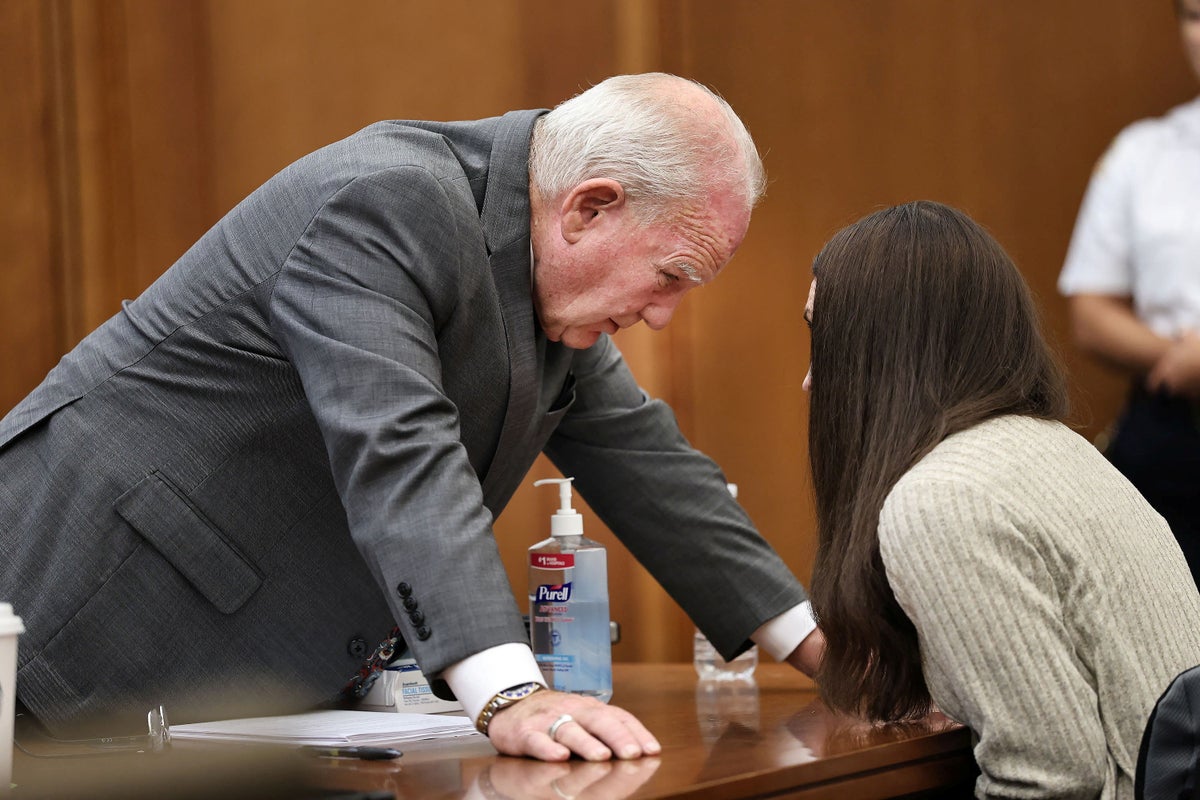
Lindsay Clancy's murder trial in Plymouth Superior Court ended in a mistrial on Friday when jurors deadlocked after 38 hours of deliberation spanning seven days. Clancy, 36, a former labor and delivery nurse, does not deny strangling her three children—Cora, 5; Dawson, 3; and Callan, 8 months old—in their Duxbury, Massachusetts basement on January 24, 2023, before jumping from a second-floor window and attempting to take her own life. The jury split 11-1, with eleven jurors persuaded to find her not guilty by reason of lack of criminal responsibility due to postpartum psychosis, while one holdout juror declined to agree. Prosecutors argued Clancy knew what she was doing and planned the killings; the defense maintained severe postpartum psychosis and prescription medications compelled her to act on auditory hallucinations. The next hearing is scheduled for September 29.
Judge William Sullivan questioned each juror individually after the foreperson reported in a note that one juror refused to follow the court's instructions on reasonable doubt. Sullivan re-read his instructions on reasonable doubt before sending jurors back to continue deliberating. The defense unsuccessfully sought removal of the juror before the mistrial was declared.
Three jurors, including the foreperson Roni Carlson, spoke publicly after the mistrial. Carlson said she began filling out acquittal forms and was 'so excited' before the holdout juror told her, 'But I'm still not going to say she's not guilty by reason of insanity.' Juror Paula Devlin reported the holdout juror seemed unwilling to engage with the panel's reasoning about reasonable doubt. Juror Kellie Farina characterized him as 'very arrogant' and said 'he really did not take anything that anybody said.' The jurors described the deliberation room as marked by explosive arguments and name-calling.
Defense attorney Kevin Reddington told NBC News on Wednesday that Clancy is 'suicidal' and on 24/7 one-on-one suicide watch at Tewksbury Hospital, a state-run psychiatric facility. Reddington said Clancy 'has bad days and has worse days,' and repeatedly says 'I want my babies' when discussing her three slain children. He stated his client does not hold anger toward prosecutors, jurors, or witnesses who testified against her, and emphasized that 'that was not the Lindsay that is now living amongst us' but rather 'the person who was the labor and delivery nurse for eight years that everybody loved.'
Reddington told reporters outside the courthouse that the eleven jurors 'were robbed by one man, for whatever his agenda was, who stole seven weeks of the life of these other jurors that were so attentive, so beautiful, so wonderful.' He said Clancy 'deserved an acquittal' and expressed deep respect for Judge Sullivan despite the mistrial outcome.
The prosecution argued throughout the trial that Clancy was aware of her actions and planned the killings ahead of time. Prosecutors repeatedly pointed to the fact that Clancy never told anyone she was hearing voices before the night of the killings and has not heard any since—something they characterized as exceedingly rare for someone experiencing psychosis. The defense maintained that Clancy told her struggles to 'anyone who would listen,' including her ex-husband Patrick Clancy and her mother, though her attorney acknowledged she should have told more people.
The Plymouth County District Attorney's office has not announced whether it will retry Clancy, offer a plea deal, or drop charges. According to sources, prosecutors must decide at a later date and will address the case further at an appropriate time in court proceedings. Reddington said he would file a motion to dismiss charges and stated he would not accept a plea that included jail time for his client.
A woman identified as Dawn Light, 56, was arrested and charged with aggravated intimidation of a juror after allegedly filming jurors as they left the courthouse on Tuesday during deliberations. Light's attorney Jennifer White said it was a 'complete misunderstanding' and that her client was seeking a picture of Clancy, not filming jurors. Prosecutors alleged police found a video of jurors in Light's deleted folder. Light, a retired nurse, has attended other high-profile trials. The judge denied the prosecution's request for $50,000 bail but ordered Light to stay away from the courthouse, witnesses, and jurors. If convicted, she faces up to 20 years in prison.
An Illinois woman named Corie Walsh, 40, of Frankfort was arrested on September 1 after her 2-year-old son was found hanging from a cord in her basement. Witnesses told police Walsh had become 'very invested' in the Lindsay Clancy murder trial and was 'actively discussing the case via group text message just hours prior to the child's death.' Walsh was found in a bathtub with reportedly self-inflicted knife wounds and allegedly told investigators she 'did this to her baby because he was the devil and the anti-Christ.' Walsh's attorney, Andrea Lyon, said the mother was 'experiencing a psychotic episode.' She is charged with first-degree murder.
The trial was livestreamed and drew substantial media attention and public interest, with reporters and spectators packing the courtroom. Reddington said Clancy has received letters of support 'from all over the world.' The case has sparked deep public divisions over her culpability and raised broader discussions about maternal mental health after childbirth. Patrick Clancy, the defendant's ex-husband, said in interviews that he forgives Clancy and views her as ill rather than evil. Clancy's lawyers released statements responding to online conspiracy theories accusing Patrick Clancy of involvement in the killings, calling such theories a 'campaign of misinformation' and stating that law enforcement has been notified.
Where sources differ
- Sources differ on whether Clancy is 32 or 36 years old. The New York Post headline in Source 4 states she is 32, while multiple other sources (NBC News, The Independent, The Guardian US) consistently report her age as 36 at the time of trial.
- Sources give different jury deliberation durations. NBC News and The Independent state jurors deliberated for 38 hours; the New York Post in Source 5 states 40 hours.
- The identity of the holdout juror is not established in any source.
- The specific medical evidence or expert testimony that persuaded eleven jurors to vote for acquittal by reason of insanity is not detailed in the sources.
- The sources do not establish what jury instructions or legal definitions the judge provided regarding postpartum psychosis or insanity.
- No statement from the Plymouth County District Attorney or prosecutors is included; only their positions as characterized by other parties are reported.
- The sources do not establish whether Clancy's ex-husband Patrick Clancy was interviewed directly or whether his statements came only through his attorneys.
- The sources do not establish whether Corie Walsh, the Illinois woman arrested in connection with her child's death, had any direct contact with or knowledge of Clancy or whether her investment in the trial was solely through media consumption.
- The specific prescription medications mentioned by Reddington as contributing to Clancy's condition are not named in the sources.
- NBC News — original — by Laura Jarrett
- New York Post — by Georgia Worrell
- The Independent — by Isabel Keane
- New York Post — by Priscilla DeGregory
- New York Post — by Sonya Gugliara
- The Independent — by Graig Graziosi
- PBS NewsHour — by Associated Press
- The Independent — by Brittney Donovan
- The Independent — by Leah Willingham
- The Guardian US — by Associated Press
- New York Post — by Carly Ortiz-Lytle