Zambia is holding a general election on Thursday in which incumbent President Hakainde Hichilema of the United Party for National Development is seeking a second term against 14 opponents. His principal challenger is Brian Mundubile, described as a former ally of the late President Edgar Lungu, who secured backing from a coalition of opposition parties. The Electoral Commission has added 70 new constituencies, raising the number of parliamentary seats from 156 to 226. Up to 8.7 million voters are registered to participate, a majority of whom are women.
Zambia Holds General Election With Economy, Governance and Expanded Parliamentary Map as Central Issues
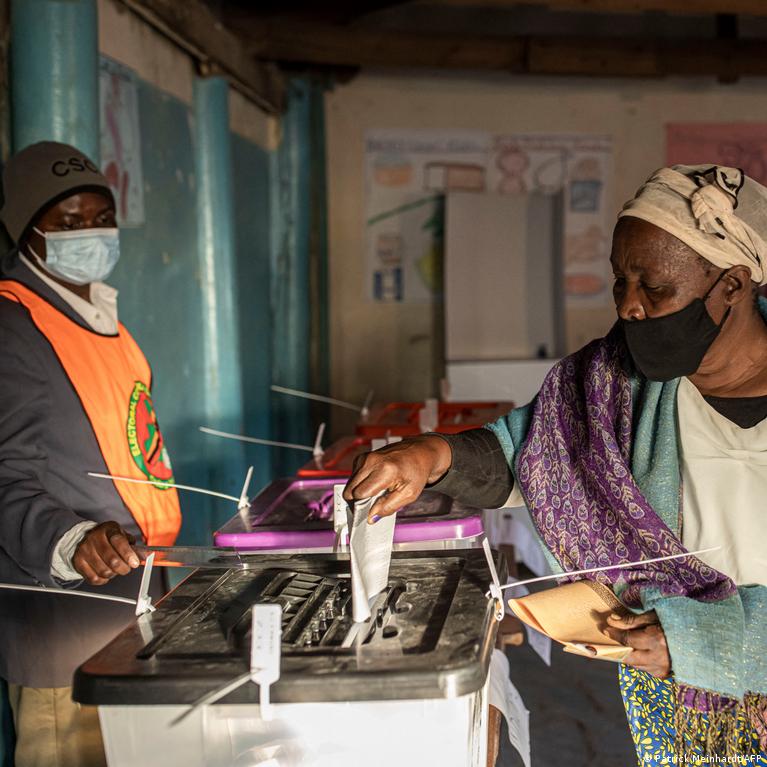
Zambia is holding a general election on Thursday in which incumbent President Hakainde Hichilema of the United Party for National Development is seeking a second term against 14 opponents. His principal challenger is Brian Mundubile, described as a former ally of the late President Edgar Lungu, who secured backing from a coalition of opposition parties. The Electoral Commission has added 70 new constituencies, raising the number of parliamentary seats from 156 to 226. Up to 8.7 million voters are registered to participate, a majority of whom are women.
Economic conditions are a dominant concern among voters. According to official data, more than 70 percent of the population lives on less than three dollars a day, and many households reportedly survive on monthly salaries of between 60 and 100 US dollars while grocery prices continue to rise.
The Hichilema administration has recorded a debt restructuring agreement, restoration of an International Monetary Fund program, and inflation that fell to 6.5 percent in June of this year. The government has also introduced free education and an expanded Constituency Development Fund that channels public money directly to constituencies for local development projects.
A drought described as historic damaged agriculture and caused severe hydropower load-shedding, according to the source, straining household finances during the election period.
To win outright, a candidate must obtain 50 percent plus one of votes cast. If no candidate reaches that threshold, the two leading candidates proceed to a second round. With 14 candidates on the ballot, analysts cited in the source say small vote shifts across Zambia's ten provinces could determine whether a runoff is necessary.
Analysts say urban centers including Lusaka and the Copperbelt, where cost-of-living pressures are described as most acute, are expected to be pivotal. Rural provinces in the Southern, Western and North-Western regions have historically supported the UPND, while opposition parties target Northern, Luapula and Eastern provinces.
According to Agence France-Presse, as cited in the source, high youth turnout helped Hichilema win by a landslide in 2021 and is expected to be a significant factor again. Nearly half of registered voters are reportedly aged between 18 and 35, according to an Institute for Security Studies researcher named Zenge Simakoloyi.
One female candidate is standing for president and four female running mates appear on ballots. Women comprise roughly 51 percent of Zambia's population but hold approximately 15 percent of parliamentary seats and fewer than 20 percent of political leadership positions, according to the source. Leah Diana Mitaba, identified as publicity secretary of the Non-Governmental Coordinating Council, said these figures show Zambia remains far from gender representation targets set out in its constitution and regional and international frameworks.
Questions about judicial independence have arisen ahead of the vote. In 2024, President Hichilema reportedly suspended three Constitutional Court judges who had ruled in favor of former President Lungu. Lawyer Linda Kasonde raised two additional concerns: a government-approved salary increase for judges in 2025 that allegedly bypassed a constitutional emoluments commission, and the appointment of 16 new judges in early 2026, many of whom are said to come from the incumbent's stronghold regions.
Amnesty International has reportedly warned that laws including the Public Order Act and cybercrime legislation have been used to restrict dissent, opposition gatherings and freedom of expression, and that criminal charges against government critics risk chilling political expression.
Chief Justice Mumba Malila stated that the judiciary stands ready to act independently, professionally and within legal timelines. Critics maintain that genuine independence requires full structural and financial autonomy from the executive branch.
Polls are open from 6:00 a.m. to 6:00 p.m. Voters will elect a president, National Assembly members, mayors, councilors and council chairs.
- No independent polling data or vote-share projections are provided to indicate the likely margin between the leading candidates
- The source does not specify the grounds on which the three Constitutional Court judges were suspended in 2024
- The source does not identify which specific provinces are considered Hichilema's strongholds in relation to the 16 judicial appointments
- The source does not state when or how results will be announced or which body is responsible for certifying them
- The source does not detail the specific terms of the debt restructuring agreement or which creditors were involved
- The source does not explain what criteria or process the Electoral Commission used to determine the 70 new constituencies
- The financial costs or funding sources for the expanded Constituency Development Fund are not specified
- The source does not confirm whether any legal challenges to the election have been filed prior to polling day
Read the original at Deutsche Welle