Palestinian families in at least two locations in the occupied West Bank have faced severe disruptions to their homes in recent days: in the village of Qusra, settlers and soldiers have blockaded at least two Palestinian families in their properties since the weekend, cutting off water, electricity and medical access; while in Ein el-Hilweh in the northern Jordan Valley, the home of Adel and Kheirieh Daraghmeh was demolished on July 28 by an Israeli bulldozer accompanied by soldiers, settlers and Civil Administration officials, despite an Israeli Supreme Court injunction the family says barred the demolition.
Israeli settlers besiege Palestinian families in West Bank while separate demolition proceeds despite court order
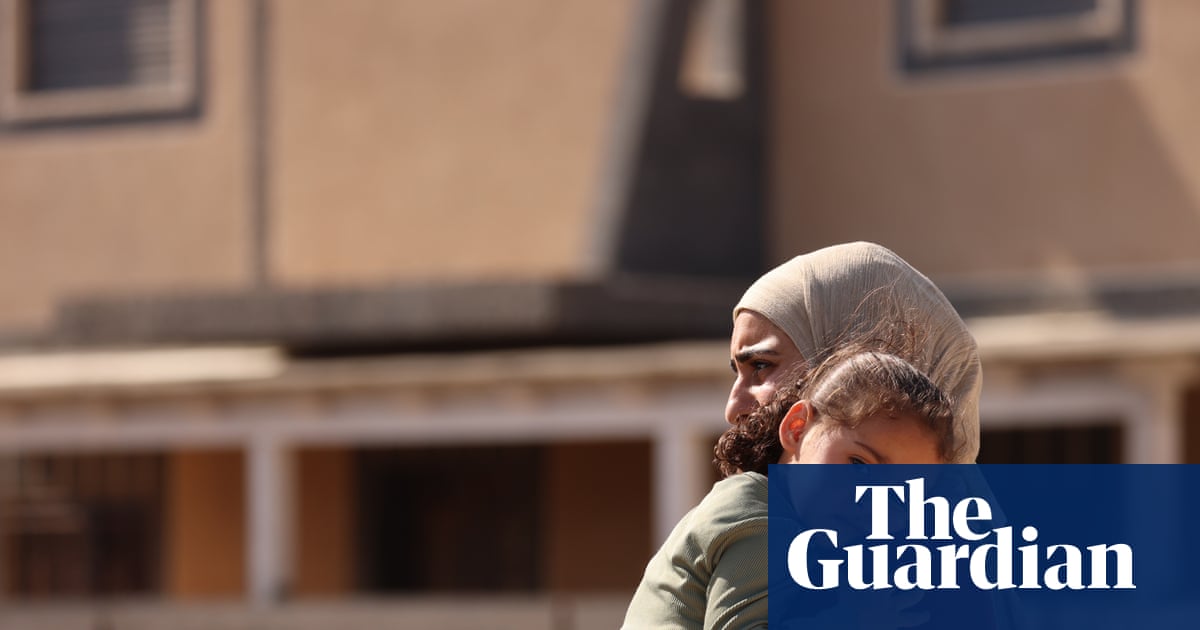
Palestinian families in at least two locations in the occupied West Bank have faced severe disruptions to their homes in recent days: in the village of Qusra, settlers and soldiers have blockaded at least two Palestinian families in their properties since the weekend, cutting off water, electricity and medical access; while in Ein el-Hilweh in the northern Jordan Valley, the home of Adel and Kheirieh Daraghmeh was demolished on July 28 by an Israeli bulldozer accompanied by soldiers, settlers and Civil Administration officials, despite an Israeli Supreme Court injunction the family says barred the demolition.
According to The Guardian, a group of settlers and soldiers set up a tent outside the home of Yousef Hassan in Qusra on Sunday afternoon, trapping him inside with his wife and two young daughters. Hassan's mother, brother, sister and three neighbours have also been blockaded, and their power and water cut off. Settlers have also blocked medical care: when Hassan's two-year-old daughter fell ill with vomiting and a high fever on Monday, settlers blocked an ambulance from reaching the house, though the child, her mother and her sister were eventually evacuated on Tuesday.
Hassan described the conditions inside. 'Every night, the settlers throw stones, use obscene language and shout during the night. We are living in a state of terror,' he said, according to The Guardian. A solar panel has allowed some devices to be kept charged, and water and juice were delivered by the ambulance that collected his daughter.
On Wednesday morning, the commander of Israeli forces in the region, Gen Avi Bluth, visited the families and promised to lift the siege, according to The Guardian, which said an Israeli military spokesperson confirmed the visit. Hassan said soldiers removed the settlers' tent but not their bedding or other possessions, and after brief clashes with settlers, withdrew. 'The settlers are still there in front of the house, and we are still unable to leave,' Hassan said. He acknowledged the visit was a first sign of seriousness from the army but said it had not yet produced tangible results.
The Guardian noted that the siege in Qusra took place near the spot where 28-year-old Amir Moatasem Odeh was killed by a settler in March, and his father was stabbed in the same incident. No one has been arrested over the killing or the assault, according to The Guardian. The outlet also reported that settlers used similar tactics in the neighbouring village of Jalud, driving the al-Tubasi family from their home in July after a months-long siege.
In Ein el-Hilweh, according to Al Jazeera, the Daraghmeh family's home was demolished on July 28 while Adel was away collecting medication and his wife Kheirieh was at home with their daughter. Kheirieh presented legal papers to the arriving soldiers, settlers and Civil Administration officials, which she said constituted proof of an Israeli Supreme Court order barring demolition while the family's case was ongoing. Al Jazeera reported that soldiers read the documents and handed them back before the bulldozer proceeded. Kheirieh said she was told: 'Five minutes to clear the whole area.' She said she told them she was ill and unable to comply, and she subsequently blacked out, waking three hours later in an ambulance.
Al Jazeera reported that a son's home, belonging to Hilal Daraghmeh, had been demolished on or around July 2 without warning or a demolition order being presented, and that this too occurred despite a court injunction. The family's lawyer, Tawfiq Jabareen, told Al Jazeera that prosecutors had described the first demolition as an army mistake that would not recur, but that the second demolition then followed.
According to Al Jazeera, the Daraghmeh family are herders who have lived along the Ein el-Hilweh spring for generations, and nearby are the Israeli settlement of Maskiyot and several settler outposts established in recent years. The publication reported that the family has been subject to numerous attacks, thefts and raids. Adel told Al Jazeera that his home had been demolished before and that he had spent significant money rebuilding it, but that what was different now was that even the limited process of a warning, demolition order and right to appeal had stopped applying to them.
Allegra Pacheco, described by Al Jazeera as chief of party of the West Bank Protection Consortium and a lawyer who has represented Palestinians before Israeli courts for decades, said the irregularity of the demolitions was not an aberration. 'This is a continuation of the deterioration of any pretence of legal protection for Palestinians,' she told the outlet. She argued that even the ordinary planning process in Area C was built to the detriment of Palestinians, under a zoning system inherited from Jordanian and British Mandate-era law that Israel had altered.
- No Israeli government, Civil Administration or settler spokesperson response or comment is present in either source regarding the Qusra siege or the Ein el-Hilweh demolitions.
- The specific legal status of the properties in Qusra and whether any formal legal proceedings are underway there is not established.
- The identities or affiliations of the settlers involved in either incident are not named or verified in the sources.
- The current status of the Israeli Supreme Court case concerning the Daraghmeh family's land and homes is not resolved in the sources.
- The total number of people affected by the Qusra blockade is not precisely stated across both sources.
- Whether any arrests or investigations have been announced in connection with either the Qusra siege or the Ein el-Hilweh demolitions is not confirmed.
- The outcome of Gen Bluth's promise to lift the Qusra siege — whether it was ultimately fulfilled — is not established at the time of reporting.
- The Guardian — original — by Emma Graham-Harrison
- Al Jazeera English — by Al Jazeera Staff
Read the original at The Guardian