Esmail Qaani, commander of the Islamic Revolutionary Guard Corps' Quds Force, made an unannounced visit to Baghdad earlier this week, meeting Iraqi political and security leaders as well as commanders of Shia paramilitary groups, as Iraqi Prime Minister Ali al-Zaidi faces a September 30 deadline to bring all weapons under state control.
IRGC Quds Force commander visits Baghdad as Iraq presses militia disarmament ahead of September deadline
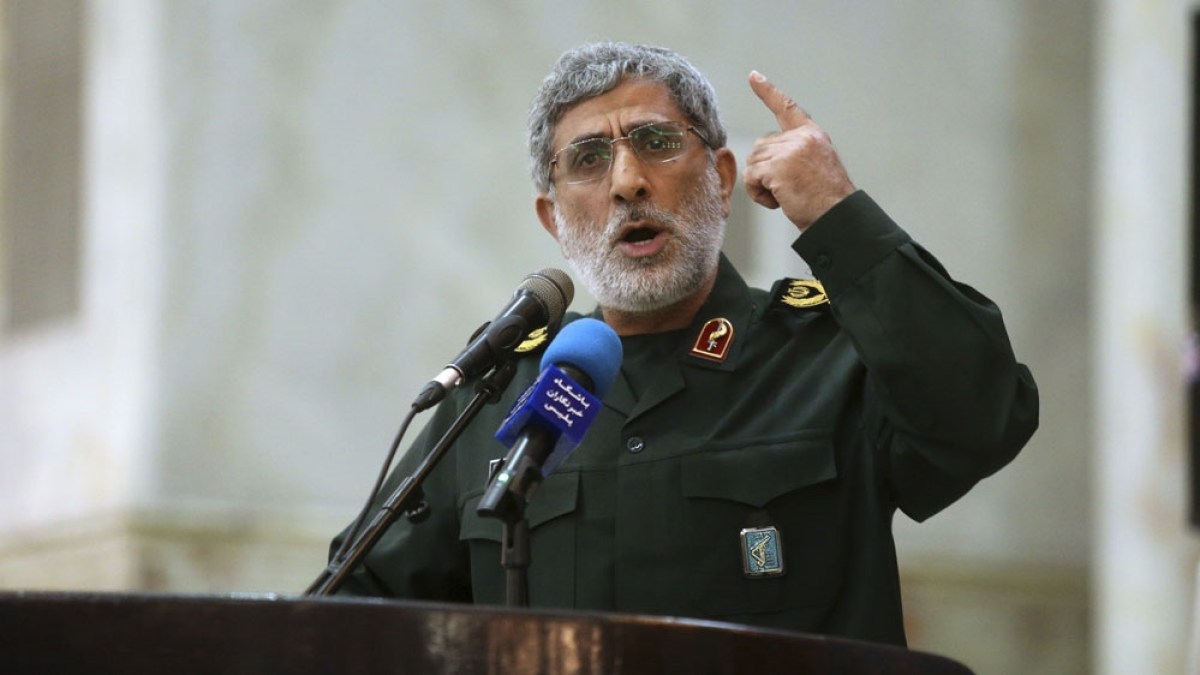
Esmail Qaani, commander of the Islamic Revolutionary Guard Corps' Quds Force, made an unannounced visit to Baghdad earlier this week, meeting Iraqi political and security leaders as well as commanders of Shia paramilitary groups, as Iraqi Prime Minister Ali al-Zaidi faces a September 30 deadline to bring all weapons under state control.
According to an Iraqi source within the Coordination Framework speaking on condition of anonymity to Al Jazeera, the message conveyed by Qaani was that Tehran opposes handing over faction weapons 'at the present time,' citing Iranian assessments that a new round of war could break out. The source said Iran called for a political compromise rather than confrontation between the government and armed factions.
On August 12, al-Zaidi visited Iraq's Operations Center at Air Defense Command to assess the status of the country's air defense systems, preparations, and readiness, according to his office. His government linked the visit to preparations for the full withdrawal of international coalition forces by September 30, in line with a 2024 agreement with the US-led coalition.
Al-Zaidi also chaired a meeting of the Ministerial Council for National Security on August 12, according to The Jerusalem Post. On Tuesday, he directed parliament's Security and Defence Committee to prepare a draft law restricting weapons to the state, warning that unregulated weapons represent what he called the most dangerous threat to state authority.
Al-Zaidi took office in May and has received support from most Iraqi factions, including the Coordination Framework of Shia parties and Kurdish leadership. He has met with US President Donald Trump, and his first foreign trip included visits to both Washington and Tehran, where he held talks with Iranian President Masoud Pezeshkian, according to Al Jazeera.
The Nujaba Movement, designated a terrorist organization by the United States, stated it would not hand over its weapons, according to a Kurdistan24 report cited by The Jerusalem Post. Al Jazeera also noted that Kataib Hezbollah and Harakat al-Nujaba have taken defiant stances that threaten to derail the government's efforts, while a number of other armed groups have agreed to integrate into the state's armed forces.
The State Administration Coalition — which includes prominent Shia, Sunni, and Kurdish parties — called for weapons to be restricted to the state and described armed entities operating outside official institutions as 'outlaws that must be fought,' according to Al Jazeera. The coalition hinted that the Anti-Terrorism Law could be applied to armed activity after the government deadline expires.
The Jerusalem Post reported that al-Zaidi stated Iraqi territory and airspace would not be permitted to serve as a launchpad for aggression against neighboring countries, and cited Al-Hurra as reporting that he insists on confronting any faction that does not relinquish its weapons within the government's specified period.
According to Al Jazeera, the head of the Hikma Movement, Ammar al-Hakim, is leading efforts to de-escalate tensions and persuade factions to move toward restricting weapons to the state before the deadline expires.
Ghazi Faisal, head of the Iraqi Center for Strategic Studies, told Al Jazeera that continued retention of weapons by armed factions could transform the issue into a broader regional security crisis, potentially prompting neighboring countries toward direct responses or joint security arrangements.
The security situation has been complicated by recent cross-border incidents. Al Jazeera reported that US Central Command announced joint attacks with Saudi Arabia on July 28 against what it described as Iran-aligned groups that had been directed to attack US forces and Saudi energy infrastructure. The Jerusalem Post noted that militia attacks on Saudi Arabia occurred this month, prompting meetings between Saudi and Iraqi delegations.
According to The Jerusalem Post, Kurdistan Regional President Nechirvan Barzani said Iran has expressed readiness to help Iraq address the weapons issue, citing Al-Arabiya. The Kurdistan region has reportedly been attacked more than 1,000 times by Iran and Iranian-backed militias since February, according to The Jerusalem Post.
Where sources differ
- The two sources transliterate the Quds Force commander's name differently: The Jerusalem Post uses 'Esmail Ghaani' while Al Jazeera uses 'Esmail Qaani.' Both refer to the same individual.
- The Jerusalem Post characterizes Qaani's mission primarily as an effort to rally militia support and delay or weaken the disarmament law. Al Jazeera, citing an anonymous Iraqi source, frames the visit as conveying a specific Iranian message opposing weapons handover while seeking a political compromise rather than confrontation, a somewhat more nuanced characterization.
- Neither source provides an on-record response from Qaani or the IRGC regarding the content or purpose of the Baghdad visit.
- The specific legal text or provisions of the proposed weapons restriction law have not been published or described in detail by either source.
- It is not established which armed factions beyond Kataib Hezbollah and Harakat al-Nujaba are refusing disarmament, or which groups have formally agreed to integrate into state forces.
- The precise mechanisms or timeline for enforcing the September 30 deadline, should factions refuse compliance, are not detailed in either source.
- Neither source clarifies whether the Iraqi parliament has formally taken up or advanced the draft weapons law.
- The outcome or conclusions of the Saudi-Iraqi delegation meetings referenced by The Jerusalem Post are not described.
- Kataib Hezbollah's stated position on the disarmament plan is not directly quoted in either source.
- The Jerusalem Post — original — by SETH J. FRANTZMAN
- Al Jazeera English — by Omaima Majeed
Read the original at The Jerusalem Post