Four US human rights organizations — the American Friends Service Committee, the Center for Constitutional Rights, Human Rights Watch, and the Open Society Institute — filed a lawsuit in federal court on Tuesday challenging a February 2025 executive order in which President Trump authorized sanctions on International Criminal Court officials, judges, and others supporting its investigation into alleged Israeli crimes in Palestine.
Four US human rights groups sue Trump administration over ICC sanctions
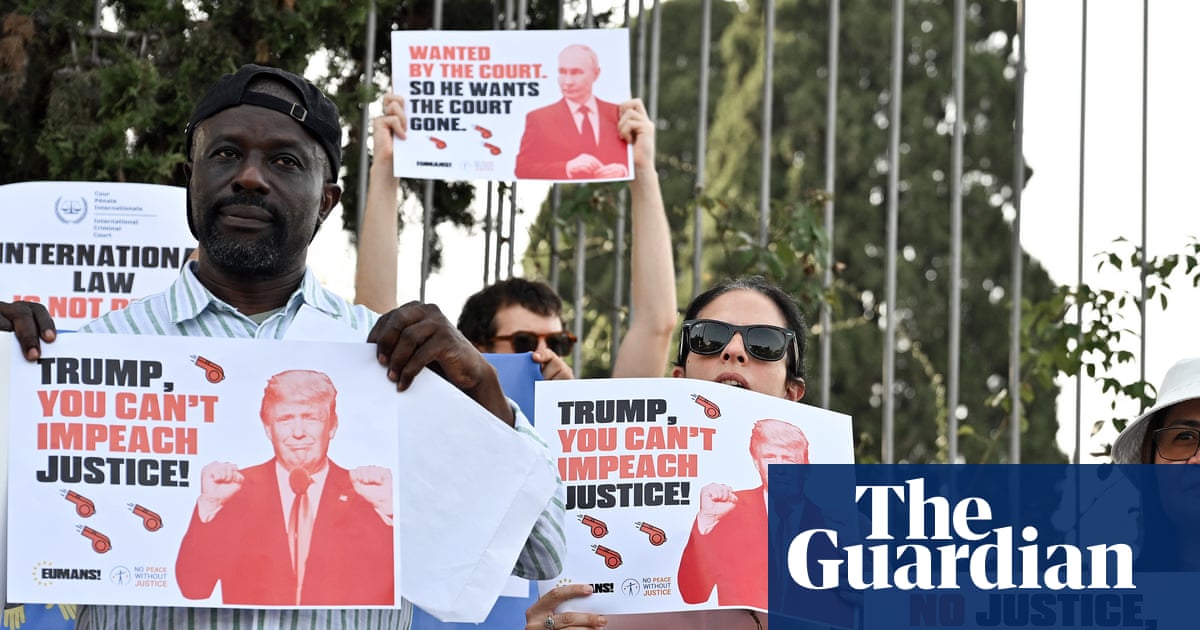
Four US human rights organizations — the American Friends Service Committee, the Center for Constitutional Rights, Human Rights Watch, and the Open Society Institute — filed a lawsuit in federal court on Tuesday challenging a February 2025 executive order in which President Trump authorized sanctions on International Criminal Court officials, judges, and others supporting its investigation into alleged Israeli crimes in Palestine.
The lawsuit argues that the administration's targeting of the ICC, along with groups and individuals affiliated with or assisting its work, constitutes an illegal attack on international justice that violates constitutional protections for free speech and association, as well as US obligations under international law.
The ICC, based in the Netherlands, is currently overseeing 18 investigations into war crimes and crimes against humanity. The US is not a party to the court. US opposition to the ICC escalated after the court's prosecutor issued arrest warrants in November 2024 for Israeli Prime Minister Benjamin Netanyahu and former Israeli Defense Minister Yoav Gallant over alleged crimes committed in Gaza.
Following those warrants, the US sanctioned ICC prosecutors, judges, three Palestinian human rights organizations, and Francesca Albanese, the UN special rapporteur on the human rights situation in Palestinian territory. Earlier this summer, Secretary of State Marco Rubio announced a campaign aimed at 'dismantling' the ICC by pressuring member states to leave the court.
According to the lawsuit, individuals sanctioned over their ICC work have faced travel bans, frozen or closed bank accounts, and denial of access to digital services. Because of the dominance of US financial and technology institutions, the effects have reportedly spread to their ability to access services in other countries.
The four plaintiff organizations say they have also been affected, even without being directly sanctioned, because the regime has hindered their ability to represent victims before the court, submit legal and policy materials, or collaborate with sanctioned Palestinian groups on litigation, advocacy, research, and humanitarian aid.
Shawan Jabarin, director of Al Haq — one of the Palestinian organizations sanctioned over its ICC work — told the Guardian in a previous interview that the sanctions left the group unable to access bank accounts or process donations, leaving approximately 45 staff members without pay. He also said longtime allies had cut communications with the group to avoid potential penalties of up to 20 years in prison and substantial fines.
Tuesday's lawsuit follows a similar legal challenge filed last month by Democracy in the Arab World Now and the Taxpayer Alliance Against Genocide, as well as separate suits brought by sanctioned individuals including Albanese's family and three sitting ICC judges.
The US State Department and Justice Department did not immediately respond to requests for comment, according to the source article.
- The US State Department and Justice Department had not responded to requests for comment at the time of publication, so the administration's specific legal or policy justification for the executive order is not detailed in the source.
- The source does not describe the specific legal relief the plaintiffs are seeking in the lawsuit.
- The source does not indicate which federal court received the filing or name the presiding judge.
- The outcome or status of the previously filed lawsuits by Dawn, the Taxpayer Alliance Against Genocide, Albanese's family, and the three ICC judges is not reported.
- The Guardian — original — by Alice Speri
- CNN — by Christian Edwards
Read the original at The Guardian