An October 2023 storm surge described as the most severe to strike the Baltic Sea coast in over 150 years destroyed dikes, collapsed coastal cliffs, and damaged marinas across the German state of Schleswig-Holstein and parts of southern Denmark. In Kiel, the state capital, the surge eroded 2.68 meters of coastal bluff — more than four times the annual average recorded over the preceding two decades — prompting the city to accelerate measures aimed at adapting its infrastructure and public spaces to worsening weather extremes.
Kiel Reworks City Design After 2023 Storm Surge Ranked Worst in 150 Years on Baltic Coast
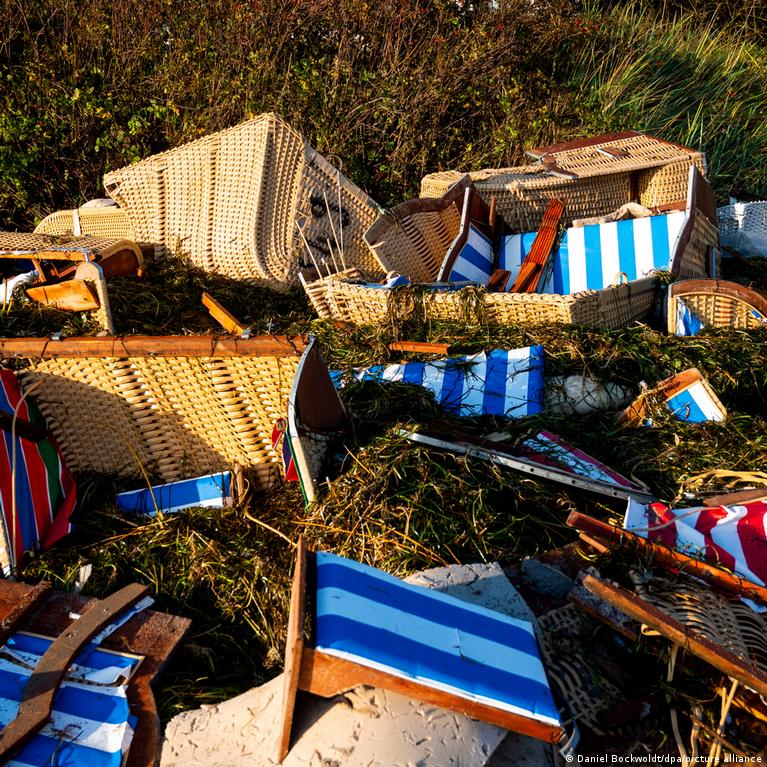
An October 2023 storm surge described as the most severe to strike the Baltic Sea coast in over 150 years destroyed dikes, collapsed coastal cliffs, and damaged marinas across the German state of Schleswig-Holstein and parts of southern Denmark. In Kiel, the state capital, the surge eroded 2.68 meters of coastal bluff — more than four times the annual average recorded over the preceding two decades — prompting the city to accelerate measures aimed at adapting its infrastructure and public spaces to worsening weather extremes.
Kiel declared a climate emergency in 2019 and has since established a climate adaptation division, launched in 2025, along with a formal adaptation plan adopted in February 2026. Martina Baum, who heads the division, said the 2023 storm surge made the consequences of climate change tangible for residents in a way that abstract projections had not.
Baum drew a distinction between climate adaptation and climate protection, stating that reducing fossil fuel emissions remains the primary line of defense because limiting warming reduces future damage. She noted that some adaptation measures, such as installing air conditioning in housing, daycare centers, and senior facilities, can conflict with emissions-reduction goals by increasing energy consumption.
Among the natural cooling strategies the city is pursuing, Kiel is adding vegetation to building facades, redesigning a park to direct cooler air toward the city center, and testing which tree species can survive projected future conditions. A trial begun roughly a decade ago planted five specimens each of 20 different species to assess resilience to heat, drought, and salt spray from the Baltic Sea. Officials said meaningful results from that study could take 20 to 30 years.
The city is also dredging a park pond to store stormwater during heavy rainfall and is considering a multi-use design concept under which sports pitches would be built at a lower elevation than surrounding areas so excess water could drain into them. Baum noted that such a pitch could be unusable for up to 60 days a year as a result.
City outreach worker Annafried Stürmer said she finds it easier to engage residents on adaptation topics — such as improved drainage systems or different tree planting — than on emissions reduction, because the former connect more directly to personal concerns like home flooding. At the annual Kiel Week sailing event, Stürmer displayed maps illustrating flood risk from heavy rainfall to reach residents who might not otherwise engage with climate issues.
Baum said climate adaptation and climate action are frequently treated as optional budget items, which she described as a flawed approach, arguing that investment in both areas has consistently demonstrated financial returns. The city's adaptation efforts are situated within a broader pattern of urban climate planning seen in other cities, including Santa Cruz in the United States and Quezon City in the Philippines, according to the source report.
- The total financial cost of the October 2023 storm surge to Kiel or to Schleswig-Holstein as a whole is not specified beyond a reference to 'millions of euro in damage'
- The size of Kiel's climate adaptation budget and any specific funding shortfalls are not quantified
- The number of staff in the climate adaptation division is not stated
- The specific location or name of the park being redesigned and dredged is not identified
- The source does not establish whether the multi-use pitch design has been approved or remains a proposal
- The extent of damage in southern Denmark from the 2023 surge is not detailed
- No independent expert assessment of Kiel's adaptation measures is included
- The source does not establish a direct causal link between human-caused climate change and the specific 2023 storm surge beyond a general statement about climate change intensifying extreme weather
Read the original at Deutsche Welle