Connecticut's gubernatorial candidates are setting out competing approaches to energy affordability and efficiency, according to Connecticut Public. State Sen. Ryan Fazio, a Republican from Greenwich and his party's gubernatorial candidate, is making elimination of the state's public benefits charge on electric bills a key campaign element, while Gov. Ned Lamont's campaign says it will not commit to removing the charge permanently. Connecticut's residential electricity rate was about 24 cents per kilowatt-hour in June, compared with about 27 cents per kilowatt-hour a year earlier, according to U.S. Energy Information Administration monthly statistics cited by Connecticut Public, which describes the state as among the most expensive in the country for electricity. At a State Bond Commission meeting last week, the commission approved the use of $125 million in state funds to offset parts of the public benefits charge, the outlet reported.
Connecticut gubernatorial candidates offer differing plans on electricity costs
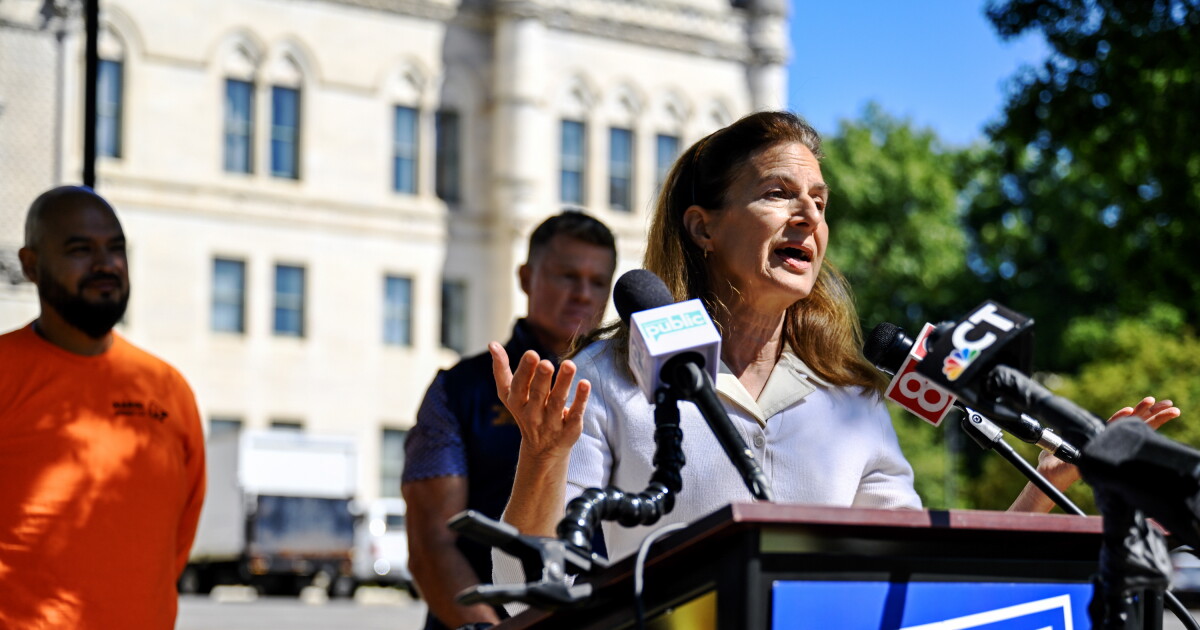
Connecticut's gubernatorial candidates are setting out competing approaches to energy affordability and efficiency, according to Connecticut Public. State Sen. Ryan Fazio, a Republican from Greenwich and his party's gubernatorial candidate, is making elimination of the state's public benefits charge on electric bills a key campaign element, while Gov. Ned Lamont's campaign says it will not commit to removing the charge permanently. Connecticut's residential electricity rate was about 24 cents per kilowatt-hour in June, compared with about 27 cents per kilowatt-hour a year earlier, according to U.S. Energy Information Administration monthly statistics cited by Connecticut Public, which describes the state as among the most expensive in the country for electricity. At a State Bond Commission meeting last week, the commission approved the use of $125 million in state funds to offset parts of the public benefits charge, the outlet reported.
According to Connecticut Public, the public benefits charge on electric bills funds electricity procurement, energy efficiency and electrification programs, energy assistance for low-income customers, and costs tied to the operations of ISO-New England, the nonprofit that oversees the regional grid. The average Connecticut residential electric bill is $173 per month, the outlet reported.
Fazio said after the State Bond Commission meeting that the public benefits charge is volatile, describing it as sometimes as low as zero and sometimes as high as 30 percent, averaging 20 percent and continuing at that level in the future, according to Connecticut Public. Beyond eliminating the charge, the outlet reported that he would invest more in the state's use of natural gas and expand natural gas pipeline capacity from Pennsylvania, reducing reliance on oil peaker plants that use petroleum as backup fuel. Connecticut Public said Fazio's campaign did not respond to its request for comment.
Lamont, in remarks cited by Connecticut Public, said his administration is taking an all-of-the-above approach to delivering affordable, reliable energy because the issue must be confronted from every angle to produce the best results for Connecticut ratepayers. The outlet reported that Lamont's campaign said he would continue efforts to weatherize older homes, find more ways to increase the use and creation of renewable energy, and provide stronger oversight of utility companies.
Lt. Gov. Susan Bysiewicz said the Lamont campaign has been able to work with the legislature to reduce the public benefits charges but is not making a commitment, as Fazio has, to make them go away without a plan to pay for it, according to Connecticut Public. She said energy efficiency is important and that building clean energy is also important to increasing supply and helping cost go down, adding that making energy cheaper requires making more energy, which she said is happening at Revolution Wind.
Connecticut Public reported that lawmakers who support the public benefits program say changing it would force the funds to be taken from elsewhere and could potentially lead to increased taxes.
- Only one of the two supplied sources addresses this event; the second source concerns an unrelated arrest in New Canaan, Connecticut, so no independent corroboration of the energy debate is available from the supplied material.
- No source states how the revenue currently raised by the public benefits charge would be replaced if it were eliminated, or the projected cost to ratepayers of either candidate's proposals.
- Fazio's campaign did not respond to Connecticut Public's request for comment, so its response to the questions raised about his plan is not established.
- No electric utility operating in Connecticut is quoted or given a chance to respond to either candidate's proposals, including the call for stronger utility oversight.
- No source establishes whether the $125 million approved by the State Bond Commission is a one-time or recurring offset, or how it will affect individual bills.
- The electricity rate figures are drawn from a single citation to U.S. Energy Information Administration monthly statistics and are not independently verified in the supplied material.
- CT Public — original — by Abigail Brone
- New Canaanite — by Michael Dinan
Read the original at CT Public