Germany's Cabinet has approved a package of laws exceeding 700 pages that grants significantly expanded powers to both the domestic intelligence agency (BfV) and the foreign intelligence agency (BND), allowing greater latitude in gathering and storing data and new options to actively counter sabotage and hacking attacks, the government announced on Wednesday.
German Cabinet approves expanded intelligence powers amid civil liberties criticism
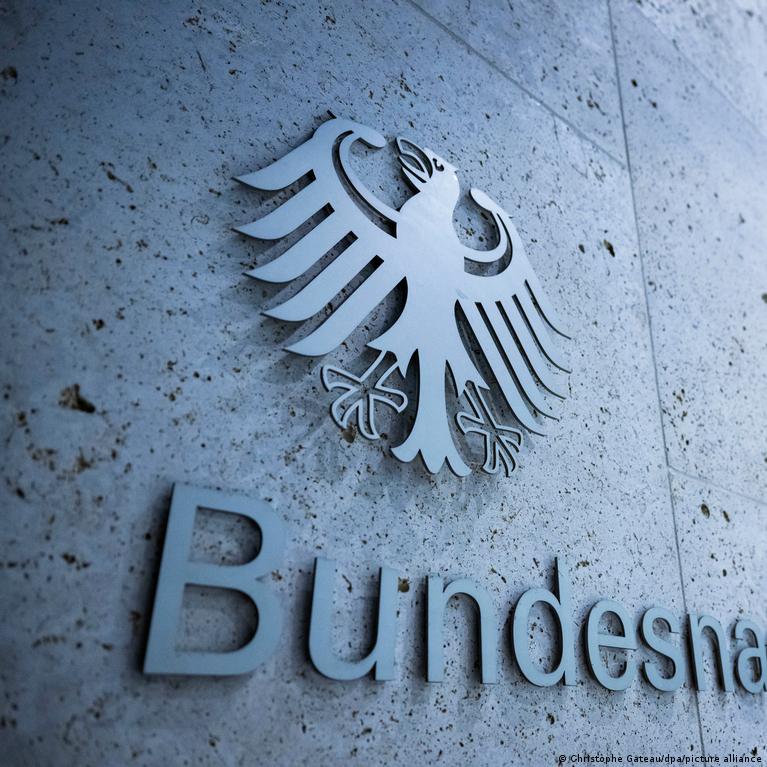
Germany's Cabinet has approved a package of laws exceeding 700 pages that grants significantly expanded powers to both the domestic intelligence agency (BfV) and the foreign intelligence agency (BND), allowing greater latitude in gathering and storing data and new options to actively counter sabotage and hacking attacks, the government announced on Wednesday.
Interior Minister Alexander Dobrindt praised the reforms at a press conference in Berlin, saying the new measures — which include artificial intelligence tools — would 'revolutionize Germany's security architecture.' He described the changes as transforming the intelligence services 'into genuine secret services' and said Germany was catching up with the broader powers already held by counterpart agencies in countries such as France and the United Kingdom.
Dobrindt attributed the historically limited scope of German intelligence services to the country's post-World War II context, in which memories of the Nazi regime were still recent, and to the experience of citizens in the former East Germany under the surveillance of the Stasi secret police.
The government has framed the reforms as a necessary response to what it describes as a growing range of hybrid security threats, particularly from cyber and sabotage operations linked, though not exclusively, to Russia. Chancellery head Nina Warken told the daily Rheinische Post that the agencies could only take targeted action against hybrid attacks if given 'more liberties and up-to-date measures.'
The reform package has also attracted criticism from political figures who argue it poses risks to civil liberties. Free Democrat (FDP) leader Wolfgang Kubicki accused Dobrindt of 'breaking a taboo' and expressed doubt that the Constitutional Court would refrain from intervening. Kubicki said he did not want 'any secret police in Germany' and called for full court oversight in cases involving attacks on basic rights.
In separate Cabinet business on Wednesday, Germany's government approved a draft bill that would end an existing exception allowing 14- and 15-year-olds to purchase and consume undistilled alcohol in public when accompanied by a parent or legal guardian. The bill cited the health and social consequences of alcohol consumption for young people.
The Cabinet also approved a plan under which children from age six would receive €10 per month from the state into a dedicated pension savings account until they turn 18, with pension payments accessible from age 65. The Finance Ministry estimated that state contributions of around €2,200 could grow to approximately €53,000 by pensionable age without additional deposits. Both bills still require approval by both chambers of parliament.
Separately, Germany's Federal Statistical Office confirmed that inflation rose to 2.8% in July, up from the June rate, driven primarily by a rise in energy prices after a government fuel tax relief scheme expired. Consumers paid 8.3% more for fuel and heating in July than a year earlier. Food prices rose 0.4% year-on-year in July, though economists warned that high energy costs and heat-related agricultural disruption could push food prices higher.
Rhine river water levels continued to fall, with the gauge at Kaub near Koblenz measuring 12 cm on Wednesday, below the previous record low of 25 cm recorded in 2018. The inland navigation agency WSV reported that the depth at Kaub's deepest point was approximately 112 cm, effectively blocking most commercial vessel traffic and cutting the Rhine in two for shipping. Traders told Reuters that sailings on northern sections of the river were often only 20% full. Federal and state transport ministers were scheduled to hold a video conference on Wednesday to discuss the disruption and possible compensatory measures, including an existing relaxation of Sunday truck bans in several states.
Germany's military reported that several hundred drone-related security incidents had been registered near Bundeswehr facilities in recent years, with sightings increasing markedly since Russia's full-scale invasion of Ukraine in February 2022. A military spokesman told Redaktionsnetzwerk Deutschland that entire drone swarms had occasionally been observed. The newsmagazine Spiegel reported that Hannover-Langenhagen airport was closed multiple times overnight into Tuesday after a drone was sighted; Spiegel noted the drone did not appear on police detection equipment, suggesting it may not have been a commercially available model.
German sprinter Owen Ansah won a bronze medal in the men's 100-meter event at the European Championships in Birmingham with a time of 10.19 seconds, described as Germany's first men's 100-meter European Championship medal in 40 years. Ansah is facing a potential doping suspension from Germany's National Anti-Doping Agency (NADA) after it accused him of refusing a doping test on July 9. Ansah said he had been unable to provide a urine sample because the doping control officer arrived outside the requested time slot and he had already used the restroom before the officer's arrival. He said he was 'not afraid' of having his medal revoked and stated his intention to compete in the 200-meter event on Friday.
- Meta has not been quoted or given an opportunity to respond to HateAid's criminal complaint in the source text.
- The Federal Network Agency's current position on the specific criminal complaint filed by HateAid is not addressed.
- NADA's detailed reasoning or evidence in the doping case against Ansah is not provided beyond the allegation of test refusal.
- The specific legal or constitutional basis for the intelligence reform package beyond general government statements is not detailed.
- The timeline for parliamentary consideration of the child pension subsidy and youth alcohol bills is not given.
- The source text supplied appears truncated; some material may be missing.
Read the original at Deutsche Welle