Archival research and genetic studies have challenged the long-standing claim that Nazi commander Hermann Göring personally ordered the release of raccoons into the German wild, finding instead that a 1934 release near Lake Edersee was an administrative decision with no documented involvement by Göring, and that Germany's current raccoon population descends from at least four distinct founding groups.
Archival research disputes Nazi-era origin story for Germany's raccoon population
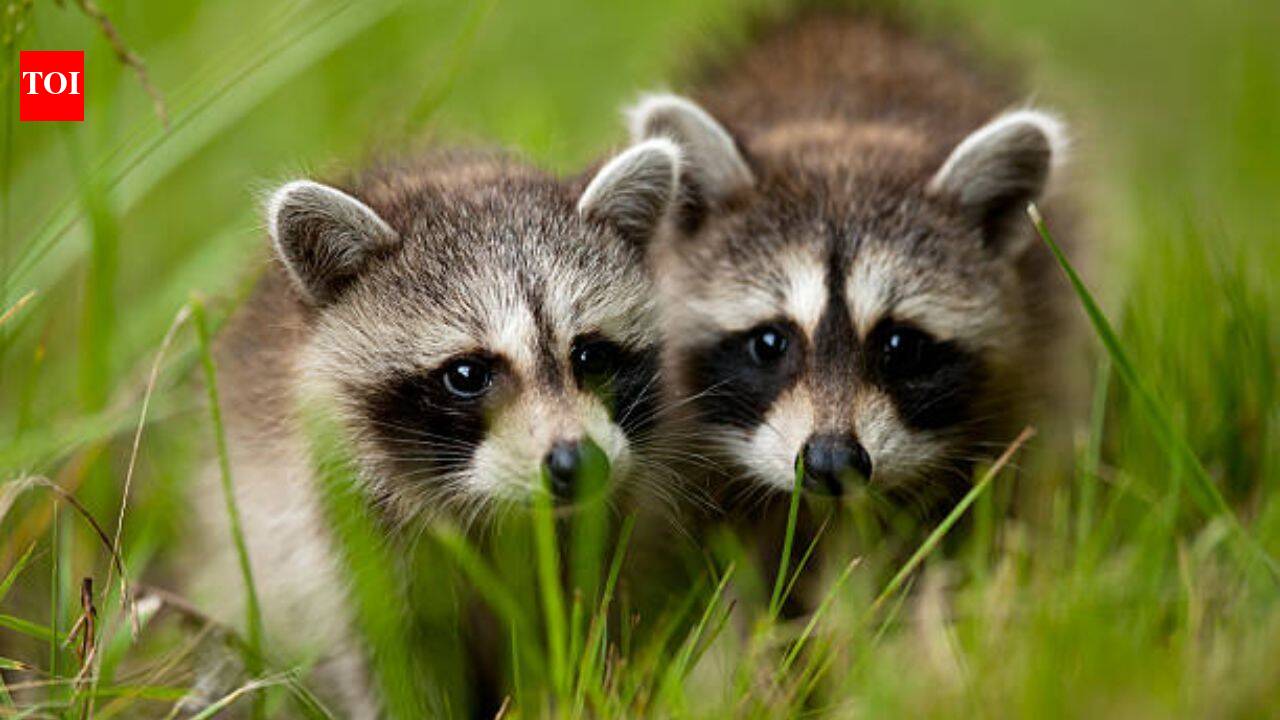
Archival research and genetic studies have challenged the long-standing claim that Nazi commander Hermann Göring personally ordered the release of raccoons into the German wild, finding instead that a 1934 release near Lake Edersee was an administrative decision with no documented involvement by Göring, and that Germany's current raccoon population descends from at least four distinct founding groups.
According to Eberhard Leicht, former head of the Vöhl Forestry Office in central Germany, a widespread popular narrative held that Göring had personally ordered — and in some versions even attended — the release of raccoons into the wild near the city of Kassel in central Germany. Leicht conducted archival research to examine those claims.
Leicht found that an application was made to the Prussian hunting office to release two pairs of North American raccoons near the Edersee reservoir, to 'enrich the fauna,' during the period when Göring oversaw forestry and hunting. The file, Leicht said, showed 'no indication anywhere that politicians — such as Göring, as a member of the Nazi Reich government — had any influence on the decision,' describing the process as 'merely an administrative matter.' Records show the animals were released from two crates on the south side of Lake Edersee near Vöhl, around 50 kilometres south-west of Kassel, one morning in April 1934.
Alain Frantz, zoology curator at the Luxembourg Museum of Natural History, began researching the raccoon population in 2011. He was aware of a second historically reported release linked to Allied bombing of a Brandenburg fur farm in the final period of the Third Reich. By sampling DNA from more than 400 raccoons across Germany, Frantz found evidence of two further significant releases, producing populations with distinct gene pools in eastern Saxony near the Czech border and in the Harz Mountains in northern Germany.
Germany's raccoon population has spread beyond its borders, with documented crossings into the Netherlands, the Czech Republic, and Switzerland. In Central Europe the population grew 300 percent between the 1990s and 2018. Raccoons have been recorded as far away as Spain, Sweden, and Greece, and there have been ongoing escapes from captivity across Europe, including from an Italian zoo in the early 2000s. Germany's overall raccoon population is estimated at two million, with the city of Kassel — described as the 'raccoon capital of Europe' — alone hosting an urban population of around 30,000.
Raccoons have been reported breaking into hospitals, zoos, power plants, and homes across Germany and have been held responsible for thousands of euros in property damage. A report by Deutsche Welle described raccoons consuming mulled wine at German Christmas markets, with one animal in Erfurt described as 'obviously intoxicated.' Arne Jernelov, a United Nations expert on environmental catastrophes who has written on invasive species, told the outlet that raccoons establish communal toilet sites, which he said 'is not very nice if it happens to be the attic of your house.'
The extent of the ecological harm raccoons cause is contested among researchers. In Germany, most states permit year-round hunting of raccoons, and the number killed has quadrupled since 2005 to more than a quarter of a million. Raccoons can carry parasites harmful to humans. In the United States, growing raccoon numbers in certain areas have been linked to declining songbird populations. European studies have indicated that raccoons consume waterbird eggs and rare European pond turtles.
- The source does not state the full name or institutional affiliation of researcher Michler beyond the Müritz National Park project.
- The source does not specify the sample locations or methodology details of Alain Frantz's DNA study beyond the total sample size of more than 400 raccoons.
- The source does not provide the specific findings or publication details of the Goethe University Frankfurt research cited by Reinwald.
- The source does not state the current estimated total raccoon population across Europe as a whole, only Germany's figure of two million.
- The source does not specify what parasites raccoons carry or the documented incidence of human infection in Germany.
- The source does not state the total number of raccoons released in April 1934 beyond 'two pairs.'
Read the original at The Times of India