A study published in the journal Science, analyzing fossilized leaf cells from the Paleocene-Eocene Thermal Maximum (PETM) roughly 56 million years ago, found that a rapid rise in carbon dioxide caused forests to initially densify and then collapse, with about 60% of standing vegetation biomass lost, according to the study's lead author.
Study finds ancient warming event caused forest collapse, not growth
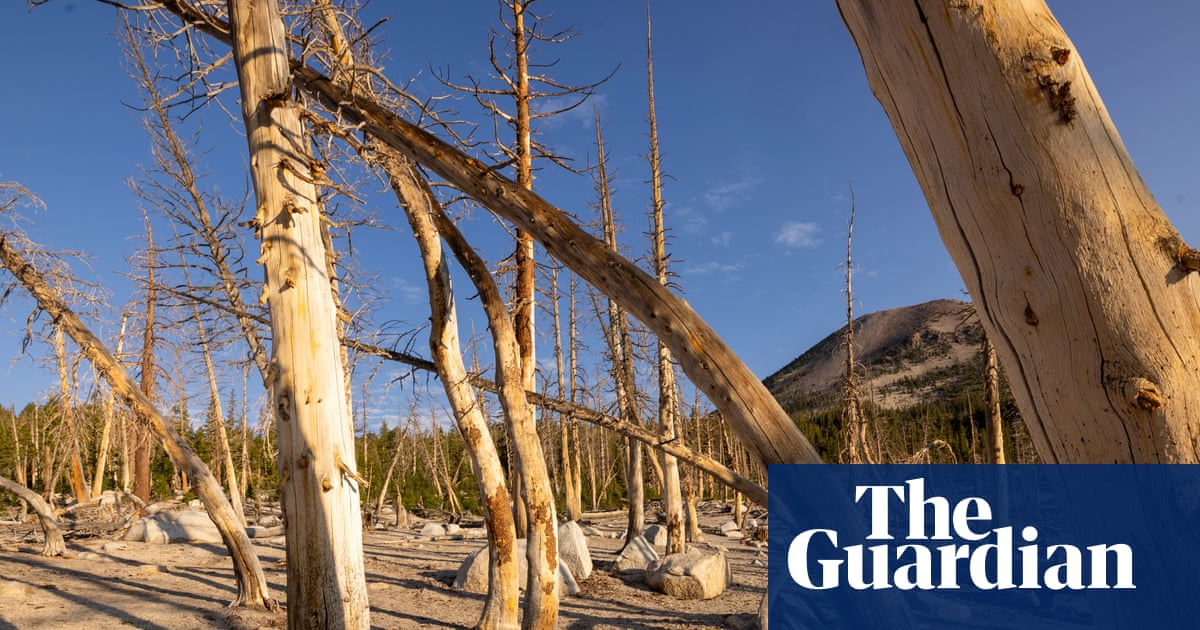
A study published in the journal Science, analyzing fossilized leaf cells from the Paleocene-Eocene Thermal Maximum (PETM) roughly 56 million years ago, found that a rapid rise in carbon dioxide caused forests to initially densify and then collapse, with about 60% of standing vegetation biomass lost, according to the study's lead author.
The PETM, during which large amounts of carbon were released over a 130,000-year period and global temperatures rose by as much as 8C (14F), is the closest known prehistoric analogue to current carbon emissions, according to the source. The study's authors state that the current rate of carbon emissions from fossil fuel combustion is unmatched in historic and prehistoric records.
Regan Dunn, a researcher at La Brea Tar Pits and the Natural History Museum of Los Angeles County who led the study, said the team reconstructed ancient forest canopy density by analyzing fossilized leaf cuticle fragments — cells from the outer layer of leaves — which allowed them to calculate how forest cover advanced and retreated across the PETM period.
The paper states that the shift from forests expanding to forests declining occurred around 2000, when the effects of drought and heat stress overtook any benefit from elevated CO2 levels. The source notes that extra carbon dioxide traps additional heat, which can cause trees to struggle under extreme temperatures, nutrient deficits, pest outbreaks, and wildfire conditions.
The source notes that atmospheric CO2 concentrations have risen by more than 50% in little over a century since industrialization, and that this increase initially helped boost some plant life — a pattern cited by some officials in the Trump administration as evidence that fossil fuel emissions benefit the environment. Interior Secretary Doug Burgum told Fox Business that "CO2 was never a pollutant" and that "plants need CO2 to survive and grow. They thrive with more CO2." Energy Secretary Chris Wright said on the same network that "a warmer planet with more CO2 is better for growing plants."
Trevor Keenan, a scientist at the University of California, Berkeley, who was not involved in the study, described it as a "genuine advance" providing a record spanning tens of thousands of years. Keenan said the ancient carbon release occurred over thousands of years, while the current release is happening over decades, giving ecosystems less time to adjust. He also noted that today's forests face warming while simultaneously being fragmented, logged, converted to agriculture, and exposed to altered fire regimes.
- The source does not state the full title or publication date of the paper within the journal Science.
- The source does not identify the other co-authors of the study beyond Dunn.
- The source does not state the specific geographic location or locations from which the fossilized leaf cuticle samples were drawn, beyond a reference to the Hanna Basin, Wyoming, in a photo caption.
- The source does not specify the CO2 concentration levels recorded during the PETM compared with present-day levels.
- The source does not state whether the paper was peer-reviewed or describe its methodology beyond the analysis of fossilized leaf cuticle fragments.
- The source does not include any response from Burgum's or Wright's offices to the study's findings.
Read the original at The Guardian US