New European Union rules under the Packaging and Packaging Waste Regulation (PPWR) took effect Wednesday, prohibiting high concentrations of PFAS chemicals in new packaging designed to come into contact with food, as part of a broader effort to reduce packaging waste and improve public health across the bloc.
EU begins enforcing PFAS limits in food packaging under new waste regulation
New European Union rules under the Packaging and Packaging Waste Regulation (PPWR) took effect Wednesday, prohibiting high concentrations of PFAS chemicals in new packaging designed to come into contact with food, as part of a broader effort to reduce packaging waste and improve public health across the bloc.
PFAS, known as 'forever chemicals' because they persist in the body and the environment, have been linked to increased risks of certain cancers and other health conditions. Scientists have raised concerns about long-term exposure, even though the amount that migrates into food from packaging is typically low. PFAS are used to make paper and cardboard packaging grease- and water-resistant and are found in products ranging from pizza boxes to frozen ready meals.
Under PPWR, businesses are not required to recall or destroy packaging that was already on the market before Wednesday. The PFAS rules follow a separate EU ban on bisphenol A (BPA) in food-contact materials, which came into force last month.
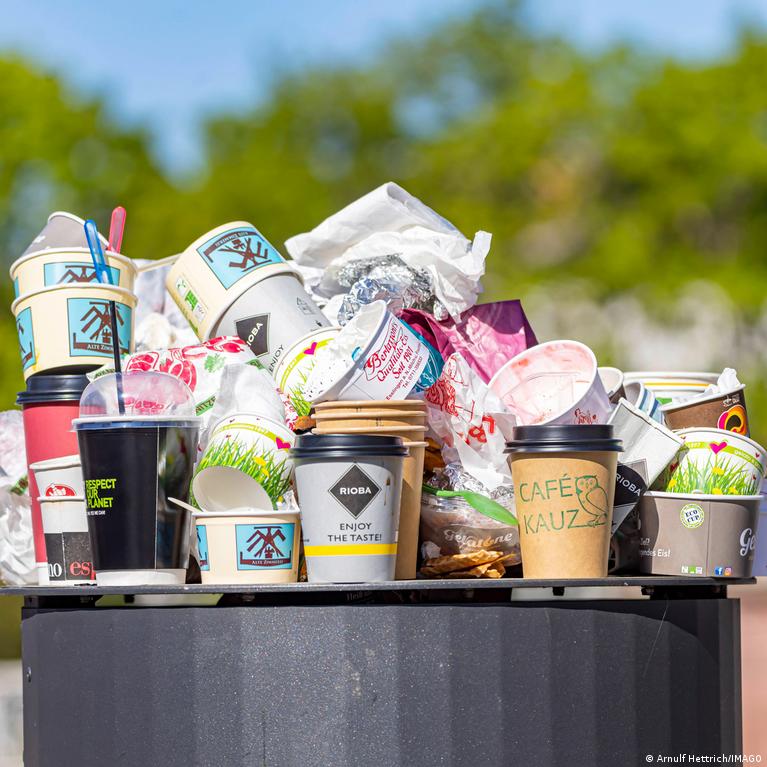
According to the European Commission, packaging waste in EU countries increased by 20% over the past decade, and without PPWR, discarded packaging was projected to rise by a further 19% by 2030, driven in part by the growth of online shopping and convenience food. EU data show that 178 kilograms of packaging waste was generated per person across the bloc in 2023, of which 35.3 kg was plastic, with only 42% of that plastic recycled. Germany's per-capita packaging waste stood at 215 kg in 2023, above the EU average. Packaging accounts for roughly 40% of plastic consumption in Europe, according to an EU official.
The regulation sets binding targets to reduce overall packaging waste by 5% by 2030 and 15% by 2040. From 2028, manufacturers will be required to place standardized labels on packaging indicating materials used and disposal instructions. Certain food-service businesses such as restaurants and cafes will be required to offer reusable packaging options, often at no additional cost to the customer. Deposit-and-return schemes for plastic bottles and cans are to be introduced bloc-wide by 2029, and from 2030 all packaging placed on the EU market must be designed to be recyclable. Single-use plastic packaging for fresh produce will also be banned from 2030, and packaging will be required to be kept to a minimum necessary to protect the product.
EU member states will set their own penalties for non-compliance. In Germany, authorities may impose fines of up to €200,000 for more serious breaches.
- The source does not include a response or rebuttal from the European Commission specifically addressing the compliance-cost criticisms raised by businesses and retailers.
- The source does not specify what levels of PFAS are now prohibited or what the precise threshold concentrations are under PPWR.
- The source does not detail how the new PFAS limits will be enforced or which EU authorities are responsible for monitoring compliance.
- The source does not indicate whether any transitional relief or grace periods are available for small businesses struggling with compliance costs.
- The source does not report on the positions of consumer or public-health advocacy groups regarding the regulation.
Read the original at Deutsche Welle