European Commission President Ursula von der Leyen is due to address the European Parliament in Strasbourg on Wednesday in her annual keynote speech, according to Arab News and The Straits Times. Arab News reports she will use the address to unveil long-awaited plans to limit access to social media, video-sharing platforms, games and AI chatbots for children under 15, with the proposed 'EU KIDS Act' to be formally presented by von der Leyen and the Commission's tech chief, Henna Virkkunen, in Strasbourg on Thursday. The Straits Times, citing officials, reports the same speech will focus on EU solidarity in tackling climate change, artificial intelligence and competition from China, and will also cover migration. Canadian Prime Minister Mark Carney, whose country has moved to curb social media for under-16s, is in Strasbourg and is due to deliver his own address to the assembly on Thursday.
Von der Leyen to set out EU priorities in Strasbourg address, including draft curbs on under-15s' online access
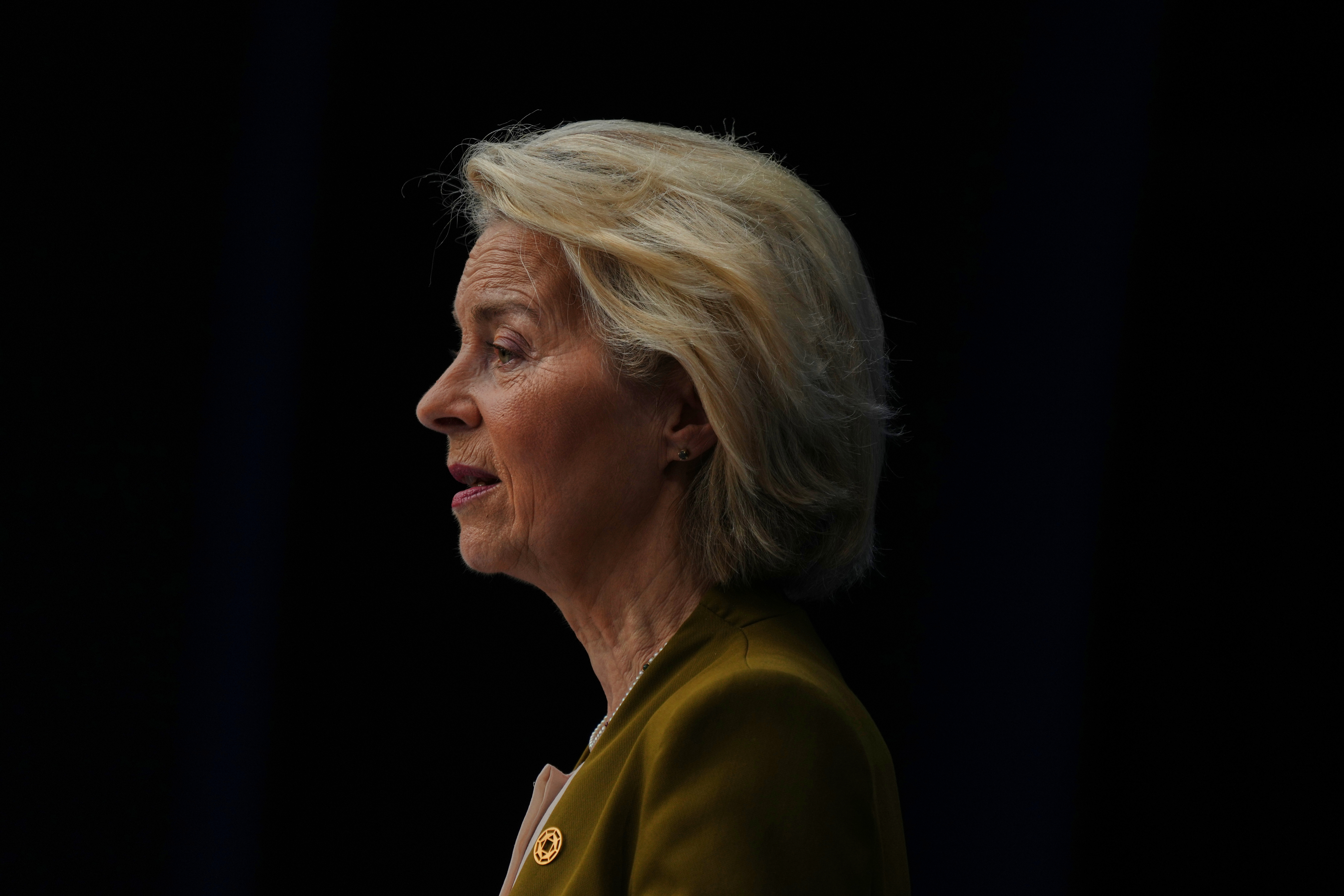
European Commission President Ursula von der Leyen is due to address the European Parliament in Strasbourg on Wednesday in her annual keynote speech, according to Arab News and The Straits Times. Arab News reports she will use the address to unveil long-awaited plans to limit access to social media, video-sharing platforms, games and AI chatbots for children under 15, with the proposed 'EU KIDS Act' to be formally presented by von der Leyen and the Commission's tech chief, Henna Virkkunen, in Strasbourg on Thursday. The Straits Times, citing officials, reports the same speech will focus on EU solidarity in tackling climate change, artificial intelligence and competition from China, and will also cover migration. Canadian Prime Minister Mark Carney, whose country has moved to curb social media for under-16s, is in Strasbourg and is due to deliver his own address to the assembly on Thursday.
According to a draft document cited by Arab News, the planned legislation would set strict limits on access to social media, AI chatbots and online gaming for under-15s. Under the tiered system described: those aged 15 and over would be allowed to open their own accounts with social media, AI and gaming platforms; those aged 13 and 14 would be allowed 'introductory' accounts set up under parental control with limited features and strict screen time caps; children aged three to 13 would have access only to 'fully parent-controlled accounts on child-friendly services' with strict safety standards; and children under three would have no access. Addictive design features such as infinite scrolling would be banned for children.
Arab News reports, citing a second document seen by AFP, that platforms breaking the rules would face fines of up to six percent of annual turnover. The EU has already instructed Meta's Facebook and Instagram and TikTok to change what it calls addictive design under its content law, the Digital Services Act, but Brussels considers existing rules insufficient to bring about the changes it wants.
Arab News reports von der Leyen faced pressure for bloc-wide action from member states including France, Denmark and Greece, and that the vast majority of EU states back stringent rules on platforms. It also reports a setback in France, where a government attempt to ban social media for children under 15 was struck down by a top court on freedom of expression grounds, with a reworked proposal submitted this week.
The Straits Times reports that von der Leyen, now in her second five-year term leading the EU executive, will stress the need to maintain European independence in sectors including energy, raw materials and clean technologies, and will argue no single EU country can handle these challenges alone. Officials said she is likely to say Canada cannot become an EU member but that the bloc wants to bring it as close as possible because it shares Europe's values and could help reduce dependence on China for raw materials and their processing.
According to The Straits Times, von der Leyen is expected to say she favours negotiations with China on reducing what officials described as an unsustainable one-billion-euro-a-day EU trade deficit, but that those talks must produce results soon or the EU would have to take other steps to protect its economy. Officials said she is also expected to say the EU is already experiencing the effects of climate change like no other continent, that it must stay its course on mitigation while stepping up adaptation, drawing on the past three months of unprecedented heat waves and wildfires, and that EU leaders must do more to address citizens' concerns that AI threatens jobs and cybersecurity while ensuring the economy benefits from it. She is also to discuss migration and lessons from the events in Ceuta at the end of July, possibly through an increased role for the EU border agency Frontex, officials said.
Arab News reports the proposal will become law only after negotiations between EU capitals and the European Parliament on a final text, which could take months.
Where sources differ
- The two sources describe different principal subject matter for the same speech: Arab News reports von der Leyen will unveil plans curbing under-15s' access to social media, AI and gaming, while The Straits Times, citing officials, reports she will call for EU unity on climate change, artificial intelligence and competition from China, and will discuss migration. Neither source mentions the other's stated themes for the address.
- Arab News reports a French court struck down a government attempt to ban social media for children under 15 on freedom of expression grounds; no equivalent detail appears in The Straits Times, which does not cover the child online safety measures.
- Neither source provides the full text of the proposed legislation, the exact scope of the rules, or which platforms and services would be covered; Arab News' details come from draft documents it says were seen by AFP.
- No source states when the proposal would take effect, what compliance deadlines would apply, or which authority would enforce the proposed fines of up to six percent of turnover.
- The identity and specific responses of the technology companies referred to collectively as 'Big Tech' are not given; no company position or comment on the planned measures appears in either source.
- Neither source includes any direct statement from Ursula von der Leyen, Henna Virkkunen or Mark Carney on the child online safety proposals.
- The 5Rights Foundation research is not described in detail — the nine services examined are not named, nor is the methodology or sample.
- The French court ruling on the under-15 social media ban is not attributed to a named court or dated, and the content of the reworked French proposal submitted this week is not described.
- The Straits Times' account of the speech relies on unnamed officials describing what von der Leyen is 'likely' to say; neither source contains the delivered text.
- The specific 'other steps' the EU might take if China trade talks do not produce results are not specified, and the EU trade deficit figure of one billion euros a day is attributed only to officials via The Straits Times.
- No source explains what happened in Ceuta at the end of July or details the proposed expanded role for Frontex.
- Arab News — original — by AFP
- The Straits Times — by The Straits Times
Read the original at Arab News