Specialist eclipse glasses have become difficult to obtain in the UK ahead of Wednesday's solar eclipse, in which approximately 90% of the Sun will be obscured by the Moon, making it the most significant such event in the country since 1999. Retailers including Royal Museums Greenwich, cited by UK health officials as a reputable supplier, have sold out, with the institution attributing the shortage to an 'unprecedented volume' of orders.
Eclipse Glasses Sell Out Across UK Ahead of Wednesday's Solar Eclipse
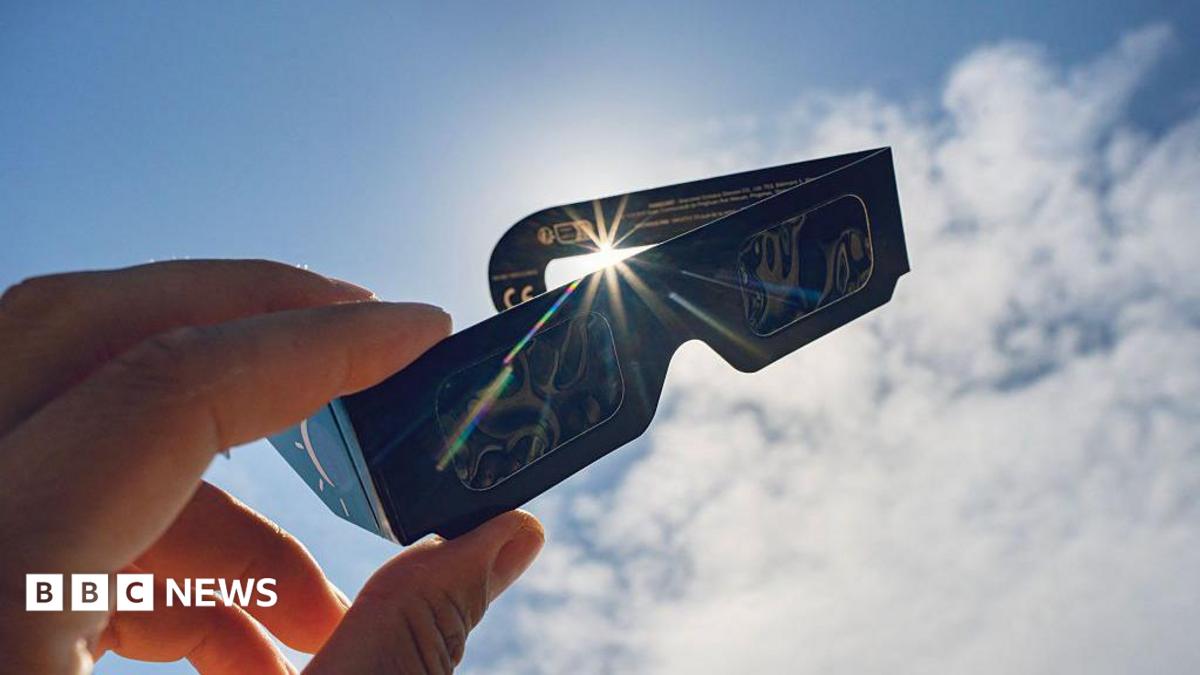
Specialist eclipse glasses have become difficult to obtain in the UK ahead of Wednesday's solar eclipse, in which approximately 90% of the Sun will be obscured by the Moon, making it the most significant such event in the country since 1999. Retailers including Royal Museums Greenwich, cited by UK health officials as a reputable supplier, have sold out, with the institution attributing the shortage to an 'unprecedented volume' of orders.
A bakery in central London has been selling eclipse glasses alongside its usual products, with one staff member telling the BBC that around 100 pairs had been sold in a single morning. Customers at the shop reported difficulty finding glasses elsewhere, with one saying they had searched specifically for outlets that did not require postal delivery after concluding they had left it too late to order online.
Online, pairs meeting the required safety specifications have largely sold out, according to the source. Those that remain available either carry next-day delivery fees or cannot be delivered before the eclipse.
The UK Health Security Agency has advised that safe glasses should carry the international safety standard marking ISO 12312-2 and should not have scratched, torn, or damaged lenses. The agency has also urged caution around glasses sold online as demand has led eclipse viewers to search social media for purchasing tips.
Experts have advised against looking directly at the Sun, warning that even brief exposure can cause lasting damage. The Royal College of Ophthalmologists noted that the retina has no pain receptors, meaning damage can occur without the viewer being aware. The college's president, Mohamed Elalfy, is quoted making this point in the source text.
The Royal College of Ophthalmologists reported approximately 70 cases of vision problems following the 1999 total solar eclipse, with around 40% of those affected having looked at the eclipse for less than one minute. The college described indirect viewing methods, such as livestreams or broadcasts, as the safest option.
Imo Bell, a planetarium astronomer at The Royal Observatory Greenwich, told the PA news agency that specialist eclipse glasses are 'very, very different' from regular sunglasses and block out enough light that only the Sun is visible through them. She also stated that the UK would not experience an eclipse of comparable significance for a considerable period.
- The name or location of the specific bakery selling eclipse glasses is not established
- The total number of eclipse glasses sold nationally or the scale of the shortage beyond individual retailers is not established
- The prices being charged for glasses, including any price increases due to demand, are not established
- Which other retailers have sold out beyond Royal Museums Greenwich is not fully established
- The exact date and time the eclipse will be visible and in which parts of the UK is not specified in the source
- Whether any regulatory or consumer protection action is being taken regarding potentially non-compliant glasses sold online is not established
- The total number of eclipse glasses ordered from Royal Museums Greenwich is not established