Senior executives at three of India's largest automakers privately discussed concerns about contamination in E20 ethanol-blended petrol in the days before their industry body withdrew a formal complaint on the issue, according to internal emails reviewed by Reuters. The Society of Indian Automobile Manufacturers (SIAM) pulled its July 28 letter to the government about fuel contamination shortly after the government said the fuel was safe, stating that some figures required further verification.
Indian automakers privately flagged E20 fuel contamination before withdrawing complaint, internal emails show
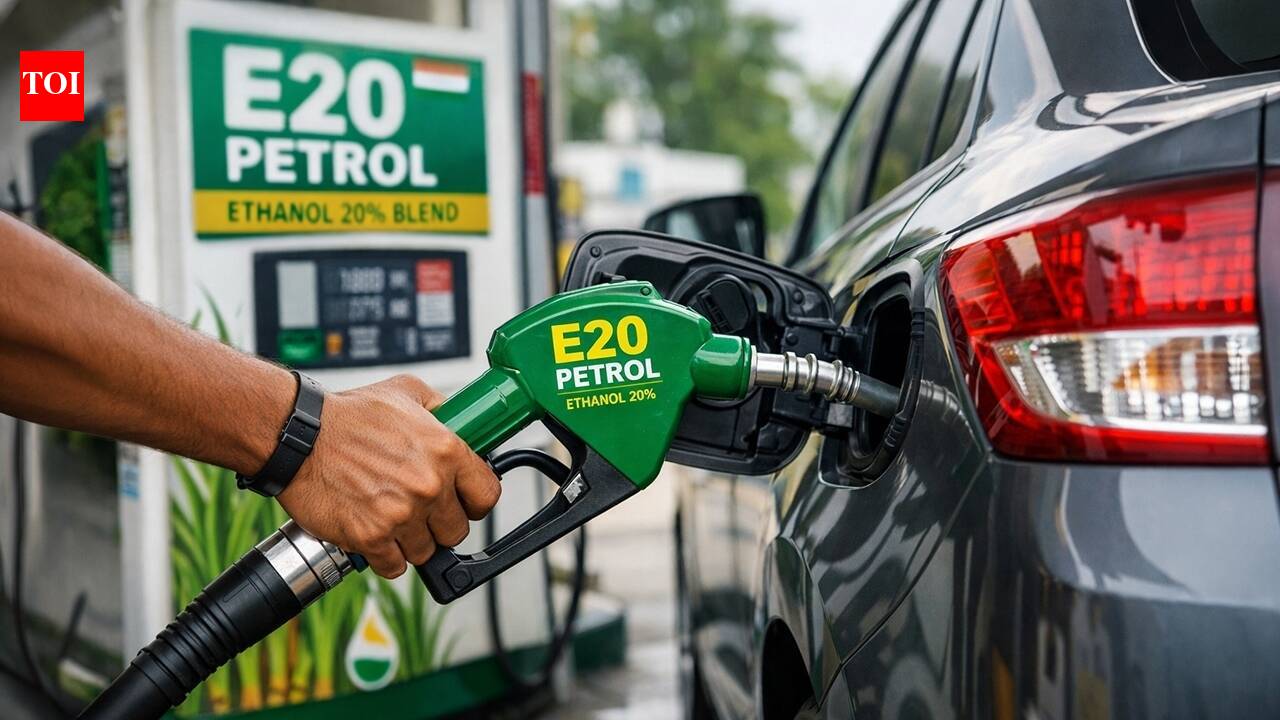
Senior executives at three of India's largest automakers privately discussed concerns about contamination in E20 ethanol-blended petrol in the days before their industry body withdrew a formal complaint on the issue, according to internal emails reviewed by Reuters. The Society of Indian Automobile Manufacturers (SIAM) pulled its July 28 letter to the government about fuel contamination shortly after the government said the fuel was safe, stating that some figures required further verification.
India made E20 — petrol blended with 20% ethanol — the only petrol available from April 1, as part of a government strategy to reduce pollution and curb crude oil imports. Since then, hundreds of consumers have claimed the fuel has lowered vehicle mileage and increased wear and tear, and at least one legal challenge has been filed, according to the Reuters report.
Industry data circulated in the internal email chain, compiled from more than 250 fuel samples collected at retail outlets over a one-year period across as many as 21 of India's 36 states and union territories, showed chloride levels ranging from 6 to 570 parts per million (ppm) in Rajasthan, 1.4 to 420 ppm in Delhi, and 10 to 357 ppm in Maharashtra. The government's maximum permissible chloride level is 3 ppm. The same data indicated moisture levels as high as 13,000 ppm in Andhra Pradesh and 12,500 ppm in Uttar Pradesh, against a government permissible limit of 3,000 ppm.
In a July 26 email, Maruti Suzuki senior executive Anoop Bhat said the high chloride levels had already been discussed privately with the Ministry of Petroleum and Natural Gas, and noted that existing fuel injectors 'can tolerate' a maximum chloride concentration of 1 ppm. Mahindra's Senior Principal Engineer for Fluids Technology, R. Ramaprabhu, wrote in the same email exchanges that organic chloride was the contaminant responsible for rapid vehicle failures being observed by the industry and said it could damage engines 'within 200 km,' adding that Mahindra has 'strong evidences' based on fuel samples collected from retail outlets.
SIAM had previously warned that elevated chloride content can corrode automotive components and that excessive moisture in fuel can cause a vehicle to stop functioning immediately after refuelling. In its since-withdrawn July 28 letter, SIAM said chloride levels had increased following the nationwide introduction of E20 and urged the government to direct oil marketing companies to identify the underlying cause. On moisture contamination, SIAM cited inadequate maintenance of underground storage tanks and pipelines at fuel retail outlets as a possible reason. The source of the contamination has not been established.
Maruti Suzuki, Tata Motors and Mahindra together account for about 67% of India's passenger vehicle market, according to the Reuters report.
- The source does not state the identity or methodology of the laboratories that conducted the fuel testing on behalf of the automakers.
- The source does not establish the cause of the chloride or moisture contamination detected in the fuel samples.
- Maruti Suzuki and Tata Motors did not respond to Reuters' requests for comment, so their official positions on the internal emails and the withdrawn complaint are not stated.
- The source does not state whether the government has launched a formal investigation into the contamination data compiled by the automakers.
- The source does not state what action, if any, the Ministry of Petroleum and Natural Gas took following its previously reported private discussions with Maruti Suzuki's Bhat about chloride levels.
- The source does not state the specific dates on which the more than 250 fuel samples were collected or the precise retail outlet locations sampled.
Read the original at The Times of India