Dolly Parton, the country singer, songwriter and philanthropist, died at the age of 80 in Nashville, Tennessee, after a privately conducted battle with cancer, the type of which her family did not disclose. Her death prompted an outpouring of tributes from figures ranging from President Donald Trump to LGBTQ+ community members, Christian clergy, and fans worldwide.
Dolly Parton dies at 80 after secret cancer battle, drawing tributes across religious, political and cultural lines
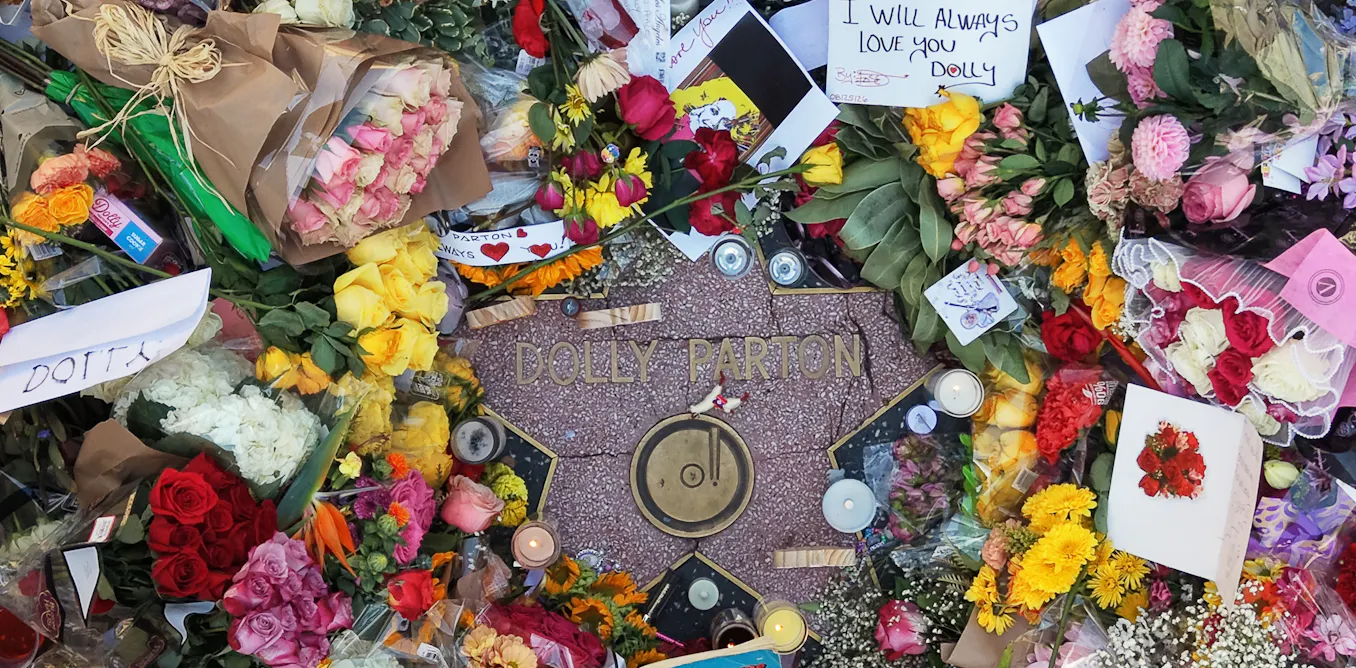
Dolly Parton, the country singer, songwriter and philanthropist, died at the age of 80 in Nashville, Tennessee, after a privately conducted battle with cancer, the type of which her family did not disclose. Her death prompted an outpouring of tributes from figures ranging from President Donald Trump to LGBTQ+ community members, Christian clergy, and fans worldwide.
According to the New York Post, Parton died on a Tuesday in Nashville. The Post also reported, citing TMZ, that she had been hospitalized at Vanderbilt University Medical Center in Nashville with kidney and autoimmune issues five days before her death, and that she will be laid to rest in a small, private service for immediate family.
Parton's sister Stella, 77, wrote in a Facebook tribute that Dolly had told her she would allow her medical team to try experimental drugs even if there was no hope for her, in the hope of helping others in the future. 'My sister was always thinking of others,' Stella wrote, according to the New York Post.
President Donald Trump posted a tribute on his TruthSocial platform and ordered flags flown at half-staff for a week, according to The Conversation. Simultaneously, a Pride flag was flown at half-staff in the Castro neighborhood of San Francisco in her honor, that source reported.
Carrie Underwood described Parton as 'the epitome of faith, grace, talent, beauty and humour' and said she 'had a humble heart for Jesus,' according to The Conversation. Jesuit priest James J. Martin thanked Parton for 'teaching me about the Christian life,' that source also reported.
The Conversation, drawing on a scholar of American religions working on a biography of Parton, described how mourners spanned conservative Catholic clergy and advocates for queer and trans rights. Non-Christians discussed Parton in sacred terms, with Vox writer Constance Grady having called her a 'secular American saint' in 2021. Musician Roseanne Cash referred to her as a 'goddess' on Instagram following her death.
According to The Conversation, Parton discussed her spirituality throughout her career. In her 1994 memoir she recounted a fundamentalist pastor grandfather, and in a 1977 Rolling Stone interview she said she did not consider herself a Christian but believed in God. Later in life she embraced the label 'Christian' in her own terms, supporting LGBTQ+ rights and celebrating her own sexuality while rejecting proselytizing. She wrote that people do not have to embrace Christianity 'to be a decent and worthwhile human being.'
Beyond her religious identity, Parton's philanthropy drew wide admiration. The Conversation noted her Imagination Library book distribution program, a one-million-dollar donation that helped fund COVID-19 vaccine research, and her support for the Black Lives Matter movement and LGBTQ+ rights.
The New York Post reported that Nathan Hickman, band director at Sevier County High School — Parton's alma mater — recalled first meeting her in 2013 at a Dollywood concert. Parton, having overheard Hickman tell students he already knew her, greeted him by name on stage with a hug, a technique Hickman later learned was part of her stagecraft. Parton anonymously funded the school's music program for decades, with small butterflies on band uniforms honoring her, and also served as an anonymous donor to hundreds of primarily Black school districts across the American South, according to that report.
According to the Times of India, Parton wrote her 1973 hit 'Jolene' after a red-haired bank teller flirted with her husband Carl Thomas Dean early in their marriage. The name 'Jolene' came from a young red-haired fan who asked for an autograph. The song became Parton's first solo number-one hit on the country charts. The Times of India also reported that Parton had been married to Dean for 59 years and that he died a year before her.
The Times of India described Parton as the most honored country performer in history, citing 11 Grammy Awards, three Emmy Awards, nominations for two Academy Awards, six Golden Globes and a Tony Award, in a career spanning six decades.
According to the New York Post, Harry Styles honored Parton during his residency at Madison Square Garden in New York City, saying 'Dolly, we love you, thank you so much,' before performing 'I Will Always Love You' to a sold-out audience.
- The type of cancer Parton had was not disclosed by her family or team in any of the sources.
- The precise circumstances of her death and who was present are not established by any source.
- No source provides detail on the experimental drug offer beyond Stella Parton's Facebook account — it is unverified by medical or other independent sources.
- The full extent of Parton's anonymous donations to Black school districts is not quantified in any source.
- No source quotes Carl Thomas Dean's family or representatives regarding Parton's death.
- The funeral arrangements are attributed only to TMZ via the New York Post and are not confirmed by family statements in the sources.
- No official medical or hospital statement from Vanderbilt University Medical Center appears in any source.
- President Trump's full tribute text is not quoted in any source beyond noting its existence on TruthSocial.
- The Conversation — original — by Sarah Dees, Associate Professor of American Religions, Iowa State University
- New York Post — by Faran Krentcil
- New York Post — by Tamantha Ryan
- The Times of India — by HAIMANTI MUKHERJEE
Read the original at The Conversation