More than 100 people have been killed across India since late July as heavy monsoon rains triggered floods, landslides and lightning strikes. The northeastern state of Assam has reportedly borne the largest share of the impact, with more than 120,000 people affected by flooding, while Kerala, Jammu and Kashmir, Bihar, Jharkhand and the capital New Delhi have also recorded deaths and widespread disruption.
India's monsoon flooding kills more than 100 as scientists point to shifting rainfall patterns
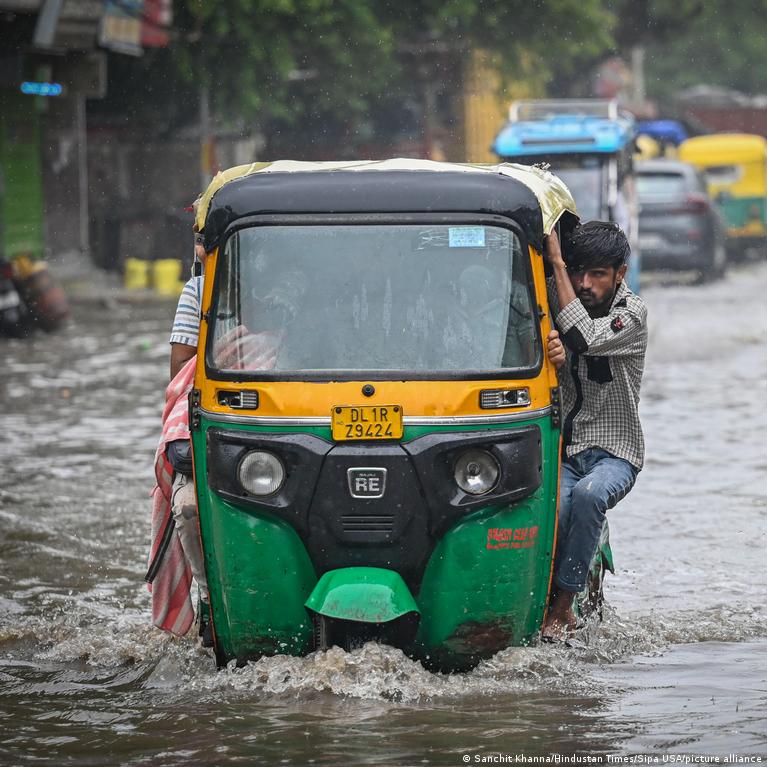
More than 100 people have been killed across India since late July as heavy monsoon rains triggered floods, landslides and lightning strikes. The northeastern state of Assam has reportedly borne the largest share of the impact, with more than 120,000 people affected by flooding, while Kerala, Jammu and Kashmir, Bihar, Jharkhand and the capital New Delhi have also recorded deaths and widespread disruption.
India's southwest monsoon typically arrives around June, delivers most of the country's annual rainfall, and begins to retreat by September. Scientists and officials say the broad pattern that allowed farmers, cities and businesses to plan around the monsoon is becoming less reliable.
Researchers say the concern is not necessarily a change in total rainfall volumes but in delivery: longer dry spells are reportedly being followed by short, intense bursts that can overwhelm rivers, drainage systems and hillsides. El Niño has contributed to variability in the current season, but scientists attribute longer-term changes to climate shifts.
Akshay Deoras, a senior research scientist with the UK's National Centre for Atmospheric Science and the University of Reading, cautioned against describing the Indian monsoon as having entered 'a fundamentally different regime,' noting that active and break spells have always been part of the monsoon. According to Deoras, what appears to be changing is their intensity, with a warmer atmosphere holding more moisture and making active spells more severe.
Madhavan Nair Rajeevan, a climate scientist and former secretary in India's Ministry of Earth Sciences, said average seasonal rainfall has not shown a systematic long-term change and the monsoon remains a robust natural phenomenon. However, he told DW that the timing, intensity and distribution of rainfall are all noticeably different, and described what he termed 'an increase in short-duration rainfall extremes, longer dry spells, and changes in the frequency, intensity and distribution of monsoon weather systems.' Rajeevan characterized this as 'a structural shift in the monsoon system.'
Indian farmers depend heavily on the timing of rainfall, with long dry spells disrupting sowing and reducing soil moisture, while intense rain can damage crops and wash away fields. Urban areas face compounding pressures: rapid construction has reduced permeable land, and soil hardened by prolonged dry periods absorbs less water when heavy rain eventually arrives, sending more runoff into rivers and drainage systems.
Deoras said India's drainage systems and flood management are still too often designed around historical seasonal rainfall averages rather than the short, high-intensity events that cause the most disruption. He noted that forecasting has improved but argued that warnings need to translate into what he called 'timely, impact-based decisions,' such as adjusting school schedules, restricting travel or closing vulnerable areas before heavy rain arrives.
Environmental lawyer Ritwick Dutta, managing trustee of the Legal Initiative for Forest and Environment, said India's environmental clearance system does not require climate change to be systematically factored into project decisions. He pointed to the western city of Pune, where a study by the state government and the Energy and Resources Institute projects a 37% increase in rainfall by 2030, a projection he said has not been adequately incorporated into the city's planning, including its riverfront development.
The Centre for Science and Environment reported that extreme weather affected India on 331 of 334 monitored days in 2025, representing 99% of the assessed period. More than 4,000 people died, approximately 3,000 of them during the monsoon season, and at least 30 states and union territories experienced extreme weather simultaneously for eight consecutive months.
Sunita Narain, director general of the Centre for Science and Environment, said adaptation needs to become part of India's development strategy, arguing that cities, roads, drainage systems and water infrastructure can no longer be designed around historical climate norms. Rajeevan called for a shift from documenting changes toward implementing sector-specific adaptation strategies, including better urban flood management, revised agricultural practices, stronger water-storage systems and infrastructure designed for short-duration extreme rainfall.
- The source does not establish a precise death toll breakdown by state or cause of death
- The source does not establish the total economic or agricultural losses from the described flooding events
- The source does not establish the specific El Niño conditions referenced or quantify their contribution to this season's variability
- The source does not establish what infrastructure investment or policy changes, if any, Indian authorities have announced in response
- The source does not establish the methodology or time period covered by the Centre for Science and Environment's monitoring data
- The source does not establish whether the 37% Pune rainfall projection has been formally submitted to or rejected by city planning authorities
- The source does not establish the current status of any legal proceedings or rulings related to Dutta's environmental legal work referenced in the article
Read the original at Deutsche Welle