Romania has shut down both reactors at the Cernavoda nuclear plant after the Danube River fell to record-low levels, cutting off adequate cooling water for the facility, which normally supplies roughly 18 to 20 percent of the country's electricity. State-owned operator Nuclearelectrica announced a controlled shutdown of the second reactor on Thursday, weeks after the first unit was taken offline on July 28. Romania has also declared a nationwide 30-day state of energy alert, according to the Times of India.
Romania shuts both Cernavoda nuclear reactors as Danube drops to record lows amid European drought
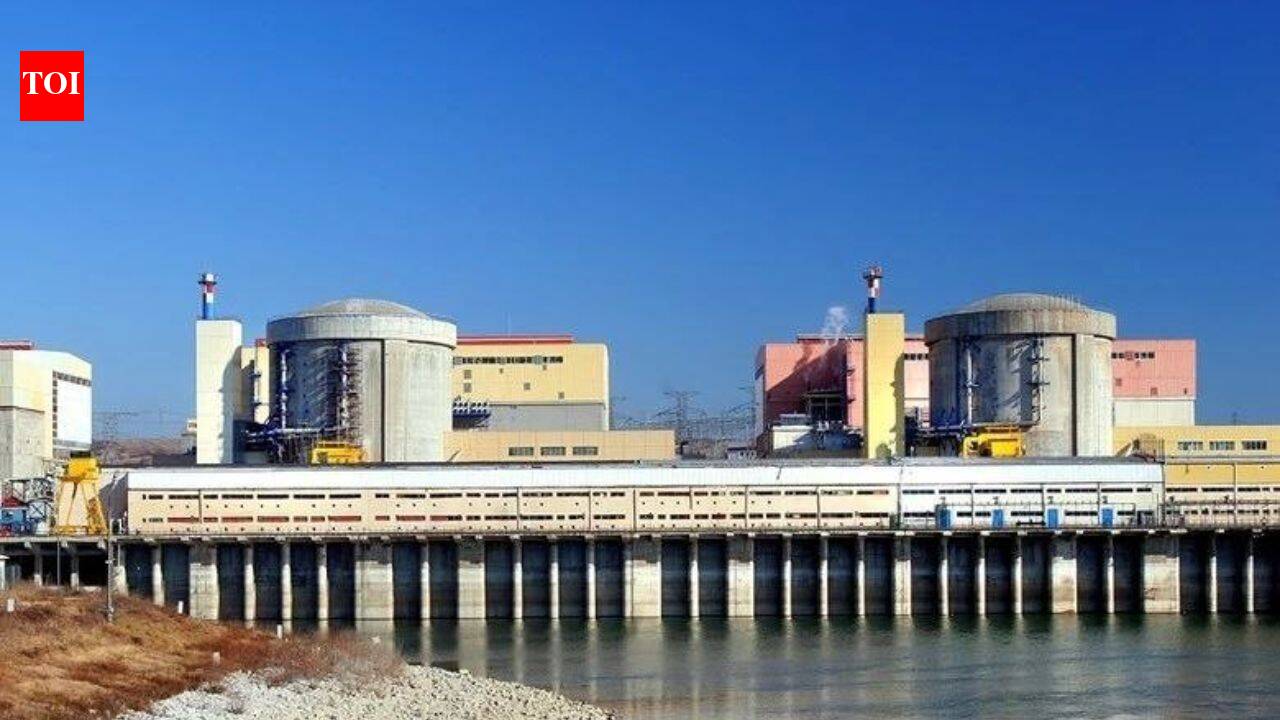
Romania has shut down both reactors at the Cernavoda nuclear plant after the Danube River fell to record-low levels, cutting off adequate cooling water for the facility, which normally supplies roughly 18 to 20 percent of the country's electricity. State-owned operator Nuclearelectrica announced a controlled shutdown of the second reactor on Thursday, weeks after the first unit was taken offline on July 28. Romania has also declared a nationwide 30-day state of energy alert, according to the Times of India.
The Cernavoda plant has two units each rated at roughly 700 megawatts, according to the Times of India. Unit 1 was shut down in a controlled manner on July 28 under procedures for severe drought conditions. Nuclearelectrica stated that the preventive shutdown had no impact on nuclear safety, plant personnel, or the environment.
The Danube, Europe's second-longest river according to Al Jazeera — or the European Union's longest river according to the Times of India — stretches approximately 2,850 to 2,860 kilometres from Germany to the Black Sea. Flow at Romania's upstream entry point fell to 1,650 cubic metres per second on July 28, about one-third of the long-term July average of 4,750 cubic metres per second, according to the Times of India. By August 6, flow had dropped further to around 1,400 cubic metres per second, matching levels cited in Romania's historical records.
An analysis by the European climate change observatory Copernicus found that flow rates in nearly two-thirds of the Danube had hit their lowest levels in over three decades, according to Al Jazeera.
Romanian authorities undertook emergency works in an effort to maintain cooling for Unit 2. These included blasting a rock obstruction using 180 kilograms of explosives by the Romanian military near the Bala Canal, dredging the riverbed, and sinking four barges loaded with stone to redirect more river flow toward the plant. The Energy Ministry reported that the water level at Cernavoda rose by four centimetres in 24 hours, even though forecasts had predicted a drop of approximately four centimetres, according to the Times of India.
Romania budgeted more than two million euros (approximately $2.3 million) for the river diversion works, according to Al Jazeera. Officials estimated that improved conditions could support Unit 2 for at least nine more days within the forecast period, though the water management agency expected Danube levels near the plant to continue falling until August 16, according to the Times of India.
Cernavoda plant director Romeo Urjan told the AFP news agency that he did not expect the plant to restart operations within the next 10 days, according to Al Jazeera.
Romania's Ministry of Energy said alternative power sources including wind energy and electricity imports were expected to ensure adequate supplies. The government opened talks with Ukraine and neighbouring countries about electricity imports during peak demand, according to the Times of India. Authorities also warned that as a last resort, large industrial consumers could face restrictions during evening hours.
Households, companies, public institutions, and prosumers have been asked to reduce voluntary electricity use between 7 pm and 11 pm through August 31, according to the Times of India citing an econews report. The Energy Ministry also recommended shifting high-consumption appliances and electric vehicle charging to between 11 am and 5 pm when solar generation is stronger.
The low Danube levels have also severely affected shipping along the river's route and, according to the Times of India, impacted wildlife, with fish unable to survive as water temperatures and pollution concentrations rise while oxygen levels decline.
Neighbouring Hungary has also been affected. Its Paks nuclear plant, whose four reactors are also cooled by the Danube and normally supply about a third of Hungary's electricity, has been partially shut down since late last month. Hungarian Prime Minister Peter Magyar announced on Wednesday that the government had ordered construction of a submerged wall, or weir, to help control flows near the plant, and that two 80-metre barges were being stationed at Paks and could be sunk to raise the water level.
Where sources differ
- The two sources describe the Danube's length differently: Al Jazeera states it is 2,850 km, while the Times of India states it is 2,860 km.
- Al Jazeera describes the Danube as 'Europe's second-longest river,' while the Times of India calls it 'the European Union's longest river.' These are not directly contradictory but reflect different framings of the same waterway.
- Al Jazeera states Romania budgeted 'more than 2 million euros' for river works and describes the measures as including blowing up a large rock and sinking four barges. The Times of India adds specific detail that the military used 180 kilograms of explosives and that dredging was also carried out, details absent from Al Jazeera.
- No timeline has been established in the sources for when either reactor at Cernavoda might return to full operation.
- The sources do not specify the terms or quantities agreed upon in Romania's talks with Ukraine and other neighbours regarding electricity imports.
- The sources do not detail the current status or progress of the construction of the weir at Hungary's Paks plant.
- The environmental impact of the controlled blasting and barge-sinking operations in the Danube has not been assessed in any of the sources.
- The sources do not clarify whether the 30-day energy alert triggers specific legal powers or obligations beyond demand-reduction requests.
- No independent expert assessment of whether the river works can sustainably maintain Unit 2 cooling through the remainder of the drought is provided.
- Al Jazeera English — original
- The Times of India — by TOI Science Desk
Read the original at Al Jazeera English