Turkey's parliament has approved a bill titled the 'Law on Strengthening National Solidarity and Social Integration,' submitted by the ruling AKP party and its ultranationalist MHP ally, with 467 out of 592 members voting in favor. The legislation creates a legal framework for an ongoing peace process with the Kurdistan Workers' Party (PKK) by allowing sentence suspensions for certain categories of PKK-related convictions, contingent on verified disbandment and disarmament of the PKK and its affiliated groups.
Turkish Parliament Passes Law Providing Sentence Suspensions Tied to PKK Disarmament
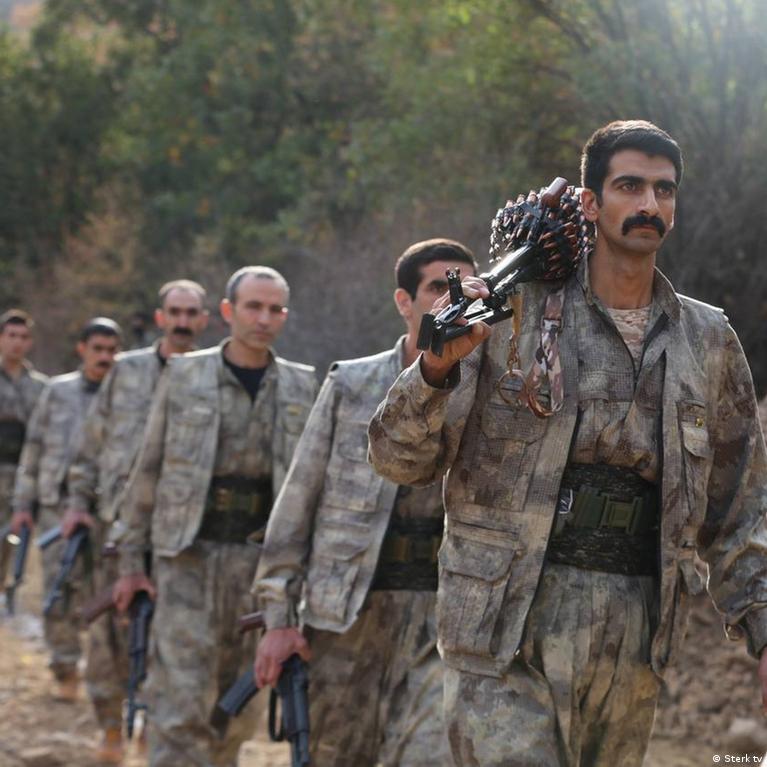
Turkey's parliament has approved a bill titled the 'Law on Strengthening National Solidarity and Social Integration,' submitted by the ruling AKP party and its ultranationalist MHP ally, with 467 out of 592 members voting in favor. The legislation creates a legal framework for an ongoing peace process with the Kurdistan Workers' Party (PKK) by allowing sentence suspensions for certain categories of PKK-related convictions, contingent on verified disbandment and disarmament of the PKK and its affiliated groups.
One year before the bill's passage, the PKK held a symbolic weapons-burning ceremony that was interpreted as a sign of willingness to disband. Since then, Kurdish political representatives have called on the Turkish government to take political steps in response.
Under the law, prison sentences of up to 15 years for PKK membership, propaganda, financing, or intentional support may be suspended for five years; sentences exceeding 15 years or life terms face a ten-year suspension. Ongoing investigations are also to be placed on hold. According to pro-government media, up to 3,600 prisoners could be affected.
The suspensions require complete disbandment of the PKK and surrender of all weapons and ammunition, conditions that must be verified by Turkish authorities and officially confirmed by the National Security Council, which is chaired by President Recep Tayyip Erdogan.
The law excludes PKK members convicted before June 1, 2005, when the current penal code took effect, as well as those with final convictions for homicide. PKK founder Abdullah Ocalan, who in February 2025 called on the PKK to disband and declared an end to armed struggle, is also excluded from the law's provisions.
The pro-Kurdish DEM party voted in favor of the legislation but described it as only a first step requiring further political and legal reforms. The PKK likewise called the bill a first step while criticizing its wording and content, stating that disarmament could not be resolved as long as Ocalan was unable to directly coordinate the peace process.
The PKK also stated that penal code changes alone were insufficient and that broader democratization was needed, arguing that returning fighters and exiled politicians would not leave their mountain bases if they continued to face criminalization and were barred from legal political activity.
Strong opposition came from the ultranationalist IYI party. During parliamentary consultations, IYI delegate Ayyuce Turkes, daughter of the founder of the Grey Wolves movement, accused the government of rushing a significant bill through parliament and criticized what she characterized as an overly conciliatory approach toward Ocalan. A physical altercation occurred during the debate.
The MHP, from which the Grey Wolves movement emerged, now supports the peace process despite having previously opposed earlier peace initiatives. Observers attribute shifts in the regional security environment — including the fall of the Assad government in Syria, the war in Gaza, and the conflict involving Israel, the United States, and Iran — as factors influencing progress in the peace process. Syria and Iran are home to large Kurdish populations supported by various regional actors.
Political scientist Berk Esen criticized the law for lacking concrete democratic solutions to the Kurdish issue, and also noted that the government had simultaneously increased pressure on the main opposition CHP party. Former Istanbul mayor and CHP presidential candidate Ekrem Imamoglu and hundreds of other party members are in prison on charges of fraud and corruption. The entire CHP leadership under Ozgur Ozel was removed; Ozel subsequently formed a new party.
Esen argued that Erdogan, as chairman of the National Security Council, would ultimately determine the pace and scope of the peace process, despite implementation being assigned to a committee chaired by the vice president. Reha Ruhavioglu, director of the Kurdish Studies Center, shared this assessment, citing an asymmetric balance of power between the Turkish state and the PKK, and noting that Erdogan had drawn lessons from the failure of peace talks between 2013 and 2015.
Ruhavioglu also noted that Erdogan is focused on the 2028 presidential and parliamentary elections and would seek to limit political risks associated with the process. He anticipated further controversy if former PKK fighters return to Turkey, and suggested the government would allow returns, suspended sentences, and resumed political activity gradually and in response to public reaction.
Legal pro-Kurdish political activity has faced restrictions in Turkey for decades, with parties banned and politicians arrested or barred from office. Two former co-chairs of the Peoples' Democratic Party, Selahattin Demirtas and Figen Yuksekdag, remain in prison.
- The source does not establish what specific conditions the PKK or DEM party consider sufficient for full disarmament to proceed.
- The source does not confirm whether any PKK members have already begun a formal disarmament or disbandment process since the symbolic weapons-burning ceremony.
- The source does not specify the timeline for implementation of the sentence suspension mechanism.
- The source does not establish what verification process Turkish authorities would use to confirm PKK disbandment and disarmament.
- The source does not provide an official Turkish government response to PKK criticisms of the law's wording and content.
- The source does not clarify the current legal or custodial status of Abdullah Ocalan beyond noting he is imprisoned and excluded from the law.
- The source does not specify how many of the estimated 3,600 potentially eligible prisoners are currently serving sentences for which category of offense.
- The source does not establish the legal basis or circumstances under which elected mayors have been removed from office.
Read the original at Deutsche Welle