Australian shadow housing minister Andrew Bragg said on Thursday that low-income earners should accept lower-quality housing as a trade-off to increase the national supply of dwellings, remarks that drew criticism from housing advocacy groups and prompted public caution from Coalition colleagues including opposition leader Angus Taylor.
Australia's shadow housing minister says low-income earners should accept lower-quality homes to boost supply
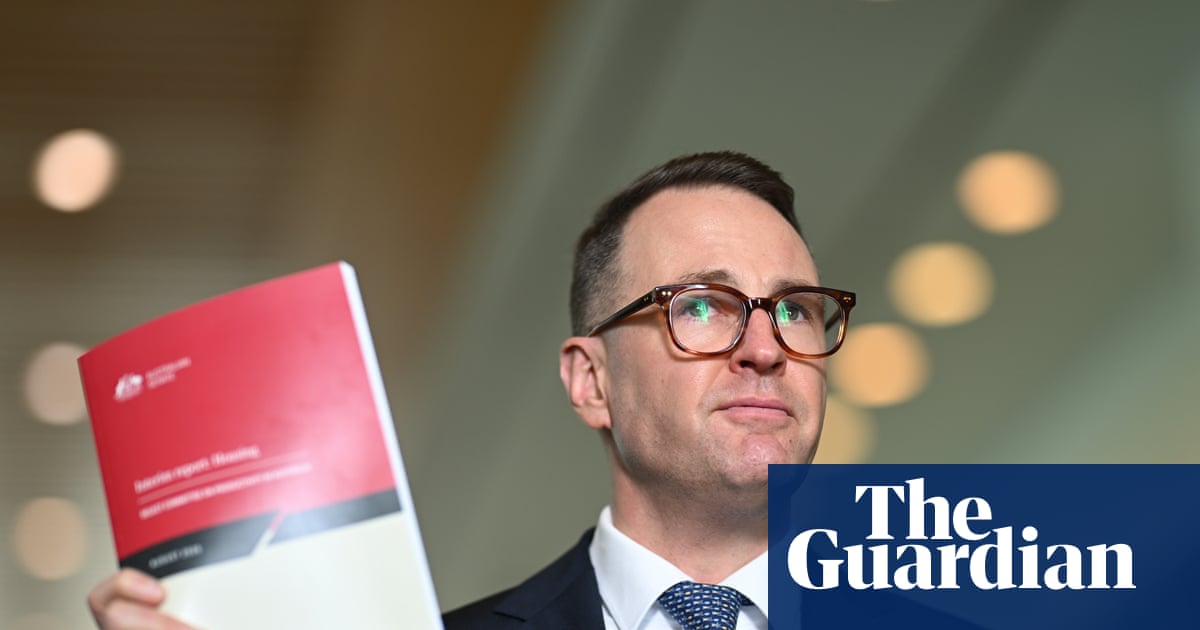
Australian shadow housing minister Andrew Bragg said on Thursday that low-income earners should accept lower-quality housing as a trade-off to increase the national supply of dwellings, remarks that drew criticism from housing advocacy groups and prompted public caution from Coalition colleagues including opposition leader Angus Taylor.
Bragg's proposed 'economic revolution', outlined in a speech on Wednesday, centred on cutting red tape to accelerate home construction. A central element was condensing the National Construction Code from nearly 2,000 pages to approximately 80, with the aim of enabling more 'basic and safe' homes to be built by removing what he described as 'optional extras', including compulsory energy efficiency and accessibility measures.
When asked on ABC Radio National whether this meant low-income earners should accept substandard housing, Bragg replied 'yes, definitely'. He invoked Maslow's hierarchy of needs — a psychological theory proposing a ranking of basic human needs — saying he had been advised against using the term in case it was unfamiliar to some audiences. 'It's more important to have a house than to not have a house,' he said, citing an affordability crisis in the housing system.
Shadow treasurer Tim Wilson had suggested on Wednesday that people could in some cases put 'a jumper on in winter rather than spending huge amounts of money' on improving housing quality, according to The Guardian.
Housing inequality groups including the Australian Council of Social Services criticised Bragg's suggestion, saying quality housing was both more affordable and safer for vulnerable members of the community, according to The Guardian. Maiy Azize, spokesperson for housing advocacy group Everybody's Home, said the change would make building homes cheaper for developers by allowing them to cut corners, arguing that accessibility, energy efficiency and basic liveability 'are not luxuries' but minimum standards. She said building more poor-quality homes 'does nothing to fix' the housing crisis but 'simply gives developers another way to profit from it.'
On immigration, Bragg said net overseas migration would need to be reduced to 180,000 a year over four years to ensure housing supply kept pace with population growth — a level that would represent the country's lowest net overseas migration figure since the mid-2000s, according to The Guardian. He said this could be achieved through 'modest reductions in international students, working holidaymakers, and some unskilled workers.'
Taylor said he had made clear to Bragg that his role was to express the views of the Coalition and its senior team, declining to provide a specific net overseas migration figure, stating it would 'depend on housing supply'. He indicated the figure would be 'well below 200,000'. The Coalition has not formally nominated a target figure or specified which visa categories would be reduced, according to The Guardian.
Nationals leader Matt Canavan ruled out cuts to visas for workers undertaking jobs in rural and regional areas for farmers, while downplaying the significance of any internal disagreement. 'There's a mountain out of a molehill being made here,' he said, adding he had spoken with Bragg that morning.
Andrew Hastie, who previously stepped down from shadow cabinet over immigration policy under former leader Sussan Ley, said Bragg's ideas did not go through a 'formal process' and cautioned that frontbenchers should not make announcements in portfolios other than their own. Shadow defence minister James Paterson described Bragg as an 'outspoken person' with strong views who 'shares them freely', saying he was not surprised by the public remarks.
- The sources do not establish whether Bragg's proposals have been formally adopted or rejected by the Coalition.
- The specific visa categories that would be reduced to achieve a net overseas migration figure of 180,000 have not been determined or announced by the Coalition.
- The sources do not detail what quality or safety standards would remain under a condensed 80-page National Construction Code.
- No independent assessment of the likely impact on housing supply or affordability from Bragg's proposals is provided.
- It is not established whether any other Coalition frontbenchers beyond those quoted support or oppose Bragg's housing standards position.
- The sources do not report any response from the Australian government or ruling Labor party to Bragg's proposals.
- The Guardian — original — by Sarah Basford Canales
- The Independent — by Reuters
Read the original at The Guardian