Azerbaijan exported €48.2 million worth of pomegranates and pomegranate products in 2025, shipping fresh fruit, juice, concentrate, wine and seed oil to 26 countries across the Gulf, Asia and Europe, according to the country's Pomegranate Producers and Exporters Association.
Azerbaijan posts €48.2 million in pomegranate exports, eyes wider market share
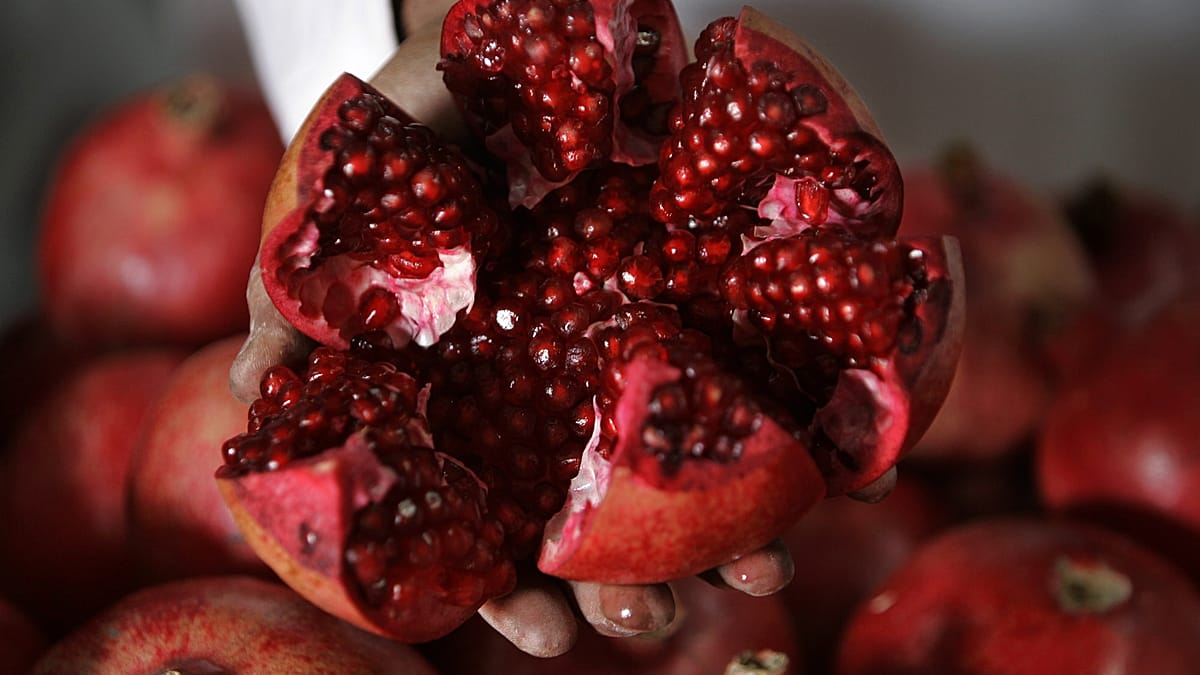
Azerbaijan exported €48.2 million worth of pomegranates and pomegranate products in 2025, shipping fresh fruit, juice, concentrate, wine and seed oil to 26 countries across the Gulf, Asia and Europe, according to the country's Pomegranate Producers and Exporters Association.
The industry draws on more than 200 cultivated varieties grown mainly in the Kur-Araz lowland and the Goychay district. The Guloysha variety is the best known internationally, valued for its thin skin, high juice content and sweet-sour flavour. Other varieties — Valas, Shah Nar, Nazik Gabig and Bala Mursal — are used by producers to differentiate their products on supermarket shelves abroad.
Farhad Garashov, chairman of the Pomegranate Producers and Exporters Association of Azerbaijan, which represents more than 500 farmers and exporters, cited indigenous variety diversity, EU-compatible phytosanitary standards and geographic proximity to European and Gulf markets as the sector's main competitive advantages. Azerbaijan faces established rivals including Iran, Turkey and Spain.
Fresh fruit dominates export volumes, but processed goods are extending the selling season beyond the autumn harvest. Cold storage facilities, processing plants and logistics infrastructure now allow year-round supply to buyers. Foreign buyers and large supermarket chains are requiring stricter phytosanitary standards, consistent fruit sizing and international packaging, conditions that are pushing smallholders toward new financing instruments and partnerships, according to the source.
Anar Jafarov, director of the Agrarian Innovation Centre under Azerbaijan's Ministry of Agriculture, told Euronews that Azerbaijani agriculture had entered a stage focused not only on raising production volumes but also on branding high value-added products.
The Goychay Pomegranate Festival, held each October in the Goychay district approximately 200 kilometres west of Baku, draws tens of thousands of visitors annually and functions as both a cultural celebration and a trade event. The festival was inscribed on UNESCO's Representative List of the Intangible Cultural Heritage of Humanity in 2024 following an initiative led by First Vice-President Mehriban Aliyeva.
Climate conditions affected the 2025 harvest. Yusif Lazgiyev, operations director at Az-Granata — a privately owned juice and beverage company operating 332 hectares of its own orchards — said cold and rainy weather in late May and early June prevented the second of the pomegranate tree's three seasonal flowerings. He attributed the disruption to climate change and said the resulting single-flowering cycle caused yield losses of 15% to 20%. He also said temperature swings between night and day were accelerating the spread of disease in orchards, and that the company's pomegranate wine production this year was down 30% to 40% compared with 2024.
Garashov said the industry had identified drip irrigation, digital water management and improved water efficiency as priorities in response to higher temperatures and more frequent drought.
- The source does not state the export value for pomegranates in prior years, making it impossible to quantify growth over time.
- The source states wine production was down 30% to 40% 'compared with 2025,' which appears to be an internal contradiction; the correct comparison year is not established.
- The source does not identify which of the 26 destination countries receive the largest share of exports or what volumes each receives.
- The source does not state the total number of pomegranate farmers in Azerbaijan beyond those represented by the association.
- The source does not provide independent verification of the €48.2 million export figure or name the official body that compiled it.
- The source does not detail the specific financing instruments being made available to smallholders to meet new buyer standards.